IN Brief:
- CEVA will continue operating as a national consolidation centre for Ocado Retail.
- The Kettering facility supports ambient storage and distribution into seven CFCs.
- Warehouse redesign, WMS changes, and replenishment improvements have lifted outbound efficiency.
CEVA Logistics has renewed its contract with Ocado Retail, continuing its role as a national consolidation centre for the UK online grocery operator.
Under the renewed agreement, CEVA will manage the bulk storage of ambient products and distribute stock to all seven of Ocado Retail’s customer fulfilment centres. Those CFCs are used to dispatch end-customer orders across the online grocery network.
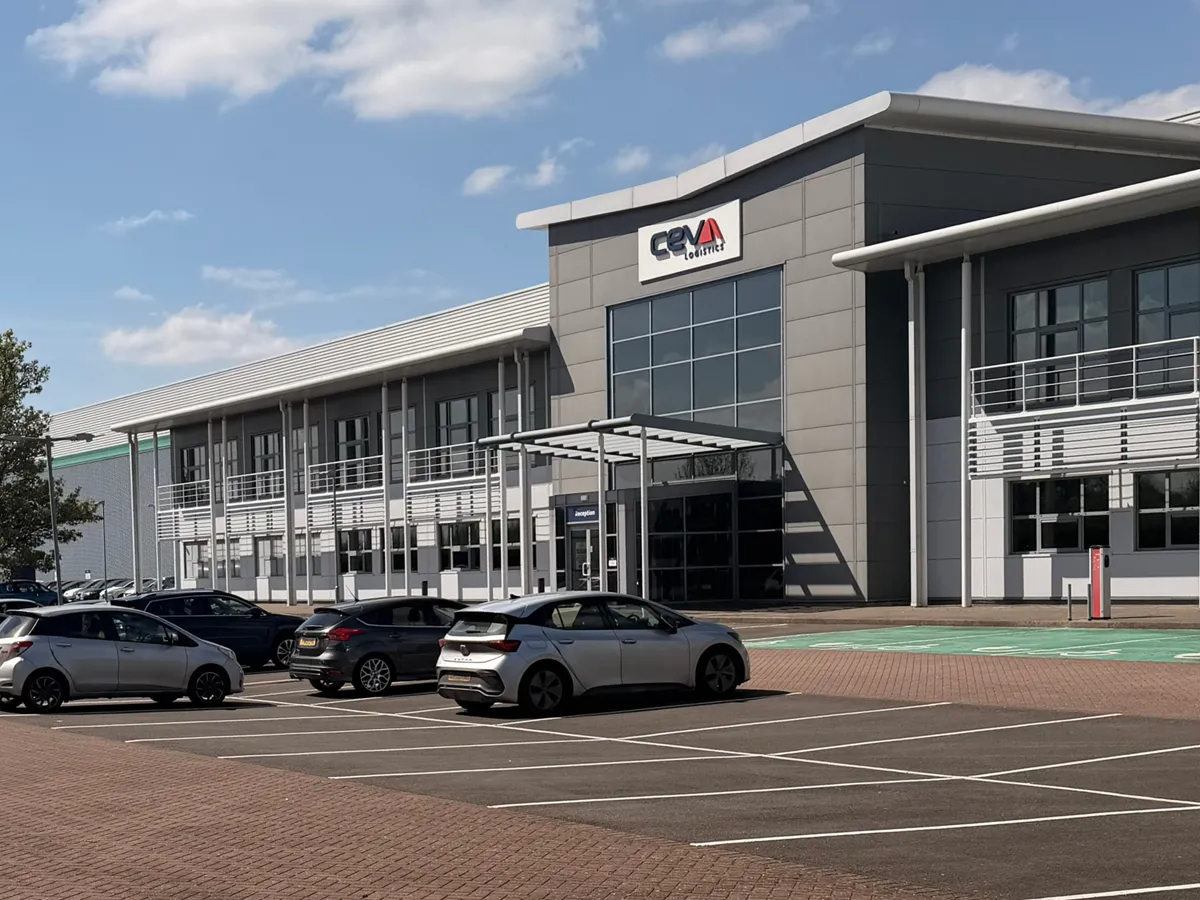
Volumes handled by CEVA for Ocado Retail have grown significantly year-on-year. To support that growth, CEVA has reconfigured warehouse design at its Kettering facility to accommodate changes in pallet configuration and SKU profile, increasing storage capacity while maintaining service continuity.
The renewal follows a wider operational optimisation programme. CEVA has redesigned its warehouse management system, implemented a new pick-face arrangement, enhanced replenishment processes, and updated put-away logic. The changes have increased outbound efficiency and strengthened the Kettering operation’s ability to support peak trading periods.
The facility now provides Ocado Retail with improved stock cover, supporting product availability and flow into fulfilment centres. In online grocery, substitutions, stock-outs, and freshness windows affect customer experience directly, so consolidation performance has a measurable effect beyond the warehouse.
A national consolidation centre plays a critical role in grocery logistics. Customer fulfilment centres are designed to process orders efficiently, but they rely on consistent upstream stock flow. Inbound disruption, poor pallet configuration, or unstable replenishment timing can create labour inefficiency, slotting pressure, and lower product availability inside the fulfilment centre.
The renewed contract also shows how third-party logistics relationships are becoming more operationally embedded. The work involves WMS redesign, layout changes, replenishment logic, and SKU profile adaptation, all of which sit close to the customer’s core fulfilment performance.
Online grocery has different logistics demands from store replenishment. Order profiles are more fragmented, customer expectations are immediate, and demand patterns can shift quickly around weather, promotions, holidays, or household behaviour. Ambient grocery may not carry the same temperature burden as chilled or frozen product, but it still requires accurate availability, predictable inbound flow, and scalable warehouse execution.
The Kettering changes also reflect a wider pattern in retail logistics. Warehouse networks are being reworked to handle changing SKU profiles without building entirely new infrastructure. As ranges shift and volumes rise, operators need to extract more capacity from existing sites through layout changes, replenishment discipline, and better systems logic.
Contract renewals in this part of the market increasingly depend on operational adaptability. Customers need partners that can reconfigure warehouse processes during live operations and preserve service levels through change. The ability to redesign WMS processes or implement a new pick-face without disrupting flow is now a core part of contract logistics capability.
The renewed partnership strengthens Ocado Retail’s upstream logistics base as online grocery continues to demand scale without sacrificing product availability. CEVA’s role combines physical infrastructure, process engineering, and systems execution in a single managed service.