IN Brief:
- Panattoni has acquired a 23-acre site at Wakefield Europort from Delin Property.
- The developer plans a 500,000ft² speculative cross-docked logistics and warehousing facility.
- The scheme targets BREEAM Outstanding and net-zero carbon construction, with strong M62, M1, and A1(M) connectivity.
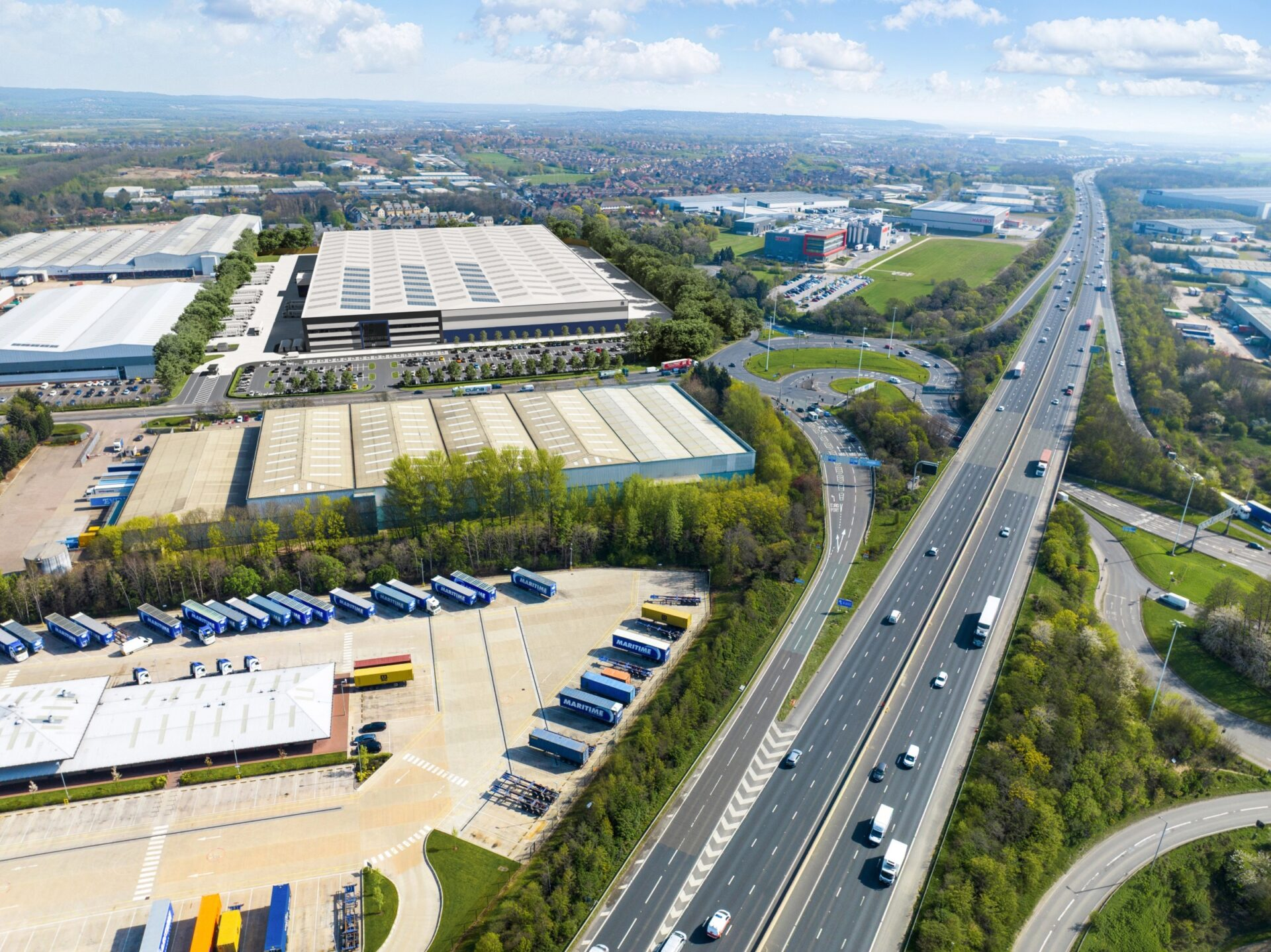
Panattoni has acquired a 23-acre development site at Wakefield Europort, West Yorkshire, for a 500,000ft² speculative logistics and warehousing scheme.
The site was acquired from Delin Property for an undisclosed price. Panattoni will deliver the project, named Panattoni Wakefield 500, in a joint venture with Newport by Panattoni, with construction expected to begin this quarter.
The proposed facility will comprise a single cross-docked logistics unit with 56 dock doors, eight level access doors, yard depths of up to 50 metres, 62 HGV spaces, 384 car parking spaces, and a 2.5MVA power supply. Panattoni is targeting a BREEAM Outstanding rating and net-zero carbon in construction.
Located at Wakefield Europort, the site has direct access to Junction 31 of the M62 and onward links to the M1 and A1(M). That position gives the scheme coverage across the North, Midlands, and wider UK motorway network, while proximity to a rail freight terminal adds intermodal potential for occupiers reviewing emissions, resilience, and transport optionality.
The acquisition follows a stronger start to the year for UK big-box logistics demand. IN Supply recently covered a 37% year-on-year rise in Grade A big-box logistics take-up in Q1 2026, with occupier demand strongest for buildings above 500,000ft² while much of the available stock remains below 400,000ft².
That imbalance is pulling developers back toward large-scale speculative commitments in established corridors. Occupiers looking for national or regional distribution capacity cannot always absorb the time required for a full build-to-suit route, especially where automation, power, ESG performance, yard configuration, and transport access all need to be assessed before occupation.
Wakefield sits in one of the UK’s most important logistics geographies. The M62 supports east-west movement across northern England, while the M1 and A1(M) connect into north-south freight flows. For manufacturers, retailers, ecommerce businesses, and third-party logistics operators, that mix supports store replenishment, parcel operations, regional distribution, industrial stockholding, and inbound component movement.
The specification of the proposed facility reflects how occupier requirements have tightened. Dock door count, HGV parking, yard depth, power availability, and sustainability certification now shape leasing decisions at an early stage. Automated warehouses require stronger energy provision and clearer internal layouts. Fleet electrification plans are putting more scrutiny on power infrastructure. Corporate ESG requirements are pushing developers toward higher environmental ratings and lower-carbon construction methods.
Rail freight proximity adds another useful layer. Most large distribution sites remain heavily road-based in day-to-day operation, but optionality is becoming more valuable as transport emissions, driver capacity, infrastructure disruption, and customer reporting requirements intensify. A location that combines motorway access with credible intermodal connections gives occupiers more room to adapt network strategy over the life of a lease.
The project also reflects the more selective phase of UK logistics property after the pandemic-era development surge. Demand is still present, but occupiers are less willing to accept buildings that fall short on layout, labour access, energy, sustainability, or transport reach. Large, well-located, high-specification buildings remain scarce in the areas where distribution networks most need them.
Panattoni Wakefield 500 adds another major scheme to that supply pipeline. Its success will rest on whether scale, specification, and location align with occupiers facing faster automation decisions, tighter service windows, and growing pressure to reduce the carbon intensity of their logistics networks.