IN Brief:
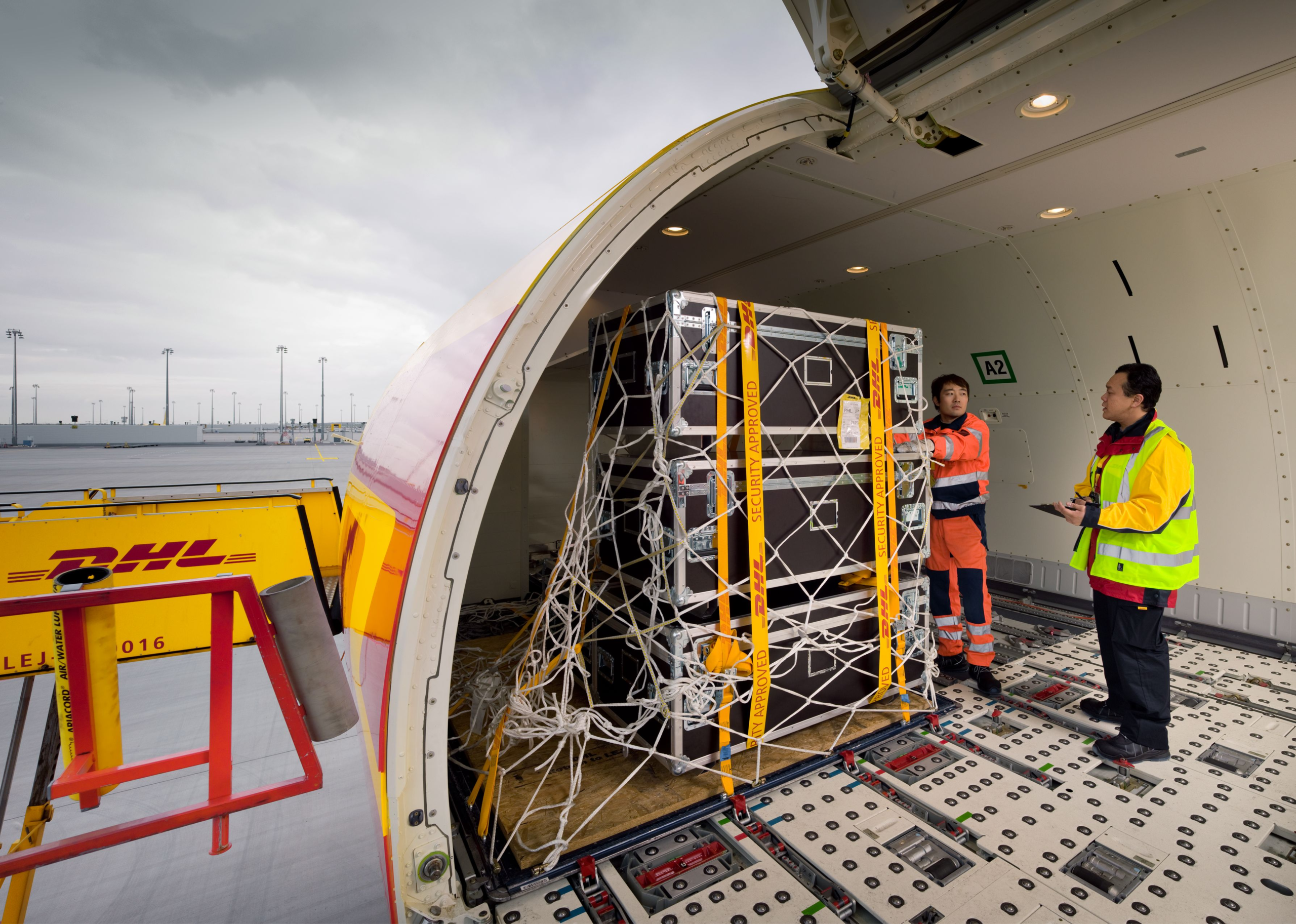
- Heavy Weight Express supports shipments up to 1,000kg per piece and 3,000kg per shipment.
- Dedicated Heavy Weight Priority Desks will monitor shipments and manage exceptions.
- DHL is targeting urgent industrial, technology, automotive, healthcare, energy, and engineering cargo.
DHL Express has expanded its Time Definite International portfolio with Heavy Weight Express, a global air express service for pieces up to 1,000kg and shipments up to 3,000kg.
The service extends DHL Express further into the heavyweight segment by combining express transit times with shipment visibility, dedicated case ownership, and proactive monitoring. It will operate across DHL’s international express network, which covers more than 220 countries and territories.
Heavy Weight Express is aimed at shipments where timing, reliability, and control carry higher commercial value than the lowest available freight rate. Target sectors include technology, automotive manufacturing, engineering and machinery, life sciences, pharmaceuticals, oil and gas, and energy.
The product uses a single-carrier model from pickup to delivery. DHL Express manages its own aircraft fleet, hubs, gateways, customs operations, and last-mile delivery, giving the service a different profile from heavyweight moves that rely more heavily on ad hoc airline capacity, multiple handovers, or variable freight surcharges.
Dedicated Heavy Weight Priority Desks will support the service globally. These teams will track heavyweight shipments, identify exceptions early, intervene where disruption appears, and maintain direct communication with customers. Each shipment receives dedicated case ownership, bringing a specialist level of supervision into DHL’s global express infrastructure.
Transparent all-in pricing is also part of the offer. Heavyweight air movements can be exposed to rate volatility, handling charges, fuel movements, security fees, and capacity constraints. A clearer pricing structure gives procurement and logistics teams a stronger basis for deciding when express heavyweight movement is justified.
DHL has identified six major use cases for the service: avoiding production downtime, supporting programme and product launches with fixed deadlines, reducing inventory buffers, managing procurement-led large-scale shipping environments, meeting special-handling requirements, and stabilising complex multi-site supply chains.
International parcel and airfreight networks have faced sustained pressure from surcharge changes, capacity constraints, and trade-lane disruption. UPS and FedEx have recently added international surcharge pressure, increasing the need for shippers to understand how urgent cargo costs vary across carriers, lanes, and service levels.
Heavyweight express occupies a difficult space between traditional express and conventional airfreight. Express networks were built around speed, visibility, and small-package consistency, while airfreight can move larger loads but often lacks the same end-to-end ownership. Cargo may pass through forwarders, commercial airline capacity, warehouse agents, and onward delivery providers before reaching its final destination.
DHL’s launch attempts to close that gap by applying express discipline to larger industrial shipments. A line-down automotive component, a critical machine part, a regulated healthcare consignment, or an urgent energy-sector replacement can carry commercial costs far beyond the transport invoice. In those cases, capacity access, customs control, and exception management can be more valuable than simply securing the cheapest air movement.
The service also connects to changing inventory strategy. Lean operating models remain under pressure after several years of disruption, but adding buffer stock everywhere is expensive. Working capital, warehouse space, obsolescence risk, and demand uncertainty all limit how much inventory businesses can hold. Faster heavyweight recovery options give operators another way to manage disruption without permanently overstocking every critical item.
Used poorly, express heavyweight movement can become a costly workaround for weak planning. Shippers will need clear governance around which commodities qualify, who approves use of the service, how transport spend is reviewed, and whether urgent movements are being driven by genuine disruption or avoidable forecasting gaps.
For DHL, the launch deepens the role of integrators in industrial logistics. Express carriers are no longer competing only for parcels, documents, and ecommerce flows. They are increasingly targeting critical freight where network control, data visibility, customs expertise, and time-definite delivery can be sold as part of a wider supply-chain continuity model.