IN Brief:
- Global schedule reliability fell to 62.6% in June, with late vessels averaging 5.3 days behind schedule.
- Sogese estimates close to one-fifth of nominal fleet capacity is effectively unavailable despite continued fleet growth.
- Earlier purchasing and softer July rates point towards weaker fourth-quarter demand and tighter carrier capacity management.
European container demand could weaken during the fourth quarter after importers shifted a larger share of peak-season purchasing into late spring and early summer, leaving carriers to manage growing nominal vessel capacity against a less certain cargo outlook.
The August Europe Container Market Update from Sogese identifies demand timing as the main variable for the remainder of 2026. Fleet capacity continues to grow, but longer routes, congestion, slow steaming, and schedule disruption mean the number of slots available on paper is still greater than the capacity shippers can use predictably.
Global schedule reliability fell to 62.6% in June from 64.5% in May, according to Sea-Intelligence data cited in the update. Vessels classified as late arrived an average of 5.3 days behind schedule, leaving close to four in ten arrivals outside their published timetable.
Performance also varied sharply between carriers. Maersk recorded 77.1% reliability among the 13 largest operators, followed by Hapag-Lloyd at 75.6% and MSC at 72.1%. At alliance level, Gemini Cooperation reached 93.4% against 53.6% for Premier Alliance.
Those gaps matter because a shipper can secure nominal capacity without securing the same level of planning certainty. A five-day arrival variance affects warehouse labour, inventory availability, import haulage bookings, customer commitments, and the amount of safety stock required to absorb disruption.
Freight rates began moving in the opposite direction during July. Drewry’s World Container Index reached $4,639 per 40ft container on 9 July before falling to $4,255 by 30 July. Sogese interprets softer pricing alongside weaker reliability as evidence that cargo demand is easing faster than carriers are removing capacity.
The market can therefore appear constrained operationally while becoming looser commercially. Ships and containers remain tied up for longer than normal on some routes, yet the reduced urgency of new bookings can still weaken the price carriers are able to sustain.
Sogese expects the global container fleet to expand by roughly 5% to 6% during 2026, while estimating that close to one-fifth of nominal capacity is effectively unavailable. Cape of Good Hope diversions account for around 2.5 million TEU of that absorption and add one to two weeks to affected voyages, with congestion and slow steaming consuming further capacity.
That inefficiency has helped balance fleet growth for much of the year. The risk for carriers is that demand weakens at the same time as some of the hidden capacity returns. More Suez transits, faster rotations, improved congestion, or new vessel deliveries can each put additional usable slots into the market without requiring a dramatic change in the published fleet.
Demand has also shifted earlier. The update says importers accelerated purchasing ahead of the conventional peak, concentrating more bookings in late Q2 and early Q3. That does not necessarily mean total annual demand has increased; it can simply mean that cargo expected later in the year has already moved.
Rotterdam provides one indication of that pattern. Deep-sea container volumes rose 5.2% in TEU terms during the first half of 2026, supported by an 8% increase in imports from Asia, while overall container throughput remained broadly flat because transhipment volumes fell.
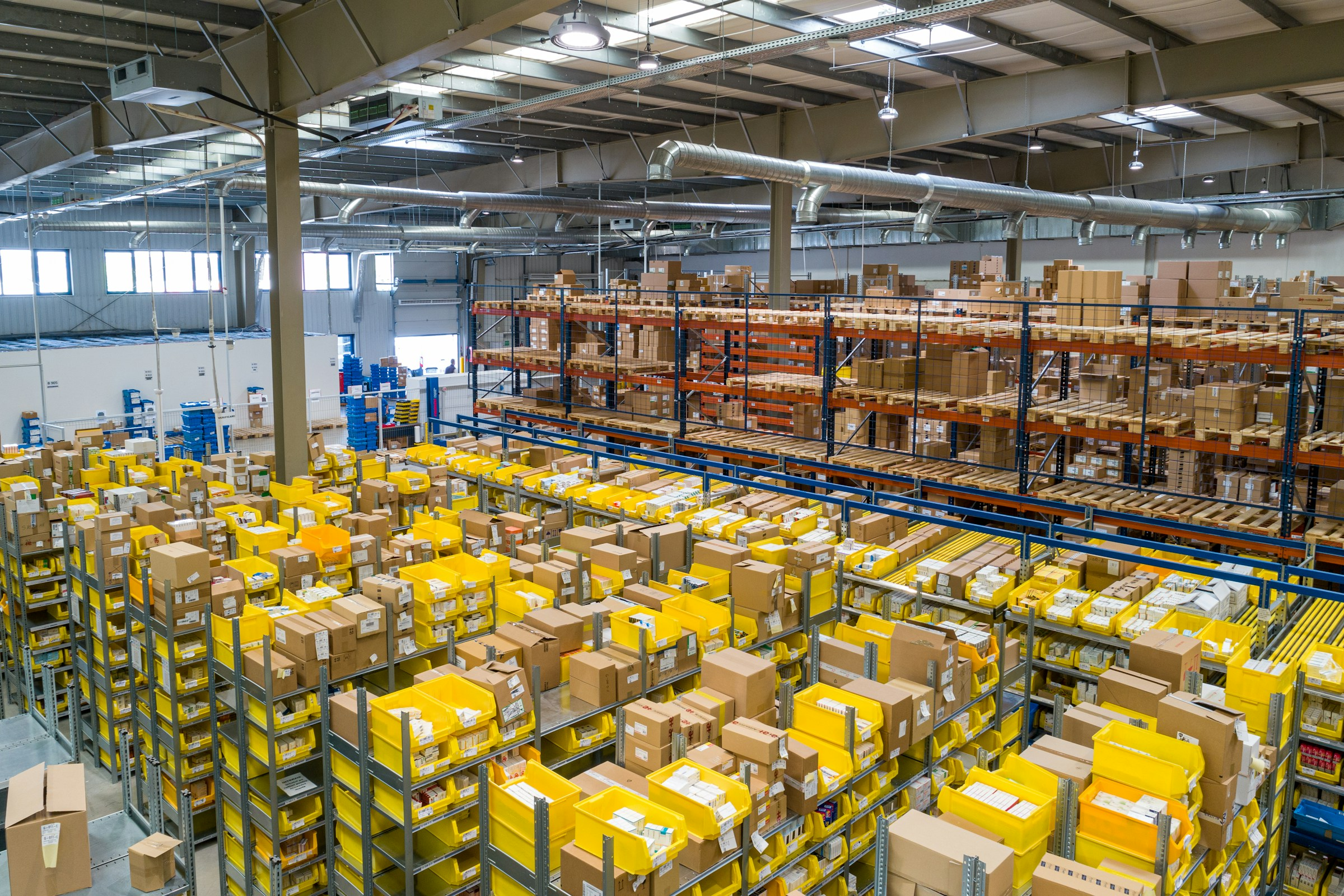
For distribution operations, an elongated peak creates a different problem from a short, violent surge. Warehouses can remain heavily utilised for longer, inbound inventory stays in the network, and transport plans need repeated adjustment as vessel schedules move. Operations teams lose some of the quieter periods normally used to rebalance stock and labour between seasonal waves.
Sogese’s base case is that demand normalises during the fourth quarter, freight rates correct further, and effective vessel capacity increases as inventories rebalance. Carriers are expected to respond with blank sailings and network changes rather than simply leave all available tonnage in the market.
That puts capacity discipline at the centre of the autumn. If operators remove sailings quickly enough, they can limit the commercial effect of weaker demand. If capacity returns faster than bookings decline, the pressure on freight pricing increases.
Shippers may therefore face an unusual combination: more bookable space without an equivalent improvement in schedule reliability. That is not necessarily a bad procurement environment, but it requires separate decisions about price and service rather than assuming that one will improve automatically with the other.
The fourth quarter will show how much of 2026’s apparent peak represented genuine growth and how much was simply cargo moved earlier to avoid uncertainty. Carriers have spent much of the year managing too little effective capacity; their next problem may be making sure enough of it stays out of the market when demand finally catches up with the calendar.