IN Brief:
- PanStar Acro is due to sail from Busan through the Arctic to Felixstowe, Rotterdam, and Gdansk.
- South Korean authorities estimate the route could cut voyage time by up to 35% against Suez.
- Commercial viability remains constrained by seasonality, vessel scale, insurance, permits, and Russian-route exposure.
PanStar is preparing to send the PanStar Acro from Busan to Europe through the Northern Sea Route on Saturday, in South Korea’s first government-backed commercial container trial across the Arctic. The voyage will test whether shorter sailing distances can translate into a commercially usable service once ice, insurance, vessel limits, sanctions exposure, and seasonal availability are included.
The 2,700 TEU ship is scheduled to call at Felixstowe, Rotterdam, and Gdansk before returning to South Korea, with the round trip expected to take between 40 and 45 days. PanStar has sought at least 1,300 TEU of cargo for the voyage, including automotive parts, food, and cosmetics, while interest has also come from shippers in China and Japan.
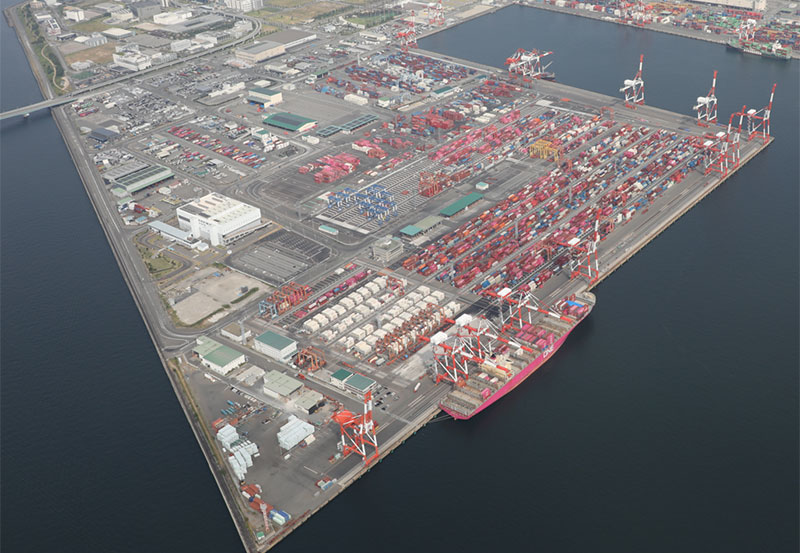
South Korea’s Ministry of Oceans and Fisheries has placed Arctic shipping inside a wider maritime strategy rather than treating the journey as a one-off demonstration. The government wants Busan to develop as a container logistics hub for Arctic trade and Ulsan as an energy logistics base, with regular Korea-Europe services targeted for later in the decade if the operating case proves credible.
Government estimates put the potential voyage-time saving at up to 35% compared with the Suez Canal route. A shorter route can reduce fuel consumption and time at sea, but the distance advantage is only one line in a much larger cost calculation. Insurance, ice conditions, navigation support, vessel specification, route permissions, crew capability, and schedule reliability all affect whether the theoretical saving survives commercial operation.
Seasonality is the first constraint. The voyage is timed for the period when Arctic sea ice is near its annual minimum, giving container vessels a relatively narrow operating window compared with conventional Asia-Europe services. A route that works for several summer months cannot yet offer the year-round weekly consistency on which most liner networks and customer inventory plans depend.
Ship size creates another problem. PanStar bought the 2,700 TEU PanStar Acro from HMM and is modifying it for polar navigation, but the vessel is far smaller than the largest ships employed on mainstream Asia-Europe trades. Container shipping relies heavily on scale, so lower sailing distance can be offset if fixed voyage costs are spread across far fewer boxes.
The route also runs along Russia’s Arctic coast and requires consultation with Russian authorities. Western diplomats have raised objections, while sanctions specialists have warned that an emergency requiring Russian assistance could create legal complications. Those risks are difficult to price in advance because they sit outside normal bunker, port, and charter calculations.
The test voyage is consequently more valuable as an operating-data exercise than as proof of a new trade lane. South Korea needs evidence on transit time, ice conditions, fuel use, port calls, cargo demand, equipment performance, insurance, and the actual cost of regulatory compliance. Modelled savings can identify an opportunity; only repeated voyages can establish whether the service can be scheduled reliably enough for customers to plan around it.
Competitive pressure is adding urgency. Chinese operators have moved earlier on Arctic services, and Russia continues to promote the Northern Sea Route as a commercial corridor. South Korean carriers risk arriving late if the route develops, but moving early also means absorbing the cost of testing a network whose long-term economics remain uncertain.
The European call pattern gives the trial a useful logistics dimension. Felixstowe, Rotterdam, and Gdansk provide access to established UK, continental European, and Baltic distribution networks rather than a single showcase destination. The test will therefore measure not only the ocean leg but how an Arctic service connects into conventional port and inland systems once the ship reaches Europe.
Cargo composition will matter as well. Automotive parts and other higher-value manufactured goods are more sensitive to transit time than many bulk commodities, making them plausible candidates for a shorter seasonal service if reliability is adequate. Lower-value cargo is less likely to tolerate a cost premium simply to save days at sea.
Saturday’s departure will not settle whether the Arctic becomes a mainstream container corridor, and the seasonal and political constraints remain substantial. It should produce something more useful than another route map: hard operating data on the cost, reliability, and cargo profile of a Korea-Europe Arctic service. If South Korea still intends to support regular sailings by 2030, those figures will matter more than the headline percentage saved against Suez.