IN Brief:
- Kobe International Container Terminal is expanding from three berths to four under the new lease.
- Quay length rises from 1,050m to 1,750m, with 12 new remote-controlled electric RTGs.
- MOL is linking berth capacity, remote yard handling, and CONPAS gate management across the terminal.
Mitsui O.S.K. Lines has signed a lease covering four berths at the expanded South Pier in the Port of Kobe, increasing the operating footprint of Kobe International Container Terminal and pairing additional quay capacity with remote-operated electric yard equipment. The project combines physical expansion with digital systems intended to improve vessel, yard, and truck flows.
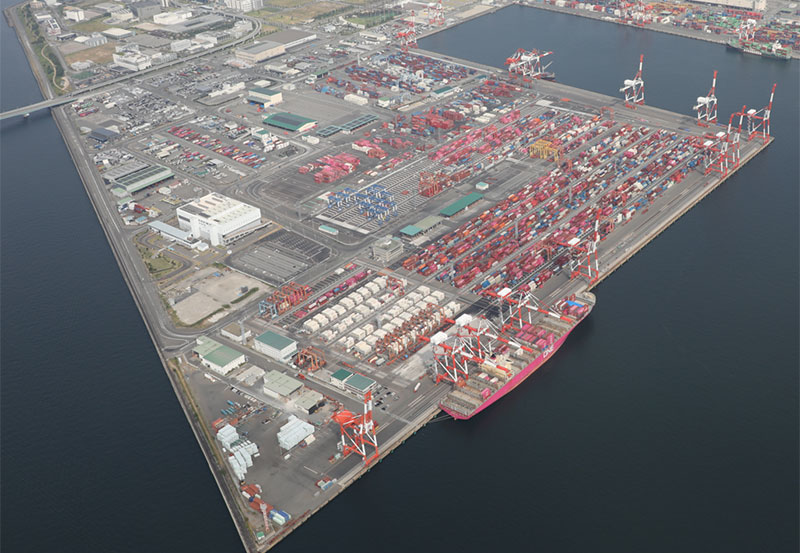
The lease covers berths PC14 to PC17 at Port Island Phase 2. Kobe International Container Terminal, operated by MOL with Sankyu, The Sumitomo Warehouse, and Nickel & Lyons, will expand from a three-berth to a four-berth configuration, with K Line joining as a new participant.
MOL expects the enlarged terminal to handle approximately 40% of international containerised cargo at the Port of Kobe. Total quay length will increase from 1,050 metres to 1,750 metres, giving the terminal more flexibility over vessel berthing windows and improving its ability to connect transshipment cargo with other services.
The expanded area includes 12 new electric rubber-tyred gantry cranes equipped for remote control. Operators will work from a dedicated operations building rather than from cabins on the cranes, reducing exposure to weather and repeated access to moving equipment while allowing yard activity to be supervised from a central environment.
Remote operation changes the labour model without removing the need for skilled crane operators. Workstations can standardise controls and improve the working environment, while equipment status and container movements can be monitored more consistently. Productivity still depends on network reliability, operating procedures, and how well remote cranes are integrated with yard planning.
The terminal upgrade also reaches beyond crane operation. MOL began full-scale, around-the-clock operation of its CONPAS port information system at the end of March, using real-time gate information, driver identification, and reservations to reduce trailer waiting and smooth arrivals around the terminal.
That connection between berth, yard, and gate is critical. Additional quay capacity allows more containers to move over the ship’s side, but poor truck sequencing can simply shift congestion inland. A larger terminal only produces a useful supply chain gain when boxes continue moving through the yard and gate rather than accumulating after discharge.
Kobe’s Port Island Phase 2 provides the physical space for that integration. The development includes deepwater container infrastructure and a large area of wharf and logistics facilities, giving operators room to combine berth capacity with yard handling, road access, and supporting logistics activity.
Electric RTGs add an emissions and maintenance dimension to the project. Replacing diesel-powered yard equipment can reduce local exhaust emissions and fuel handling inside the terminal, although power supply, charging or cable infrastructure, and equipment availability become more important operational dependencies. The benefit is therefore tied to the resilience of the electrical and control systems supporting the fleet.
MOL is also installing solar panels at container gates and on logistics-facility rooftops, placing the terminal upgrade inside a broader energy-efficiency programme. The combination of electrified yard equipment and on-site generation will not make terminal operations independent of the grid, but it gives the operator more scope to reduce direct fuel consumption and manage part of its electricity demand locally.
Kobe competes in a region dominated by large Chinese, Korean, and Southeast Asian container hubs, so additional berth length alone is unlikely to alter carrier choices. Schedule reliability, transshipment connectivity, gate performance, and inland access carry equal weight, particularly for shippers moving time-sensitive manufactured goods through Japan.
The 12 remote RTGs and CONPAS system are therefore more than technology additions attached to a civil-engineering project. They determine whether the 700 metres of extra quay can be converted into faster cargo movement without creating longer queues elsewhere in the operation.
The project also reflects the way terminal automation is maturing. Ports are moving away from isolated technology trials towards systems that connect equipment, gate appointments, energy use, and cargo visibility across live operations. The value is no longer in demonstrating that a crane can be controlled remotely; it is in whether remote equipment helps the entire terminal handle more cargo with fewer interruptions.
MOL has now committed to the four-berth layout and the expanded terminal is already equipped with the new electric RTGs. The next measure is operational performance: whether longer quay frontage, remote yard handling, and real-time gate management reduce vessel and truck delays as cargo volumes are absorbed. If those systems work together, Kobe gains more than capacity on paper; it gains a terminal that can use that capacity without simply moving congestion from one interface to the next.