IN Brief:
- Poti handled 404,760 TEU between January and July 2026, 7% above the same period last year.
- July set a monthly record of 65,759 TEU at the APM Terminals-operated gateway.
- Further volume growth increases pressure on berth, yard, crane, road, and rail capacity serving the regional corridor.
Georgia’s Poti port handled a record 404,760 TEU during the first seven months of 2026, increasing container throughput by 7% year on year as traffic continues to build through the country’s main Black Sea gateway.
July produced a monthly record of 65,759 TEU, giving the port its highest reported container month and increasing the operational pressure on a facility that already handles the large majority of Georgia’s containerised ocean traffic.
APM Terminals Poti operates the container terminal and describes Poti as Georgia’s largest seaport. The facility handles approximately 80% of the country’s container traffic while also serving dry bulk, liquid bulk, ferry, and other cargo operations.
Poti’s significance extends beyond Georgia. Its eastern Black Sea location connects maritime services with road and rail routes serving Armenia and Azerbaijan and provides one of the western interfaces for cargo travelling between Central Asia, the Caucasus, and European markets.
The seven-month increase therefore measures more than local import demand. Container volumes through Poti include regional cargo whose logistics chain can involve rail, road, Caspian shipping, Black Sea vessels, and several border or terminal transfers before final delivery.
Each additional hand-off creates another point at which theoretical transit speed can be lost. Wagon availability, customs processing, ferry schedules, terminal congestion, truck supply, and border procedures all influence how quickly a container passes through the wider corridor.
The July record is especially important operationally because short peaks stress infrastructure differently from gradual annual growth. A port may have enough theoretical capacity for an annual increase while still experiencing pressure when several vessels, trains, or truck flows converge within a narrow period.
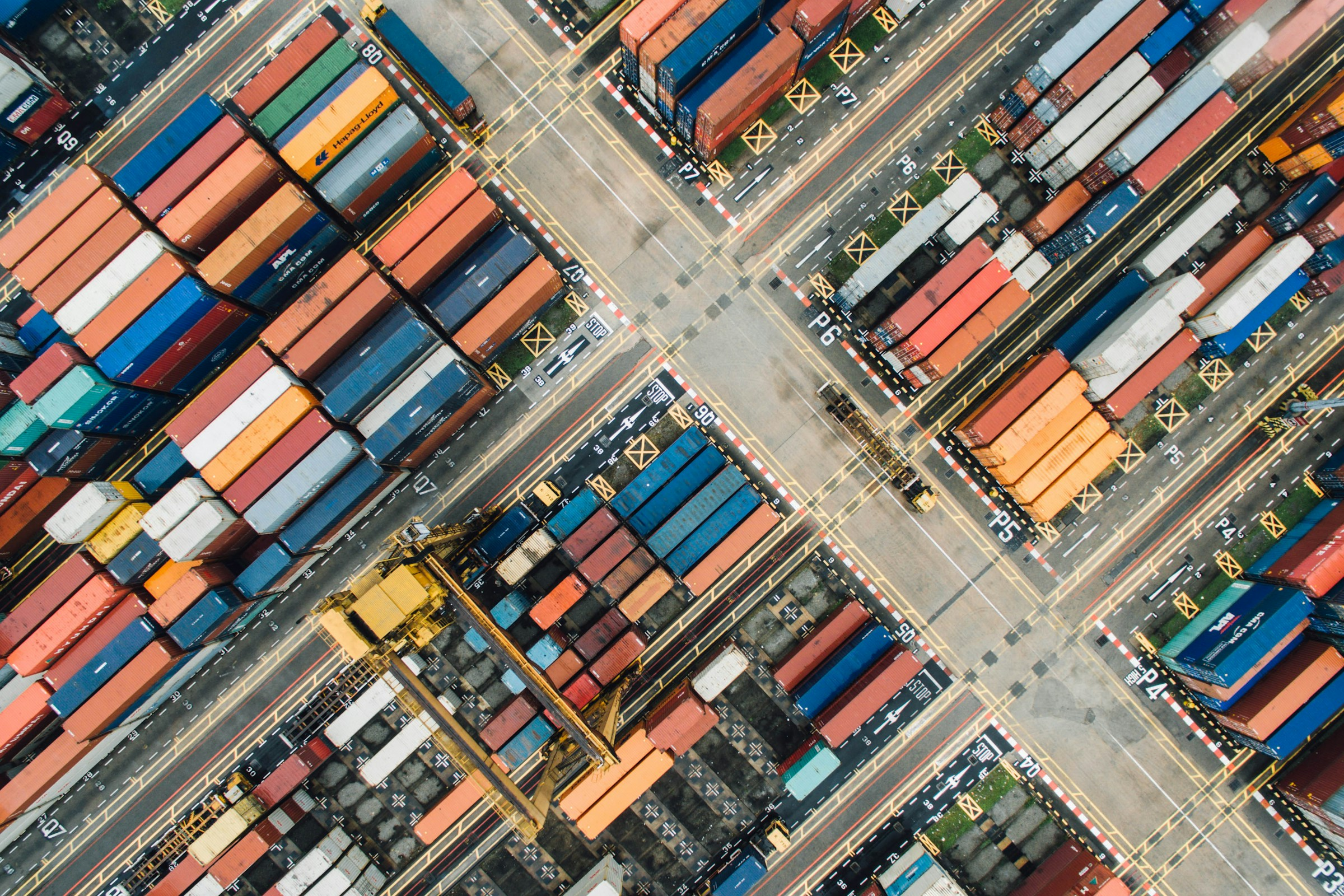
Yard density becomes one of the first constraints. Containers discharged quickly from vessels still occupy terminal space until customs, rail, or truck arrangements are ready, and high occupancy can increase rehandling as boxes needed for immediate collection become buried behind later departures.
Crane capacity, gate performance, and landside transport then determine whether the terminal can turn record throughput into usable supply-chain capacity. Growth at the quay has limited commercial value if containers simply spend longer waiting for the next leg.
Poti’s rail connection is therefore central to its role in the Middle Corridor. The terminal has previously supported ocean-rail services linking Central Asian flows with Black Sea shipping, allowing cargo to transfer between long-distance rail networks and maritime services to Turkey and Europe.
That route has attracted more attention as manufacturers and logistics providers look for alternatives to established Eurasian corridors. Sanctions, conflict, border restrictions, and geopolitical risk have increased the value of having more than one practical route between Asian production markets and European customers.
Alternative does not mean simple. Middle Corridor movements cross several transport systems and jurisdictions, which makes schedule reliability dependent on coordination between organisations that do not share one operating network.
For cargo owners, consistency can therefore matter more than the fastest advertised transit time. A slower route with predictable connections allows inventory and production to be planned; a nominally faster service that regularly loses several days at transfer points requires larger buffers and more working capital.
Growing container volumes help improve the economics of infrastructure investment. APM Terminals has continued to add capacity at Poti, including investment in new cargo-handling equipment as the port prepares for higher traffic.
A new multipurpose mobile harbour crane announced earlier this year is scheduled for delivery by the end of 2026. APM Terminals expects the equipment to lift container capacity above 650,000 TEU while also increasing non-container cargo capability.
The operator has longer-term expansion ambitions beyond equipment additions. Existing plans envisage deeper-water infrastructure and additional container handling capacity, reflecting expectations that the port’s role in Caucasus and Central Asian trade will continue to grow.
Those investments have to be matched outside the terminal. More quay capacity can increase the volume arriving in short periods, which raises requirements for rail paths, wagons, road capacity, depots, customs processing, and inland terminals.
The first seven months of 2026 indicate that this is already becoming a practical capacity question rather than a distant strategic scenario. Poti has moved 404,760 TEU before the final five months of the year, while July alone reached 65,759 TEU.
Continued growth at that rate would strengthen Poti’s position as a Black Sea logistics node, but it also reduces the margin available for weak links elsewhere in the corridor. A port can add cranes and yard space faster than a multinational transport route can simplify borders, increase rail capacity, or synchronise connecting services.
The latest record therefore gives both sides of the investment case. More cargo demonstrates that customers are using the gateway, providing a commercial basis for further capacity. It also means Poti and its inland connections have less room for delay before growing throughput begins to create the congestion that new infrastructure was intended to solve.