IN Brief:
- Amazon plans to invest more than $100 million in the 585,000 sq ft Greenwood facility.
- Manufacturing will combine fabrication, robotic welding, automated powder coating, assembly, AWS systems, and AI-supported technology.
- The plant is expected to launch by 2028 and create 300 manufacturing and engineering jobs.
Amazon plans to invest more than $100 million in a 585,000 sq ft advanced manufacturing facility at Greenwood, Indiana, producing equipment for its North American fulfilment and robotics network.
The plant is expected to launch by 2028 and create 300 skilled manufacturing and engineering jobs. Amazon says the facility will combine advanced fabrication, robotic welding, automated powder coating, and assembly under one roof, supported by AWS infrastructure, artificial intelligence, and robotics.
The investment adds manufacturing capacity upstream of Amazon’s warehouse estate rather than another building for storing and dispatching customer orders. Products made at Greenwood will be used in Amazon fulfilment centres across North America, although the company has not published a detailed list of the equipment or robot models that the site will produce.
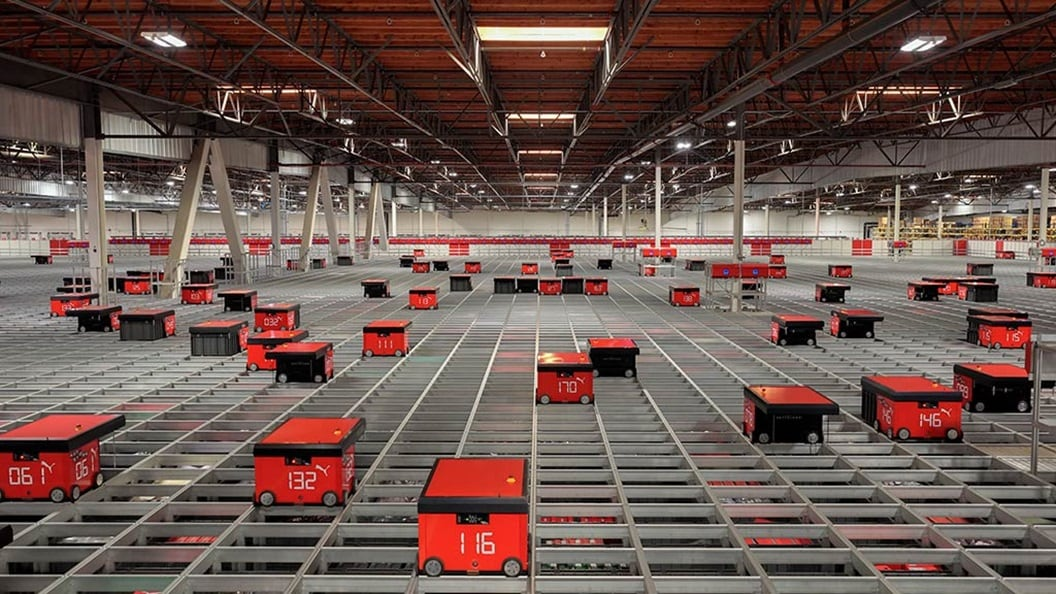
That distinction matters because Amazon’s logistics network is increasingly dependent on equipment that the company designs, builds, and deploys itself. Amazon says it has manufactured more than one million robots in the United States to date and now operates those systems across more than 300 facilities globally.
The company says robots assist employees with 75% of the customer orders it delivers worldwide. An installed base at that scale creates a manufacturing requirement beyond supplying new fulfilment centres: equipment is also needed for network expansion, upgrades, replacements, and the continuing introduction of automation into existing sites.
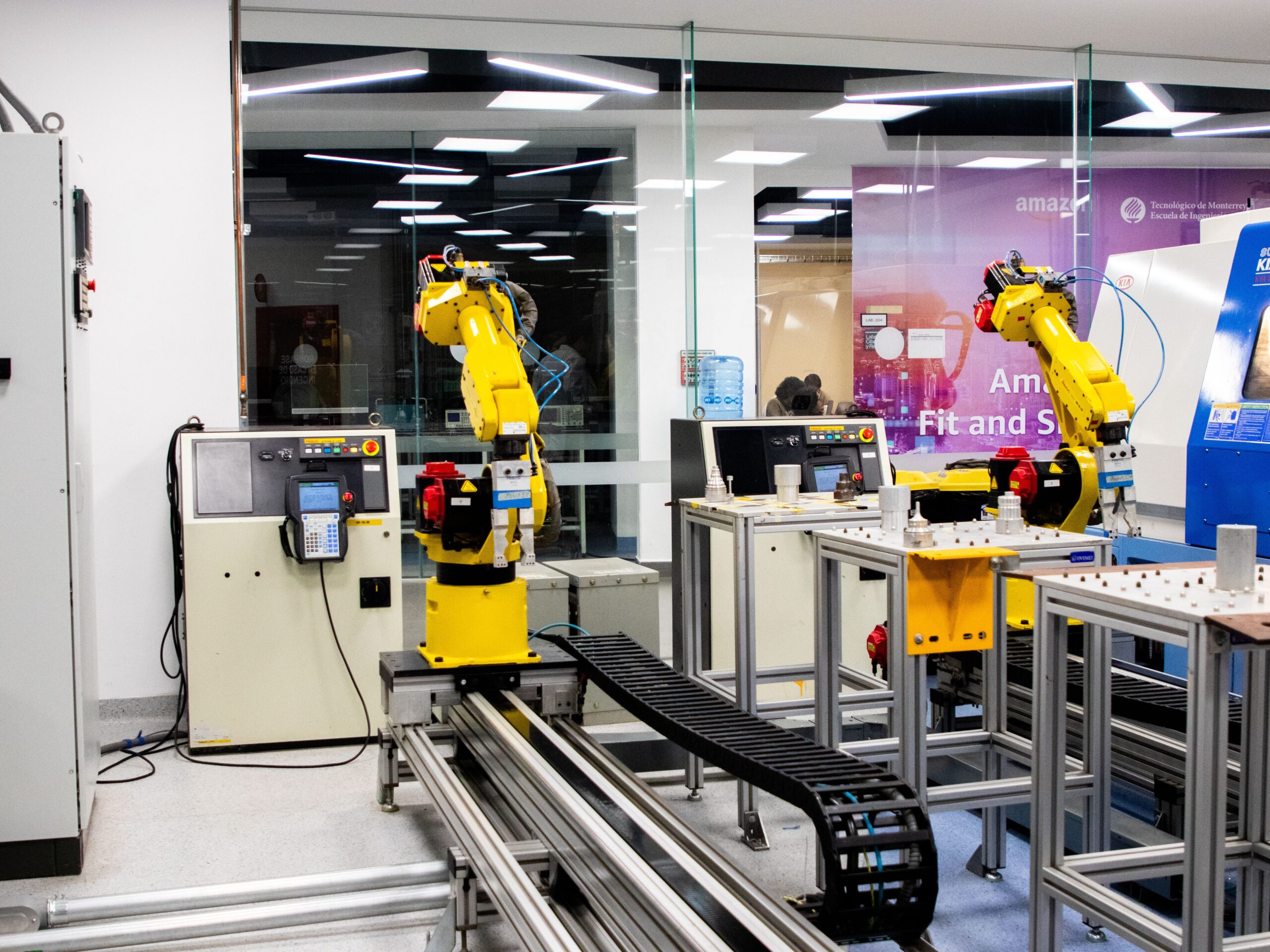
Greenwood will place several production stages inside a single facility. Fabrication and robotic welding will create structural components, automated powder coating will provide a finishing process, and assembly will bring manufactured parts together into completed equipment. Amazon says the plant will use AWS and AI-powered smart manufacturing systems to support those processes.
The company has not disclosed the planned annual output, production lines, or model mix, so the scale of the physical building should not be translated into a robot volume that Amazon has not announced. The supported position is narrower: the site will manufacture products used across the North American fulfilment network and will add 300 specialist roles when operational.
Those roles include CNC operators, welders, powder coating technicians, assemblers, manufacturing engineers, quality assurance specialists, controls engineers, and programme managers. Amazon says average pay across the planned workforce will be close to $100,000 a year.
The occupational mix reflects the combination of factory production and automation engineering planned for the site. Manufacturing hardware for a standardised logistics network requires repeatable fabrication and assembly, but it also depends on controls, quality assurance, and engineering functions capable of managing changes as equipment designs evolve.
Greenwood follows another robotics manufacturing investment announced by Amazon in Texas during August. The Indiana project also builds on the company’s established robotics manufacturing operation in Massachusetts, extending a domestic production base that supports an increasingly automated warehouse network.
Amazon’s Dobromierz fulfilment centre in Poland illustrates the other end of that cycle. The site uses more than 5,000 robotics units alongside automated packaging and material handling. Greenwood will sit upstream of comparable deployments by manufacturing equipment rather than operating it.
Locating more production inside Amazon’s own network can shorten the organisational distance between equipment design, manufacturing, and warehouse deployment. Engineering changes can be connected directly with the operating requirements of fulfilment sites, while quality and production schedules can be managed against internal deployment plans rather than treated solely as external procurement.
That does not remove normal manufacturing constraints. A plant of this size still needs stable component supply, equipment uptime, skilled labour, quality control, production planning, and sufficient demand to keep the lines utilised. Amazon has not disclosed how much of its total robotics supply Greenwood will represent once the facility reaches operation.
The Indiana location was selected partly for its manufacturing workforce and transport infrastructure. Amazon says the state’s central position provides direct access to its North American fulfilment network, giving the plant a practical distribution base for equipment moving to sites across the country.
The company already has a substantial Indiana footprint, with more than $40 billion invested and more than 27,000 direct employees since operations began in the state in 2008. That existing logistics estate gives the manufacturing project access to a region in which Amazon already operates fulfilment, sortation, delivery, robotics, data, and energy infrastructure.
Production is still some distance away. Construction, equipment installation, recruitment, process qualification, and commissioning all sit between the announcement and the expected 2028 launch. Until Amazon publishes more detail, the exact product mix and manufacturing capacity remain open.
The confirmed investment nevertheless adds a significant new function to Amazon’s Indiana operations. Greenwood is intended to make the equipment that powers the fulfilment network, moving part of the robotics supply process closer to the warehouses where that equipment will ultimately be deployed.