IN Brief:
- The Port of Helsingborg has ordered two Kalmar electric reachstackers with MyKalmar INSIGHT and Inspector software.
- Delivery is scheduled for the end of Q2 2027, with the order booked in Kalmar’s third-quarter 2026 intake.
- The purchase is the first call-off under a six-year agreement covering potential procurement of up to nine zero emission machines.
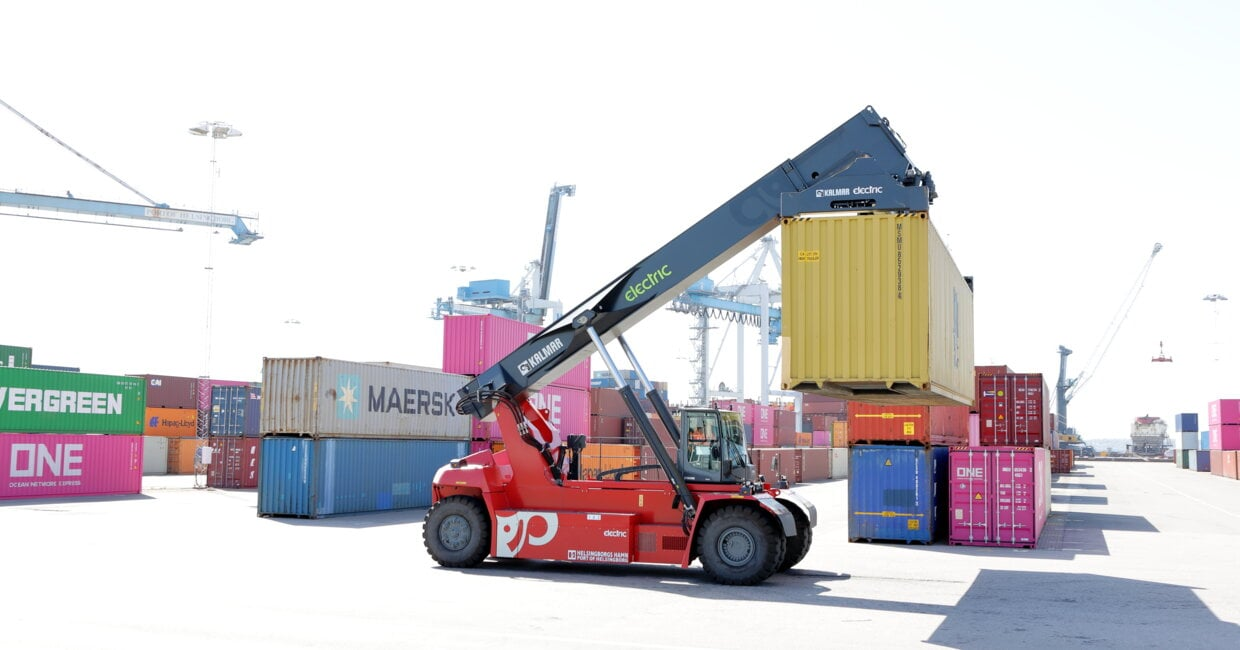
Kalmar has received an order from the Port of Helsingborg for two electric reachstackers, marking the first equipment purchase under a six-year framework covering potential procurement of up to nine zero emission machines.
The two reachstackers are scheduled for delivery at the end of the second quarter of 2027. The order was booked in Kalmar’s third-quarter 2026 intake and also includes MyKalmar INSIGHT with the Inspector machine inspection solution.
The framework was signed during the second quarter of 2026 and gives Helsingborg a mechanism for replacing heavy handling equipment progressively rather than purchasing its potential nine-machine requirement at once. The current order covers two units; the remaining quantity remains optional rather than committed.
Reachstackers carry out intensive mobile container handling duties around ports and intermodal facilities. Unlike fixed cranes, they can move between working areas and reposition loaded containers as operating requirements change, making them useful where flexibility is more important than serving one permanent crane lane.
That flexibility also creates substantial energy demand. The machines lift heavy loaded containers while repeatedly accelerating, braking, and travelling between stacks, road vehicles, and rail handling areas. Replacing diesel power in that duty targets one of the more demanding mobile equipment applications inside a container terminal.
Helsingborg has already begun that transition. In 2024 it became the first Swedish port to order a Kalmar electric reachstacker and it also operates three Kalmar Eco reachstackers, giving the terminal direct experience of both electric and lower fuel consumption equipment before the new pair arrives.
The staged procurement model allows operating experience from those machines to influence later orders under the framework. Battery performance, charging patterns, maintenance requirements, and driver experience can be assessed under normal workloads before the port decides how quickly to purchase additional units.
Charging is a central constraint in heavy electric materials handling. A diesel reachstacker can be refuelled and returned to work relatively quickly, whereas an electric fleet must coordinate charging with shifts, vessel calls, rail activity, and other periods of high equipment demand.
The order announcement does not specify battery capacity, charging equipment, or expected operating hours between charges. Those details will determine how the new reachstackers fit into Helsingborg’s working patterns and should not be inferred from other Kalmar electric deployments.
The digital elements of the order add another layer around the machines. MyKalmar INSIGHT provides equipment monitoring and fleet information, while Inspector supports structured machine inspection. Those tools can help maintenance teams follow equipment condition and operating data as the proportion of electric machinery increases.
A mixed fleet brings its own management requirement. Helsingborg will be operating equipment with different powertrains and maintenance profiles during the transition period, so workshops and operators must support conventional and electric machines at the same time rather than moving from one technology to another overnight.
The Port of Helsingborg is Sweden’s second-largest container port and connects sea, road, and rail traffic on the Øresund coast. Reachstacker availability therefore affects more than the storage yard. A machine required for transferring containers around rail or truck operations can influence the sequence of movements across several transport modes.
The six-year framework gives the port procurement continuity as that equipment base changes. Individual machines can be called off when replacement cycles, investment budgets, and infrastructure are ready without repeating the complete supplier selection process for each purchase.
Kalmar has been expanding its electric reachstacker order book across several terminal markets during 2026, including additional European and international customers. The Helsingborg agreement differs in combining an immediate two-machine purchase with a longer framework that could support further fleet replacement through the decade.
Whether the full nine machines are ultimately ordered will depend on future operating requirements and the performance of the earlier equipment. Zero tailpipe emissions at the machine do not by themselves establish the total cost or carbon outcome; utilisation, electricity supply, charging infrastructure, maintenance, and battery life remain part of the calculation.
The two new reachstackers will provide another substantial operating dataset once they enter service in 2027. Helsingborg’s transition is therefore proceeding through repeated equipment deployments rather than a single fleet replacement, allowing the terminal to increase its electric handling capacity while testing how the technology performs under normal container operations.