IN Brief:
- The 131-tonne shunt reactor travelled from Rotterdam on a 12-row modular drawbar trailer carried aboard the Terra Marique.
- Around 290 metres of temporary beach trackway and a purpose-built ramp enabled discharge during a 12-hour tidal window.
- Final installation used hydraulic jacks, a 12-metre skid track, and steel load spreading beams at Trawsfynydd Substation.
Collett has completed the delivery of a 131-tonne shunt reactor to National Grid’s Trawsfynydd Substation in North Wales, using a tidal beach landing after inland route restrictions ruled out a conventional port-to-site road movement.
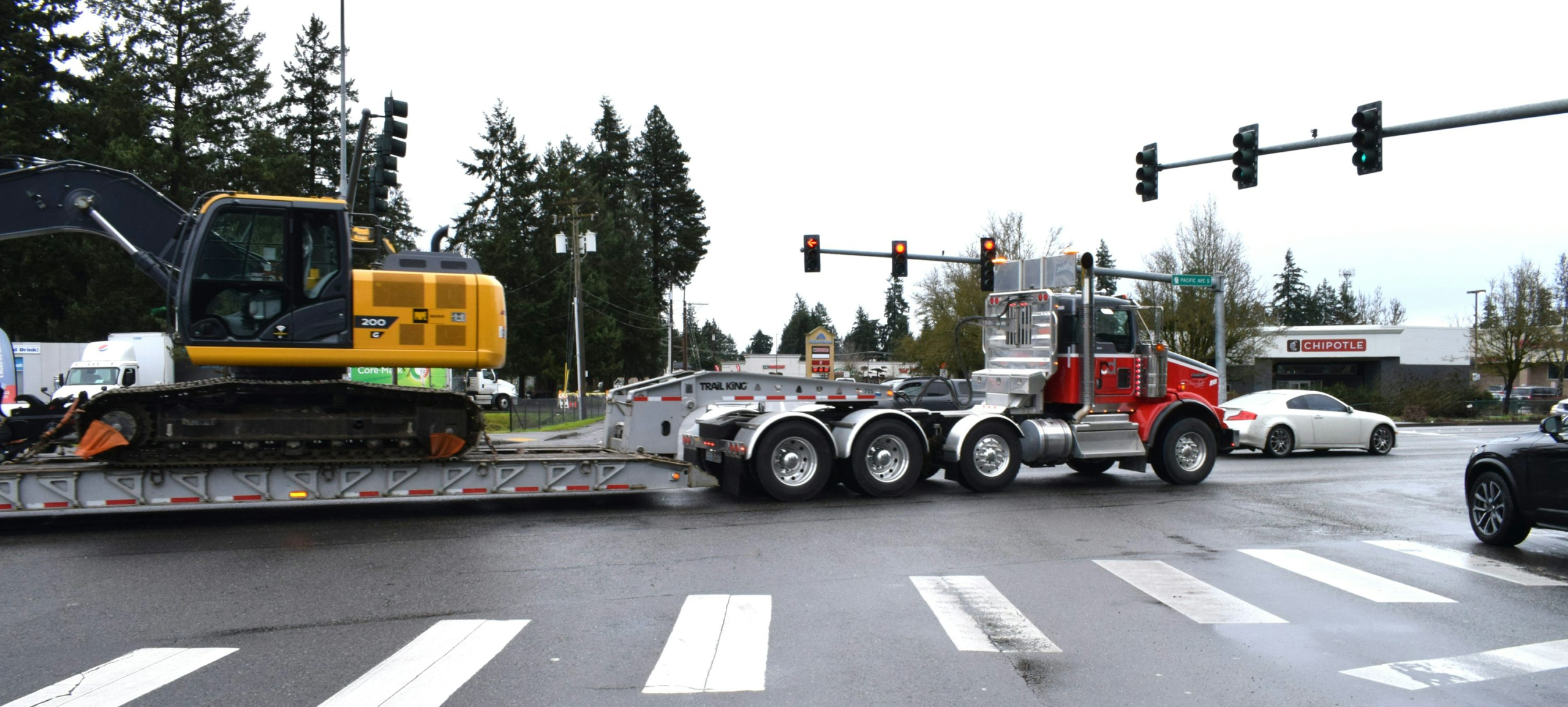
The reactor measured 7.2 metres long, 4.2 metres wide, and 3.9 metres high. Collett carried out the project on behalf of Royal SMIT B.V., loading the unit onto a 12-row modular drawbar trailer at the Port of Rotterdam before the complete loaded trailer was carried aboard the Terra Marique operated by Wynns & Sons.
Keeping the reactor on its road transport equipment during the marine leg removed a heavy lifting transfer between vessel and trailer at the UK landing point. It also required the discharge route to be engineered so the loaded modular trailer could move directly from the vessel onto temporary infrastructure installed across the beach.
Black Rock Sands was selected because restrictions on the conventional inland road network prevented a suitable route from an established port. The landing operation therefore created a temporary cargo gateway closer to Trawsfynydd rather than attempting to force the 131-tonne load through unsuitable road infrastructure.
The beach discharge had to be completed within a 12-hour tidal window. As the tide receded, crews installed around 290 metres of temporary trackway across the sand and built a purpose-designed ramp between the Terra Marique’s tail lift and the trackway.
The ramp had to accommodate the modular trailer suspension while providing a stable transition from vessel to shore. Once the route was ready, the loaded trailer was driven directly from the vessel, across the temporary surface, and above the high-water mark.
The temporary infrastructure then had to be recovered before the incoming tide removed access to the working area. Time was therefore a physical constraint rather than simply a programme target: a delay could not be absorbed by extending the shift indefinitely because the route itself would become unavailable.
Marine transport solved only the first part of the movement. From Black Rock Sands, the reactor continued under North Wales Police escort along a route that had already been assessed for the dimensions and weight of the load.
Preparatory work included tree pruning and planning around restricted rural roads and steep gradients. Heavy transport routes often require changes that are invisible once the load has passed, including vegetation clearance, temporary traffic controls, swept path assessment, and detailed examination of gradients and turning areas.
The final installation at Trawsfynydd introduced a different handling method. Collett’s heavy lift team constructed a 12-metre skid track before the reactor arrived, allowing the load to move laterally into its final position rather than relying on a crane for the entire placement operation.
Hydraulic jacks transferred the reactor from the modular trailer onto the skid system. A bund wall at the site could not accept the concentrated load, so steel beams were installed to bridge the obstruction and distribute weight across a suitable structure.
The reactor was then skidded into position and jacked down onto its plinth. The operation illustrates how the final few metres of a project cargo movement can require a different engineering solution from the transport used across the rest of the journey.
Collett also managed the movement and installation of associated cooler bank equipment. Those components travelled separately through the company’s Goole depot before delivery to Trawsfynydd, where a 90-tonne mobile crane completed the offload.
Separating ancillary equipment from the main reactor allowed each load to use transport and lifting arrangements suited to its own dimensions. Project logistics frequently involves several linked movements rather than one oversized item travelling with every associated component throughout the route.
The complete sequence combined marine carriage, modular road transport, temporary access construction, police escorted abnormal load movement, hydraulic jacking, and skidding. Each stage depended on the next interface being ready, with the beach landing adding the fixed timing imposed by the tide.
Very heavy electrical equipment regularly exposes the limits of established transport infrastructure. Shunt reactors, transformers, and generators may be designed to operate for decades at fixed sites but first have to pass through ports, roads, bridges, and local access routes that were never intended for loads of their dimensions.
Where those constraints cannot be engineered out economically, changing transport mode can provide the more practical solution. The Trawsfynydd project replaced part of the conventional road journey with coastal transport and a temporary beach route, moving the point at which the heavy load entered the highway network much closer to its destination.
The reactor is now installed, leaving little evidence of the temporary logistics infrastructure that made the movement possible. The 290 metres of beach trackway, discharge ramp, modular trailer, skid system, hydraulic jacks, and load spreading beams were temporary assets, but together they provided the route required to place a 131-tonne component on its permanent foundation.