IN Brief:
- Singapore and Brunei signed a supply-chain resilience memorandum on 12 October at their second ministerial committee meeting.
- Its scope covers food, crude oil, fuel products, medical supplies and other essential goods mutually agreed by the countries.
- The MOU complements existing ASEAN and bilateral cooperation; practical procedures and implementation will determine its value in a disruption.
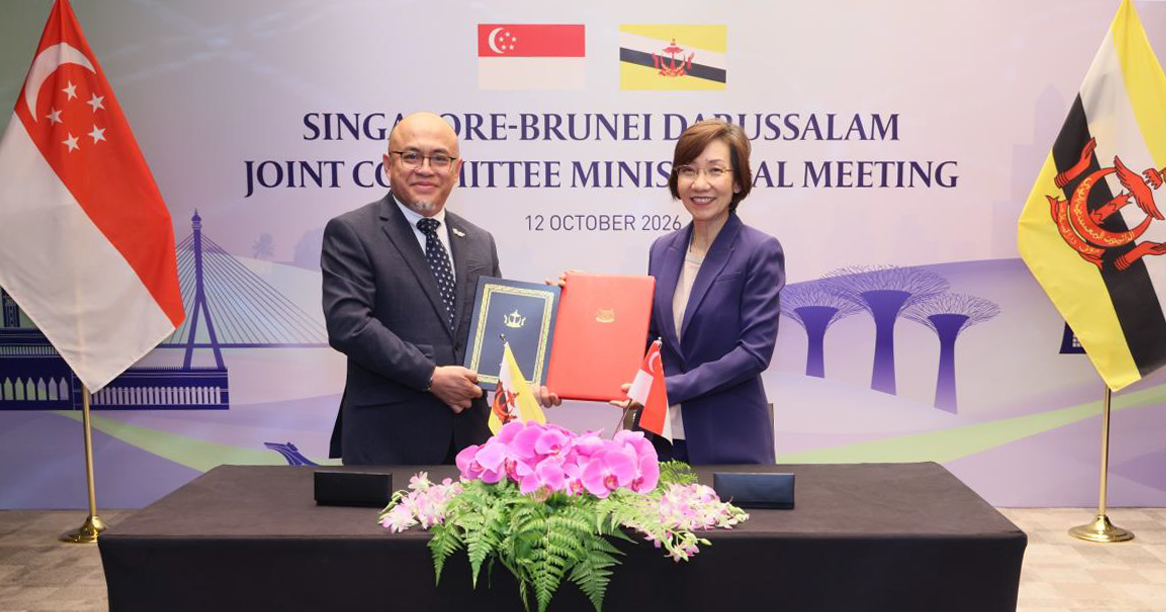
Singapore and Brunei have signed a memorandum of understanding on supply chain resilience intended to support the flow of essential goods during disruptions, extending their existing economic cooperation into a more explicitly defined framework for critical supplies. The agreement was signed on 12 October at the second Singapore–Brunei Joint Committee Ministerial Meeting by Singapore’s Minister-in-charge of Trade Relations, Grace Fu, and Brunei’s Coordinating Minister for Economic Policies and Minister of Economy, Trade and Industry, Abdul Manaf Metussin.
Contemporary reporting of the government announcement identifies food, crude oil, fuel products and medical supplies as covered categories, alongside other essential goods that the two governments may mutually identify. According to Singapore’s Ministry of Energy, Trade and Industry, as quoted in contemporaneous coverage by Bernama, the memorandum gives greater clarity about which essential products are covered and reaffirms the countries’ commitments under the upgraded ASEAN Trade in Goods Agreement. Neither government announced additional manufacturing, warehouse or transport capacity alongside the memorandum.
The memorandum covers goods with markedly different storage, quality-control and transport requirements. Food requires attention to shelf life, quality and, in some cases, temperature-controlled transport. Medical supplies can depend on product-specific handling and documentation, while crude oil and refined fuels move through different storage and distribution infrastructure. Bringing these commodities under a shared resilience agenda may help officials coordinate priorities, although the memorandum’s public description does not establish a uniform logistics process for every product.
As a memorandum of understanding, the arrangement does not itself provide a binding guarantee that either country will continue exports regardless of the circumstances. The governments have signalled cooperation and clearer categories of priority goods; the publicly reported terms do not disclose enforceable shipment volumes, compulsory emergency stock releases or penalties for interrupted supply. The policy commitment remains separate from the commercial contracts governing individual suppliers and carriers.
Singapore has pursued several arrangements to protect access to essential goods. In May, it signed an agreement on trade in essential supplies with New Zealand, which entered into force in July and is described by Singapore’s government as legally binding. A separate protocol concerning economic resilience and essential supplies was signed with Australia in July. The Brunei memorandum adds another bilateral layer, but its form and disclosed commitments differ from those instruments and should not be treated as legally identical.
Brunei brings a longstanding trading relationship and particular relevance to energy products, while food and medical supplies feature in existing bilateral work. Singapore was Brunei’s fourth-largest merchandise trading partner in 2025, with bilateral goods trade worth S$2.32 billion, according to figures reported by the Malaysian national news agency Bernama. Trade value alone does not describe the countries’ exposure to individual supply interruptions, but it establishes that the new memorandum concerns an active commercial relationship.
The meeting also highlighted progress on diversification of food sources. Singapore’s Food Agency approved Brunei as a new source country for frozen poultry in August, with one Bruneian establishment approved to export at the time of its official circular. That authorisation precedes the October supply chain memorandum and is a separate regulatory milestone. It illustrates the operational work required before cooperation can result in actual shipments: eligible establishments must meet applicable food safety, accreditation and import requirements.
The memorandum does not establish new storage, transport or production capacity for the essential goods it covers. A diplomatic arrangement can make government communication more predictable during a crisis, but ports, cold stores, road networks and fuel infrastructure still determine which consignments can move and at what speed. An emergency response also needs accurate information about stocks, available transport and the requirements of the intended recipients. The countries have not announced new quantified reserve capacities or guaranteed delivery times in connection with this memorandum.
The joint committee process provides a mechanism for pursuing details over time. Discussions between trade authorities can help identify priority products, regulatory obstacles and practical lines of communication before a shortage occurs. It remains to be seen whether the new memorandum leads to published operational protocols, industry exercises, additional recognised suppliers or other measurable improvements. None of those potential steps should be assumed to have been completed by the signing itself.
The agreement expands government-to-government communication on essential goods while leaving suppliers and carriers responsible for the normal commercial and regulatory requirements of each shipment. Greater coordination could assist when supplies are interrupted, but the governments have not announced an operational timetable, reserved cargo capacity or a joint stockholding programme. Any operational benefit will depend on how the governments coordinate decisions when an essential product faces a supply interruption.