IN Brief:
- Finnfund has committed €10 million of senior debt to Bisedge Holdings to expand electric materials handling equipment in Nigeria, Kenya and Tanzania.
- Bisedge provides forklifts, maintenance and trained operators through long-term logistics service agreements, reducing customers’ upfront equipment purchases.
- Finnfund says around 95% of Bisedge’s existing fleet is electric; its emissions savings estimates are projections rather than measured outcomes for the new financing.
Bisedge has secured a €10 million senior loan from Finnish development financier Finnfund to expand its electric materials handling operations across Nigeria, Kenya and Tanzania. The funding will support additional forklift fleets supplied to industrial and logistics customers under long-term service contracts. The investment gives Bisedge capital to acquire and deploy equipment while customers obtain a managed intralogistics service rather than buying each machine outright.
Finnfund describes the transaction as a €10 million senior debt investment, rather than a grant or an equity purchase. It is the lender’s first electric vehicle investment in Africa, following earlier activity in India and Vietnam, while Bisedge has separately received equity backing from Metier Private Equity. The financing announcement names Nigeria, Tanzania and Kenya but gives neither a fleet addition target nor a delivery timetable for particular sites. New machines and operators will have to be assigned as customers agree service requirements.
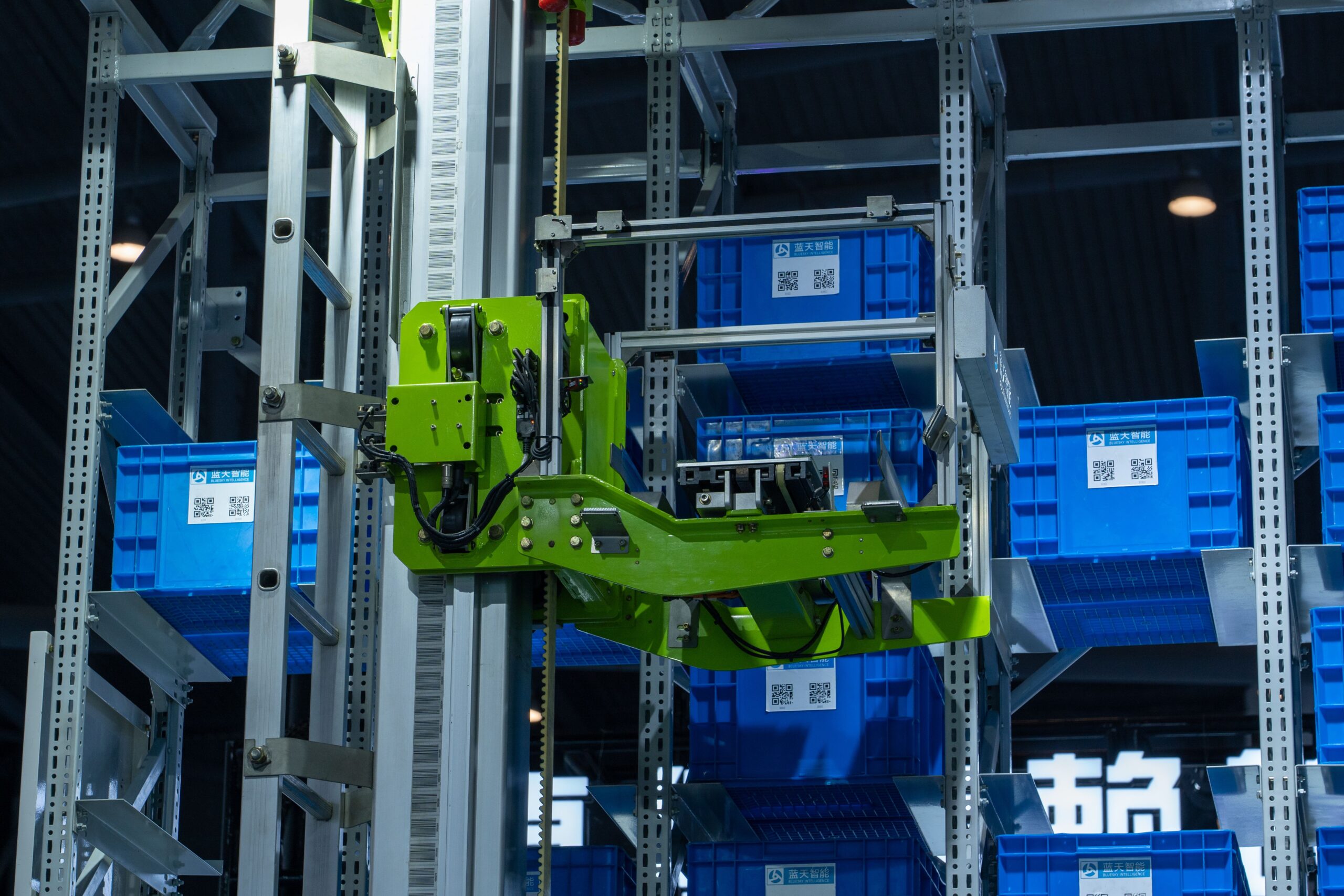
Bisedge supplies equipment and logistics services through long-term contracts. The company provides electric forklifts and other materials handling equipment together with maintenance and trained operators, allowing a warehouse or manufacturer to use the fleet without funding its purchase up front. Customers remain responsible for paying for the contracted service; the arrangement changes how the cost and operational responsibility are allocated rather than eliminating them. Fleet size, duty cycles and service coverage must be agreed for each installation.
With electric forklifts, vehicle availability depends on matching battery charge to the site’s handling pattern. A shift with frequent pallet movements can require a different charging schedule from one with long idle periods, and a truck removed for maintenance needs replacement capacity if loading is to continue. Supplying operators and maintenance alongside machines allows Bisedge to manage some of these interfaces under one contract. Actual service levels will still depend on the electrical supply, charging equipment, spare parts and the pattern of work at individual customer facilities.
Finnfund says approximately 95% of Bisedge’s existing fleet is electric. That proportion refers to its current operation, not a target for the three-country expansion. The company employs around 1,000 people, according to the financing announcement. The investment therefore supports the growth of an established operating business, rather than a proposal to launch Africa’s first electric forklift fleet.
Impact investment platform Trine has worked with Bisedge since 2021, deploying approximately €16.5 million of earlier-stage financing and providing sector support, according to Finnfund. The parties have now structured a larger institutional facility intended to accommodate Bisedge’s capital needs as its fleet expands. Earlier financing and the €10 million loan are distinct funding arrangements with different capital sources and terms. The agreement also establishes cooperation between Finnfund and Trine on scaling businesses beyond smaller impact-investment rounds.
The investment also benefits from the EDFI Renewable Energy Transition programme, using a European Union-funded guarantee under the European Fund for Sustainable Development Plus. A guarantee can support the lender’s willingness to finance a project, but the public announcement does not state that the European Union is directly paying for the forklift purchases. Finnfund remains the named senior lender to Bisedge.
Finnfund cites independently verified estimates that replacing a diesel forklift with an electric alternative in Nigeria could reduce annual emissions by approximately 37 tonnes of CO₂ per truck. The figure is a modelled comparison, not a measurement of savings from forklifts that the new loan has yet to finance. Actual results will depend on diesel use in the displaced vehicle, site utilisation, charging demand and the electricity supply. Finnfund also estimates that Bisedge’s existing fleet already avoids thousands of tonnes annually, without assigning a verified emissions outcome to this new financing decision.
Fleet electrification can also alter day-to-day working conditions. Eliminating diesel combustion at the point of use removes exhaust emissions from the loading area and reduces the need to handle diesel fuel on site. It introduces requirements for electrical capacity and charging infrastructure, which may be difficult to address uniformly across different industrial sites. Availability of charging power, service engineers and suitable spare parts therefore remains part of any credible expansion plan, rather than something the financing announcement itself resolves.
The expansion is expected to create employment as well as adding equipment. Bisedge employs around 1,000 people and has established dedicated training and recruitment opportunities for female forklift operators in Nigeria. Its objective is to increase women’s share of its workforce to at least 20%, not a level it claims already to have reached. Vehicle deployments, operator training, service reliability and measured emissions reductions will provide evidence of the project’s operating results as the loan is used; none has yet been quantified for the new financing.