IN Brief:
- HARMAN is installing an AutoStore system at its Pécs manufacturing facility to expand component storage capacity.
- The system will use 13 robots, 22,500 bins, three Carousel Ports, two Conveyor Ports, and SAP EWM integration.
- Installation is taking place during existing warehouse operations, while HARMAN has selected Kardex as a global warehouse automation partner.
HARMAN is expanding automated storage at its manufacturing facility in Pécs, Hungary, with a new AutoStore system supplied by Kardex. The installation will increase storage density and improve the movement of components between warehouse operations and production, using 13 robots, 22,500 storage bins, and five workstations connected to the facility’s warehouse management software.
The project builds on an established relationship between HARMAN and Kardex, whose vertical lift modules have already been operating at the Hungarian site for several years. Growing production requirements have increased the need for component storage capacity and more efficient handling between the warehouse and the manufacturing environment.
The new AutoStore system is designed to manage approximately 3,000 stock keeping units (SKUs). Its configuration includes 22,500 Type 220 bins, three Carousel Ports, two Conveyor Ports, and integration with SAP Extended Warehouse Management (SAP EWM), providing a combination of high-density storage and controlled access to inventory.
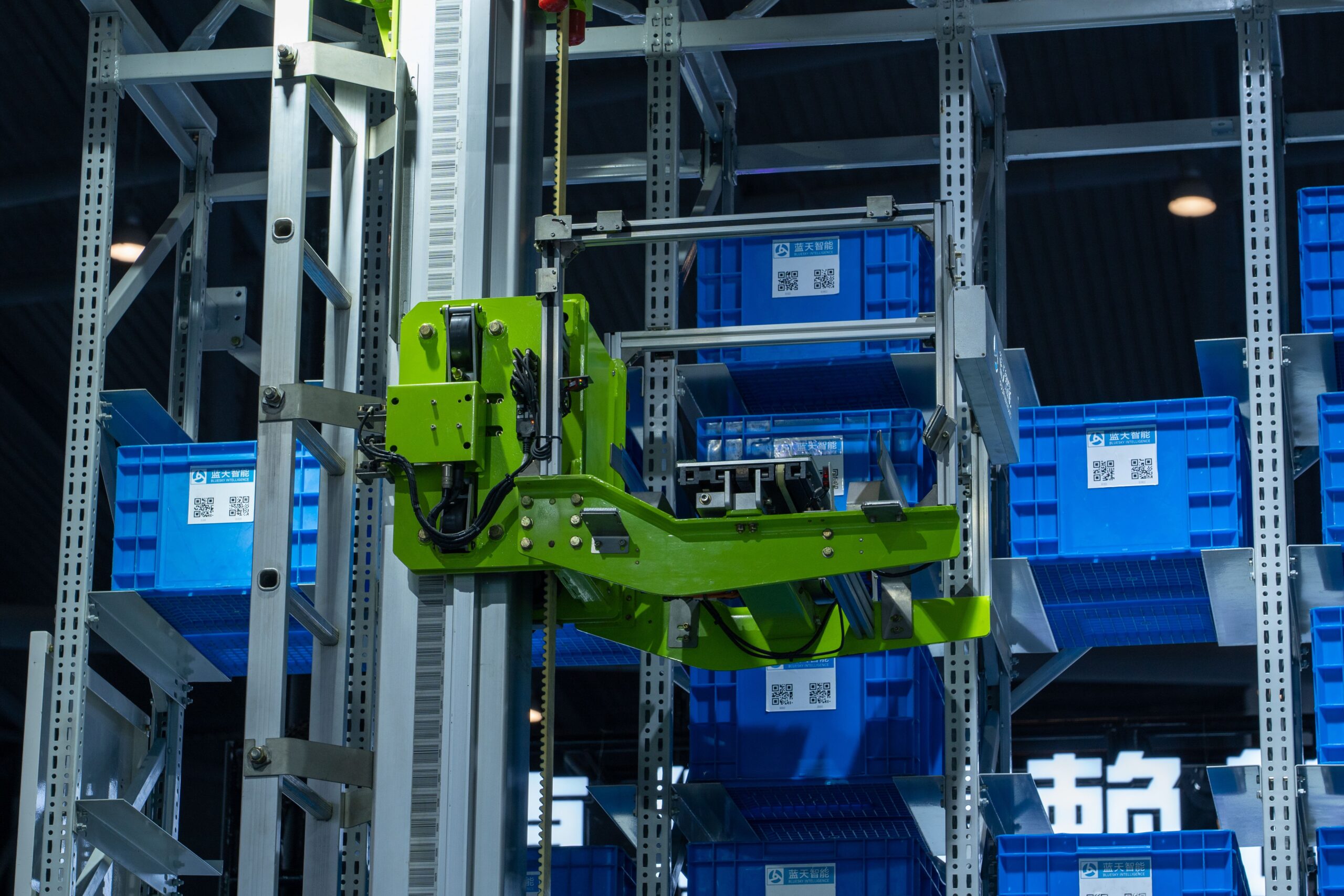
AutoStore uses a cube-based storage arrangement in which bins are stacked vertically within an aluminium grid. Robots travel along tracks above the grid, retrieving individual bins and delivering them to workstations where operators can access the required goods. The system removes much of the aisle space associated with conventional shelving and allows inventory to occupy a compact storage footprint.
Each bin has an identifiable location within the control system, allowing the automation to locate and retrieve it when required. If a requested bin is positioned beneath other containers, the robots temporarily move those above it before extracting the target bin. The displaced bins are subsequently returned to the grid as part of the retrieval process.
The layout enables storage density to be separated from the arrangement of manual picking aisles. Inventory remains within the grid until requested, while the workstations provide controlled interfaces for accessing goods. The achievable retrieval rate depends on the number of available robots, the location of required bins, and the operating characteristics of the connected workstations.
HARMAN’s system will include three Carousel Ports. These workstations use rotating arms to present bins to an operator while allowing the next container to be prepared for retrieval or return. The arrangement is designed to maintain a continuous flow of accessible inventory without requiring personnel to enter the storage grid.
Two Conveyor Ports will provide additional interfaces between the automated storage system and the surrounding warehouse. These use conveyor mechanisms to transfer bins to an accessible handling position, supporting movement between the grid and processes outside the storage structure.
The combination of port types provides different operating options for retrieving and handling materials. Their precise allocation to receiving, picking, replenishment, or production supply activities will depend on HARMAN’s final warehouse configuration, which has not been detailed in the published project specification.
SAP EWM integration will connect the automated equipment with the broader inventory management processes used at the facility. The warehouse management system maintains stock records and generates handling requirements, while the automation controller coordinates the robots and physical movement of bins through the grid.
These systems need to exchange information about requested inventory, completed movements, and the locations at which stock is held. When a component is required for production, the relevant handling instruction can be translated into a retrieval operation, with the resulting inventory transaction recorded through the connected software.
Reliable inventory records depend on the correct identification of goods as they enter storage and are subsequently withdrawn. Automated retrieval reduces manual travel within the storage area, but the accuracy of the overall stock position still relies on controlled replenishment, confirmation of movements, and appropriate handling procedures at the workstations.
The relationship between the system’s 22,500 bins and approximately 3,000 SKUs gives HARMAN multiple storage locations for its component inventory. Individual products may occupy more than one bin according to their quantity, dimensions, and storage requirements, while some containers may hold separate items where the operating configuration permits.
HARMAN has not disclosed the total physical size of the AutoStore grid or the precise amount of additional stock it will accommodate. The bin count establishes the number of storage containers included in the project, but the usable inventory volume depends on bin dimensions, the goods being stored, and the allocation of space within each container.
Robot numbers and workstation configuration also influence operating capacity. More storage bins allow additional inventory to be accommodated, while the number of retrieval robots and the arrangement of workstations determine how many handling operations can take place during a given period. The system’s actual throughput will be established through its operating configuration and subsequent performance.
Installation is taking place within an existing warehouse that continues to support manufacturing operations. Kardex and HARMAN are coordinating the project around ongoing activity, requiring equipment installation, access arrangements, and commissioning work to be managed without interrupting the facility’s established material handling processes.
The active warehouse environment creates constraints that would differ from those of an entirely new building. Installation areas must be separated from routine movements where necessary, while equipment deliveries and construction activities need to be coordinated with the movement of components and warehouse personnel.
The existing Kardex vertical lift modules remain part of the site’s established intralogistics infrastructure. Their continued presence demonstrates HARMAN’s previous use of automated storage, while the AutoStore project introduces a different system architecture and an additional level of integration with warehouse and production requirements.
HARMAN has also selected Kardex as its global automation partner for warehouse projects across multiple countries. The decision extends the commercial relationship beyond the Pécs installation and establishes a common supplier for future automation work, although the companies have not disclosed the number, locations, or implementation dates of additional projects.
Using a common technology partner across different facilities can provide continuity in engineering design, service arrangements, and system integration. Individual warehouse projects will nevertheless require configurations matched to their inventory characteristics, operating volumes, physical layouts, and production processes.
At Pécs, the installation is progressing towards go-live. The published system configuration establishes its storage and equipment capacity, while the actual picking rate, material handling performance, and operating costs will be established once the robots, workstations, and warehouse management systems are functioning together.
The next stage will be commissioning the robots, storage grid, workstations, and SAP EWM connections as an integrated operating system. Once running, the equipment will provide HARMAN with additional automated storage capacity and a more closely connected flow of components between the warehouse and manufacturing operations.