IN Brief:
- Aptiv and Comau will explore co-development of intelligent automation systems for industrial customers.
- The MoU covers advanced robotics, autonomous systems, warehouse logistics software, interconnect, and industrial safety.
- The collaboration brings together Aptiv’s perception, compute, sensing, and software portfolio with Comau’s automation deployment expertise.
Aptiv and Comau have signed a memorandum of understanding to explore co-development of next-generation intelligent automation systems for robotics, autonomous platforms, and industrial logistics.
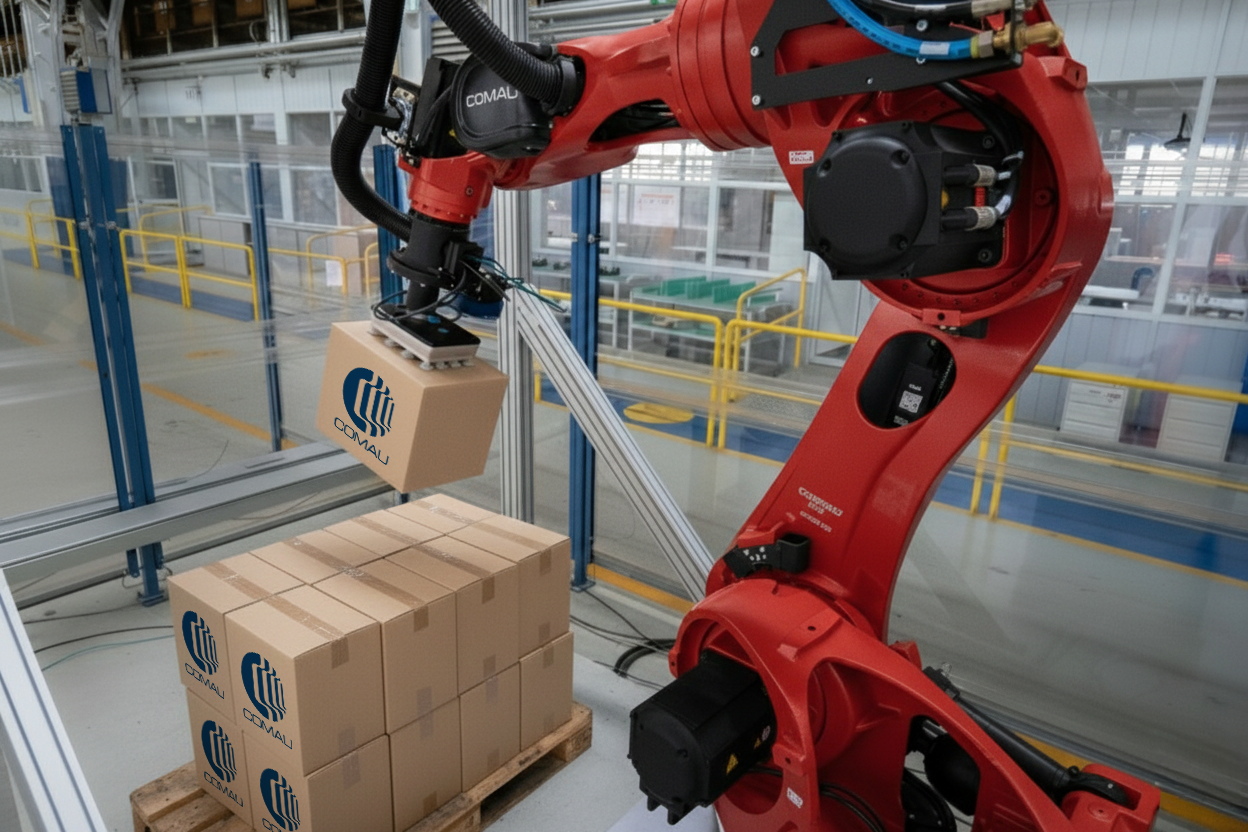
The collaboration will focus on advanced robotics, autonomous systems, and automated warehouse and logistics systems. It brings together Aptiv’s perception, compute, sensing, interconnect, and software capabilities with Comau’s robotics, industrial automation, and large-scale deployment experience.
The initial phase will examine several use cases across industrial automation. These include perception solutions and compute reference architectures for autonomous mobile robots, collaborative robots, and other autonomous platforms, validated through Comau use cases.
The companies will also explore AI-enabled warehouse and logistics automation through enhancements to Comau’s Automha logistics software, using Wind River cloud and edge technologies to support AI and machine learning at the edge. The work is intended to improve system intelligence, real-time responsiveness, and lifecycle management across logistics operations.
Other areas include ruggedised cabling, micro and modular connectors, cable assemblies for demanding robotic applications, and radar and vision-based industrial safety architectures using deterministic compute and multizone monitoring.
Jay Bellissimo, Senior Vice President and President, Intelligent Systems, Software and Services at Aptiv, said: “Robotics and industrial automation are evolving quickly, with systems that sense, think, and act in real time at the edge. Through our work with Comau, we aim to combine Aptiv’s advanced perception, compute, and software solutions with Comau’s deep expertise in robotics and large-scale industrial deployment, to help customers build smarter, safer automation without the cost and complexity that has historically slowed adoption.”
Giovanni Volpes, Chief Extended Europe Officer at Comau, said: “Comau’s planned partnership with Aptiv creates a powerful combination of complementary strengths. Together, we can deliver advanced robotic and digital solutions that help customers in many different sectors modernize operations, accelerate AI adoption, and prepare for a future where autonomy is foundational to industrial productivity.”
The MoU builds on an existing relationship between the companies. Comau has used Wind River’s VxWorks in industrial controllers, while Comau robots are already used in Aptiv manufacturing facilities. The new collaboration would extend that relationship across Aptiv’s broader portfolio of perception, compute, sensing, and interconnect technologies.
Warehouses and factories are moving towards autonomous systems that need to sense dynamic environments, coordinate safely with workers, and make real-time decisions close to the point of operation. That places greater demand on edge compute, reliable software platforms, machine perception, and safety-rated system design.
Industrial automation still faces practical barriers around integration cost, fragmented systems, and long deployment cycles. AMRs, cobots, automated storage, conveyors, and industrial robots often need to work across mixed fleets and legacy environments. Combining robotics deployment expertise with software-defined control and sensing could reduce some of the integration burden that slows adoption.
The collaboration also brings automotive-grade sensing and industrial robotics closer together. Perception, radar, compute platforms, edge software, and high-performance interconnect developed for autonomous mobility are increasingly relevant inside factories and logistics sites. As automation moves from fixed machinery towards mobile, adaptive, and AI-enabled systems, the boundary between vehicle intelligence and warehouse intelligence continues to narrow.