IN Brief:
- Decathlon and Exotec are deploying a seven-site warehouse automation programme across five European countries.
- Skyfleet standardises store replenishment architecture, software, and equipment integration across the retailer’s network.
- The programme shows how large retailers are moving from single-site automation projects to repeatable, multi-country warehouse templates.
Decathlon is scaling a standardised warehouse automation model across Europe through a seven-site programme with Exotec called Skyfleet. The roll-out covers France, the UK, Portugal, Italy, and Germany, and is designed to harmonise store replenishment flows while making it easier to deploy, support, and expand automation across multiple countries.
The significance lies in the repeatable architecture. Each site is built around a typical configuration of 150 to 200 Skypod robots, 100,000 to 125,000 storage locations, and daily handling capacity of 150,000 to 200,000 items, with full automation of inbound and outbound flows. Exotec is also integrating associated equipment including depalletisers, carton opening systems, RFID tunnels, and palletisers under one execution layer through its Deepsky warehouse execution system.
For retailers, that level of standardisation changes the economics of automation. The design phase becomes less bespoke, software can be reused across sites, and operational learning from one building can be transferred more quickly to the next. Decathlon says the model has already expanded service reach at existing sites, with Ferrières in France moving from 37 to 73 stores served, while Setúbal in Portugal has doubled order preparation capacity to 114,000 orders a day.
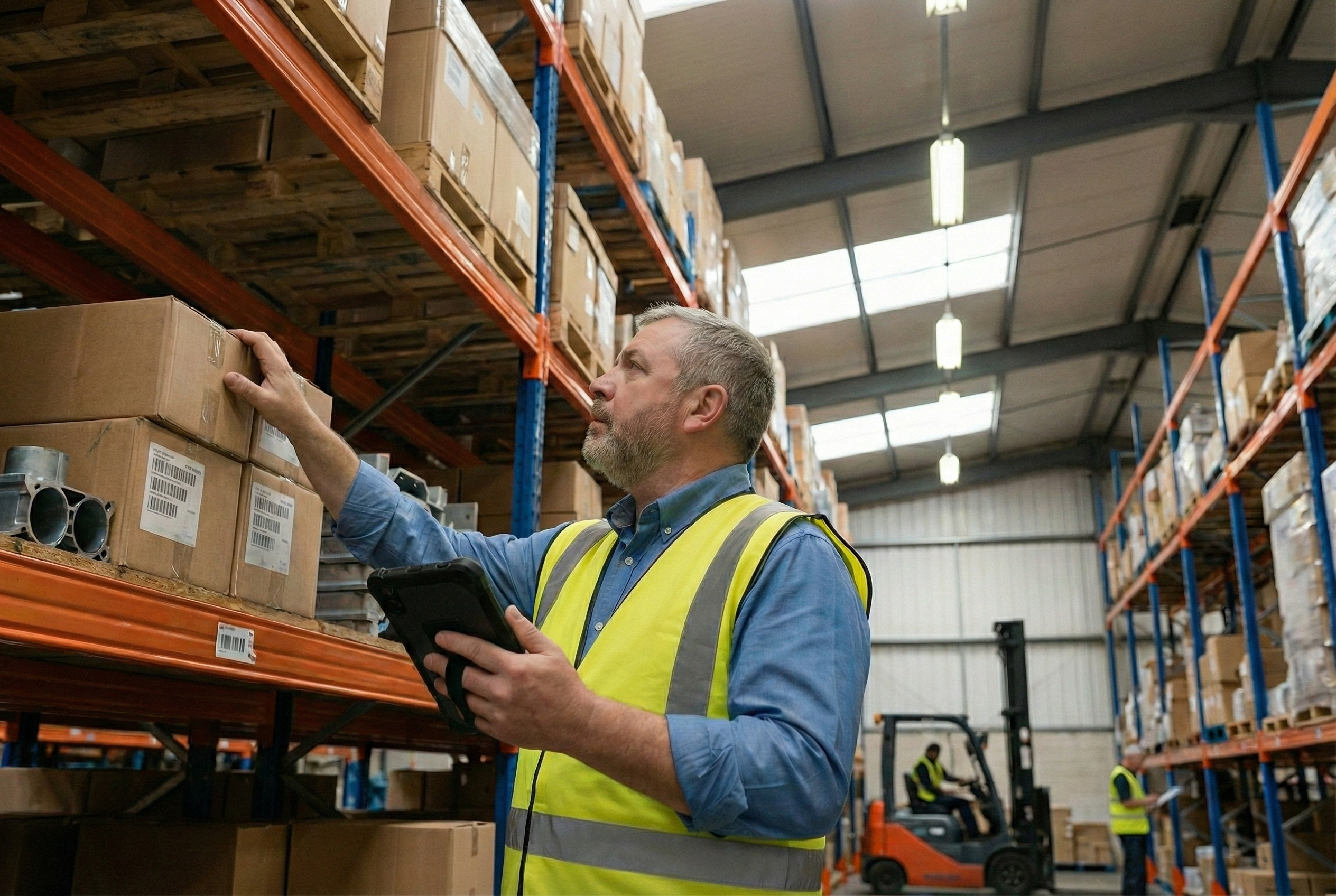
There is also a labour angle. Decathlon says walking distance for a picker at its Northampton site has dropped from 10 kilometres a day to one, while order-picking incident rates have improved. Those are the kinds of gains that turn warehouse automation from a capacity project into an operating model. Skyfleet suggests the next phase is not simply more robots, but more repeatable warehouse blueprints at network scale.