IN Brief:
- DHL is extending a dedicated pharma airfreight cold-chain network, linking more than 30 GDP-compliant hubs and gateways.
- The first corridor connects Brussels (BRU) and Cincinnati (CVG) with a dedicated Boeing 777 freighter.
- Additional lanes are planned across Europe, the Middle East, Asia, and Latin America.
DHL Group is expanding its dedicated Airfreight Cold Chain Network as it pushes more life sciences and healthcare volumes onto controlled capacity, with an initial focus on the Brussels (BRU) to Cincinnati (CVG) corridor. The company is positioning the service as an end-to-end, temperature-managed option for high-value, time-sensitive products — including biologics and cell and gene therapies — where stability, chain-of-custody, and intervention capability can matter more than pure uplift availability.
“Life sciences and healthcare companies expect cold chain solutions that are reliable, compliant, and transparent from end to end — and those expectations are rising fast,” said Oscar de Bok, CEO of DHL Global Forwarding, Freight. “At the same time, they’re looking for ways to simplify supply chains and reduce costs. Our expanded network brings together DHL Aviation’s global air connectivity, our GDP-compliant station network, and our major investments in modern, temperature-controlled facilities. The result is a more resilient, more efficient logistics backbone for customers who depend on flawless quality to deliver critical therapies to patients.”
The network is built around GDP-compliant handling — referring to Good Distribution Practice requirements for medicinal products — across more than 30 aviation hubs and gateways, with DHL aiming to reduce reliance on third-party carriers and commercial belly capacity. That approach is intended to tighten temperature control during transfers, cut exposure to capacity shocks, and reduce the probability of excursions that trigger product quarantine, investigation, or write-offs.
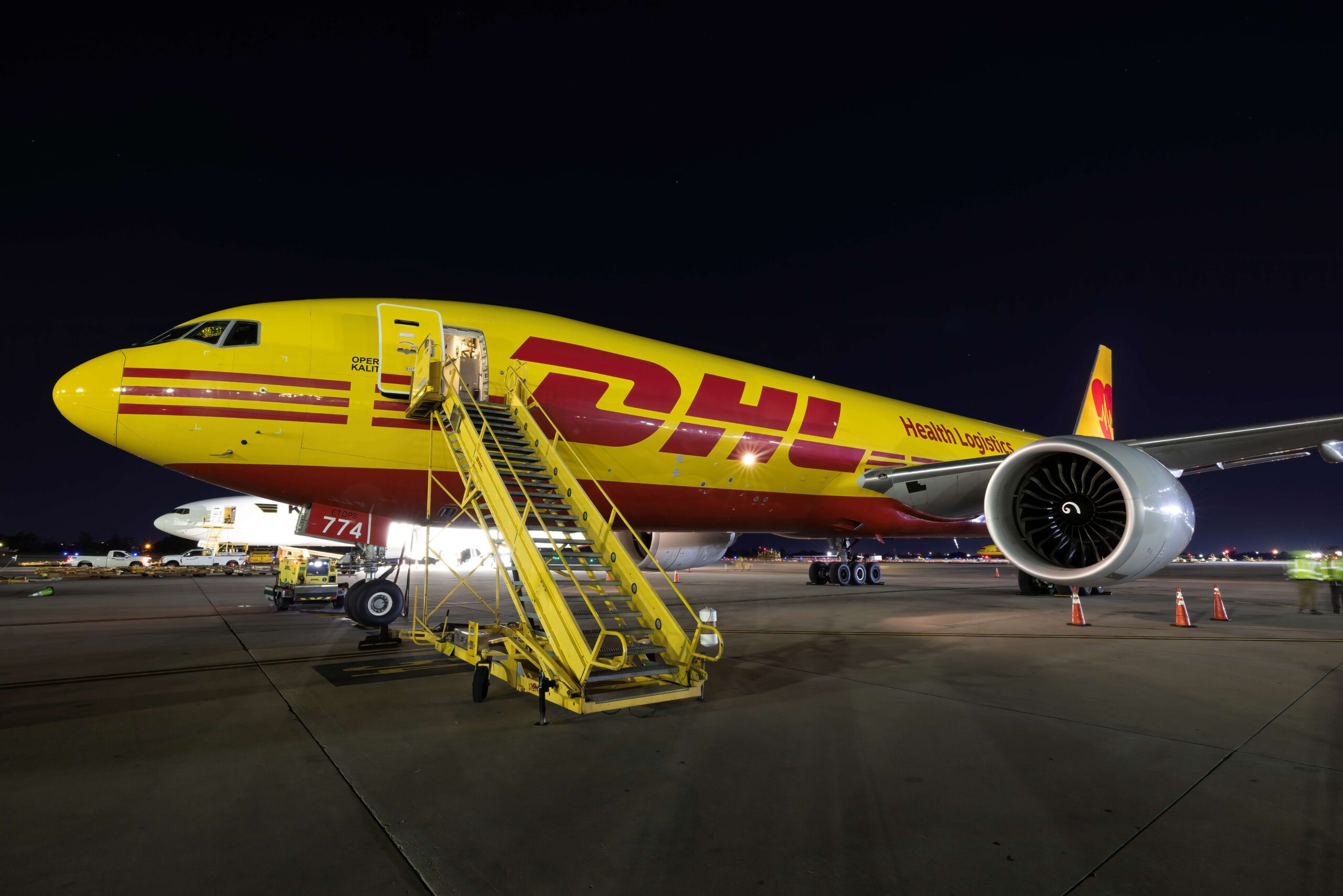
Operationally, the BRU–CVG lane is designed to connect two established life sciences clusters without routing flows through congested coastal gateways. DHL is using a dedicated Boeing 777 freighter on the sector, with the aircraft carrying a “DHL Health Logistics” livery. The branding is incidental; the practical change is predictable, bookable capacity on a corridor DHL describes as critical for pharma, including high-value, time-critical therapies that are increasingly shipped under narrow temperature bands and strict time windows.
At Brussels, the route is supported by pharma-only zones at BRUcargo totalling 45,000 square metres, providing dedicated handling space intended to limit cross-contamination risk, manage segregation, and maintain stable environments through build-up and break-down. DHL is also arguing that tighter process control reduces the need for heavy passive packaging and refrigerated containers on every movement, shifting cost and complexity away from packaging intensity and towards facility capability and operating discipline.
DHL has said further expansion will prioritise key healthcare markets including India, Singapore, Japan, South Korea, Brazil, the United States, Germany, and Ireland, as additional routes are rolled into the dedicated network.