IN Brief:
- Go-Pak has deployed an AI-enabled warehouse robot to speed container unloading and case handling at its UK operation.
- The business says unload times for heavy SKUs have fallen from around 7.5 hours to 2.5 hours per container.
- The project reflects a broader move towards robotics that ease labour pressure without requiring a full rebuild of warehouse operations.
Go-Pak has stepped further into warehouse automation with the deployment of a robot it calls Stretch, aimed at accelerating inbound handling and reducing the physical burden of container unloading. The packaging supplier says the system can photograph incoming goods, identify dimensions, and place cases onto conveyors feeding a palletiser, allowing heavier and more repetitive handling work to be automated inside the existing flow.
The numbers give the move more weight than a routine technology upgrade. Go-Pak says manual unloading of heavy SKUs previously took about 7.5 hours per container, but the new process cuts that to 2.5 hours. The robot is described as capable of handling up to 800 cases an hour, while palletisation can reach 1,200 cases an hour. For a warehouse already managing hundreds of pallets a day and multiple inbound containers during peak periods, that translates into faster dock turns and less strain on labour availability.
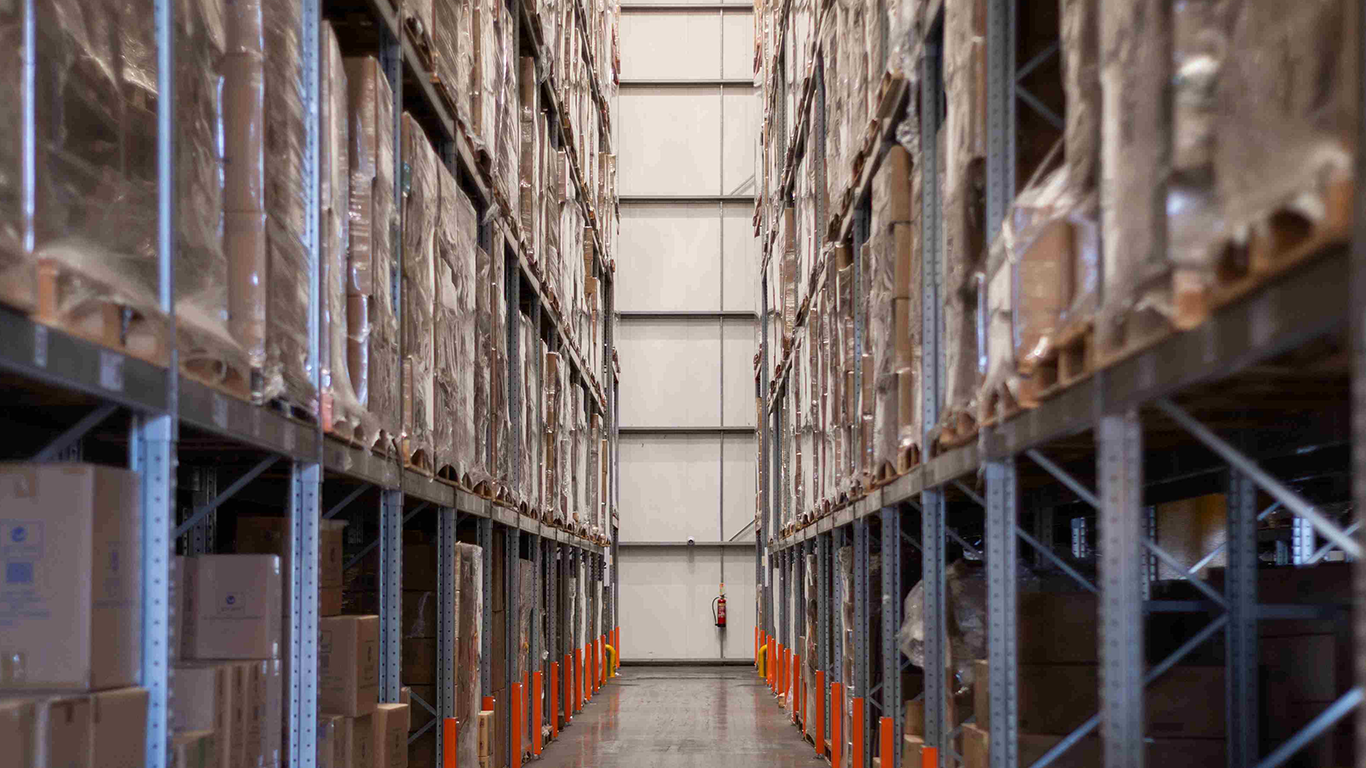
The operation itself is already sizeable. Go-Pak says its Sharpness distribution facility now supports more than 24,300 pallet spaces, while the business has previously highlighted dispatch volumes of up to 350 pallets a day. That makes inbound stability increasingly important, especially for a packaging supplier serving foodservice, cash-and-carry, and retail channels where service consistency matters as much as absolute speed.
The choice of Boston Dynamics’ Stretch platform is also telling. Stretch is designed to automate case movement without the kind of heavy fixed infrastructure that puts some operators off warehouse robotics. Go-Pak appears to be using that flexibility to add capacity without turning the warehouse into a full-scale automation project. That is likely to be the more common route for mid-sized operators: targeted robotics where the bottleneck is obvious, labour-intensive, and repeatable enough to justify the spend.