IN Brief:
- Supply chain risk teams often rely on partial data from third-party ports, transport routes, and industrial facilities.
- Persistent satellite observation and automated pattern analysis can highlight activity missed by cooperative tracking systems.
- Network-level intelligence could support earlier decisions when disruption begins to emerge across connected infrastructure.
By Eric von Eckartsberg, Chief Revenue Officer at EarthDaily
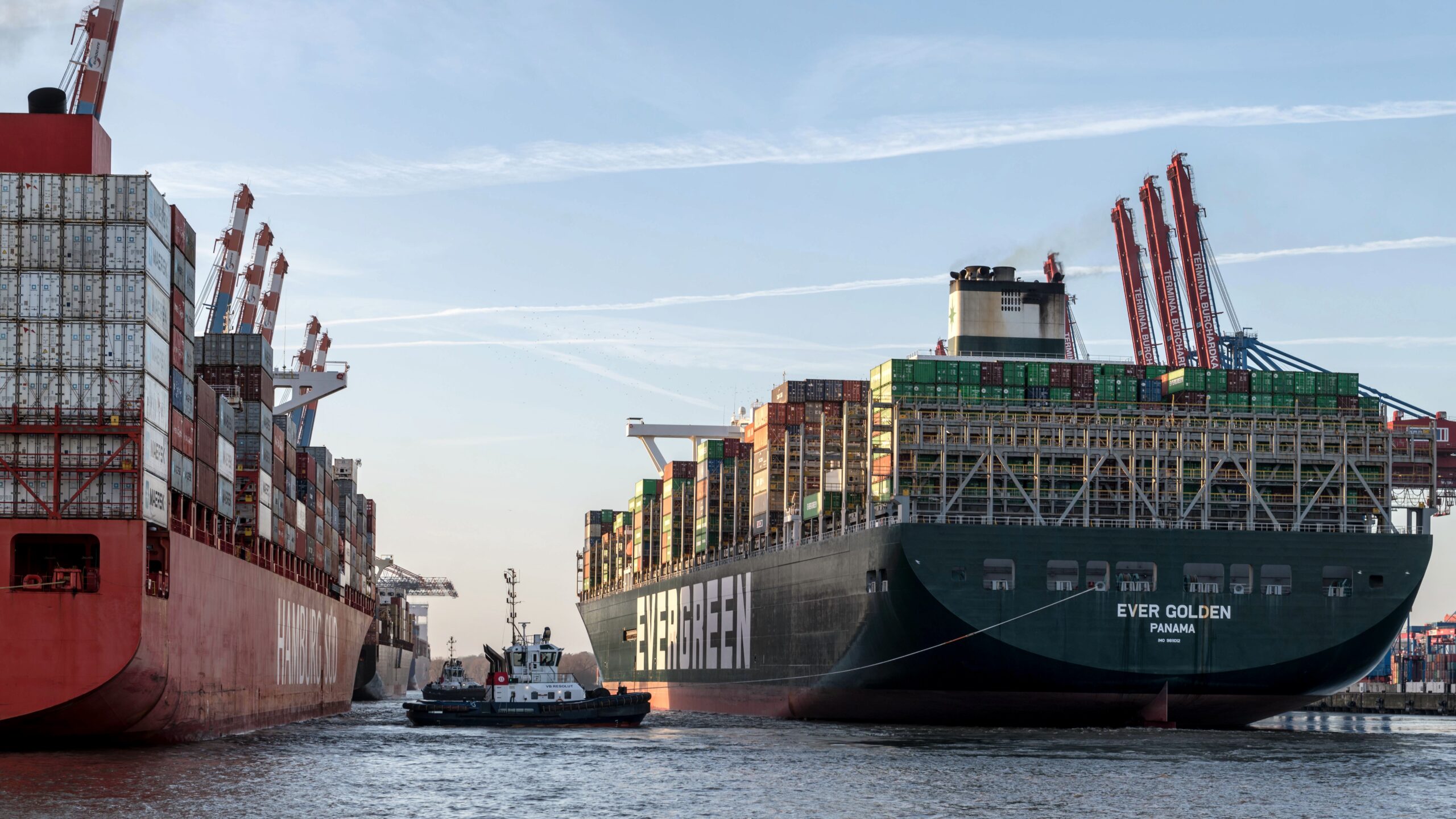
Every day, thousands of vessels transit the world’s ports and open oceans. Aircraft move through hundreds of airfields. Goods and commodities flow across global supply chains.
The companies operating vessels, aircraft and facilities often have detailed visibility into their own assets. The wider network of supply-chain teams, insurers, investors, commodity traders and governments does not. Their decisions depend on activity across third-party ports, transport routes and industrial facilities that sit outside their operational systems.
Most intelligence and monitoring systems were designed to track specific assets in specific places, leaving organisations to assemble a network-level view from fragmented data. For organisations looking across multiple operators and jurisdictions, visibility must be assembled from shipping databases, manifests, cooperative tracking signals and occasional satellite observations. Each provides part of the picture, but none offers a consistent view of the wider network.
Reconciling these fragmented sources creates what can be described as an “interpretation tax”: the resource-heavy, manual process of turning raw observations into usable intelligence.
The broader stakes are significant: supply chain disruptions cost organisations an estimated $184 billion annually, as detailed in the 2025 J.S. Held Global Risk Report, while McKinsey research shows that disruptions lasting a month or longer occur every three to four years on average and could erase nearly half of one year’s profit over a decade.
The problem with watching selectively
The conventional model for global monitoring was shaped by the constraints of legacy technology: watch the known chokepoints, track the flagged vessels. This assumes that industrial activity is predictable and that we already know where to look. In reality, modern supply chains are volatile and increasingly opaque.
Operational blind spots include specialised airfields supporting remote mining operations and coastal slips essential to offshore energy. These are high-value, time-sensitive nodes of our global network that legacy systems simply aren’t built to see.
The rise of vessels operating without active transponders, which can be disabled for operational or safety reasons in high-risk corridors, means that complete reliance on reported AIS data is no longer a viable operational strategy. The “last mile” of industrial logistics often depends on smaller commercial vessels that are not legally required to carry Class A transponders.
Monitoring based on cooperative signals and predefined areas leaves activity outside those boundaries unseen. Daily, repeatable observation across ports, transport routes and industrial sites creates a baseline that reveals when activity begins to depart from established network patterns.
This wider view complements the live systems used by vessel owners, airlines and port operators. It gives organisations that do not control those assets an independent view of the activity on which their decisions depend.
The deeper shift is in the unit of observation. Traditional systems follow individual assets and sites, while disruption propagates across connected networks. Monitoring must therefore extend to the wider system and identify where established patterns begin to change.
Solving the interpretation tax
There is a distinction between data and intelligence. For many industrial organisations, more data has become a liability. An analyst or risk team does not have the time to manually verify five thousand “dots on a map” just to find the five that matter.
The industry has treated scale, repeatability and automated interpretation as separate upgrades — more coverage here, faster processing there. They aren’t separable. A system that collects broadly but interprets manually just produces more snapshots, faster. A system that interprets well but only watches known chokepoints still misses where disruption actually starts. The standard worth building toward is one where both hold at once: persistent enough to replace the snapshot, and automated enough that the persistence doesn’t become its own burden.
Persistent observation must be paired with automated pattern-of-life analysis. By comparing today’s data against a baseline of normal activity, anomalies surface automatically, while environmental context such as terrain and ground conditions helps determine where activity can occur. A vessel calling at an unusual port or an aircraft appearing at a dormant airfield becomes a prioritised signal rather than a needle in a haystack.
From imagery to actionable intelligence
Industrial organisations need Earth observation to function like a utility. For maritime and airfield monitoring, operational intelligence should mean structured observation packages: classification, confidence scoring, movement, and visual context, delivered within hours of the satellite pass. At the pace global trade moves, the difference between a three-hour alert and a next-day report is often the difference between a decision and a damage assessment. These outputs must move directly into operational workflows, alerting systems, logistics planning, and risk assessment.
Global trade cannot be understood through asset-level snapshots alone. Organisations need a network-level view that can identify early signals across infrastructure and activity they do not control. Moving from evidence after the fact to evidence while it can still inform a decision is the shift that turns monitoring into intelligence.