IN Brief:
- An unnamed parcel delivery business has leased 145,454 sq ft at Baytree Leeds.
- Unit 3 is specified with 15m clear internal height and 15 dock level doors.
- The scheme sits by the M621 and M1, with further space still available.
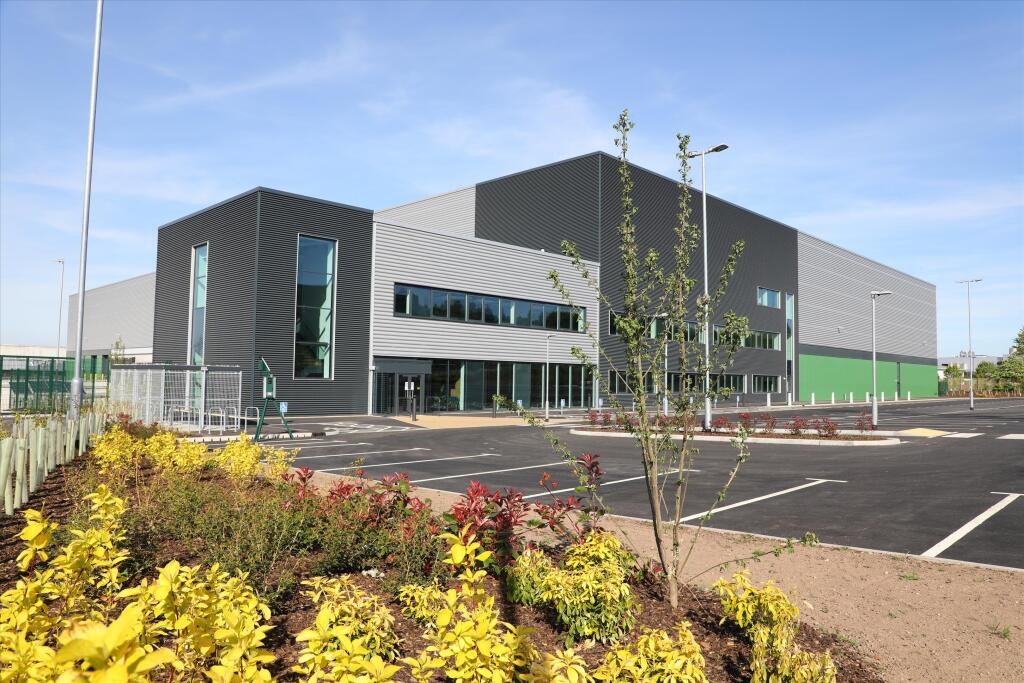
An unnamed UK parcel delivery business has secured a long lease on a 145,454 sq ft warehouse at Baytree Leeds, taking Unit 3 at the Stourton logistics development as its main northern hub.
The deal is a significant letting for the Leeds market because it is not a legacy shed being recycled into parcel use. Unit 3 is a modern, high-specification building designed around high-throughput distribution, with 15m clear internal height, 15 dock level loading doors, and three level access loading doors. The site provision includes 37 HGV spaces, 171 car parking spaces including overflow, and an 800 kVA high-voltage power supply — capacity that supports both automation loads and fleet electrification planning where it is operationally viable.
Sustainability credentials are a core part of the offer rather than a bolt-on. The building is marketed with EPC A and BREEAM “Outstanding” status, the top tier in the BREEAM rating framework. On-site measures listed for the unit include roof-mounted solar PV, permeable paving to manage storm conditions, remote access to building management systems, and facilities designed around occupant wellbeing, including refreshment stations and outdoor amenity areas.
Location remains the hard constraint. Baytree Leeds sits around three miles south-east of Leeds city centre, adjacent to junction 7 of the M621 and close to junction 44 of the M1, placing it directly on the motorway geometry parcel operators rely on to hit cut-offs across Yorkshire, the North East, and onward trunk routes. The Leeds Rail Freight Terminal lies immediately to the north of the site, with a purpose-built Royal Mail depot nearby and national occupiers in the surrounding logistics cluster.
Casey Ferguson, development manager for Baytree Developments, said: “Securing a long-term commitment from a leading national operator is a strong endorsement of the scheme and its strategic location.” Marketing agents have also indicated that the deal set a new headline rent for a building of this scale, although terms were not disclosed.
For the wider Baytree Leeds scheme, the letting reduces available Grade A space in a market where operators increasingly want the combination of clear height, yard depth, and power capacity that can support automation and higher trailer volumes without a redesign. Unit 1 at Baytree Leeds, around 76,000 sq ft, remains available, while Unit 2 is positioned as a build-to-suit opportunity with detailed consent for a significantly larger footprint.
The tenant name is not public, but the building profile fits the operational direction of the sector: larger, fewer hubs, more cross-dock capability, and less tolerance for inefficiency that shows up as late linehauls. This letting adds another data point that the best-located, best-specified sheds are still getting long commitments, even when the wider parcel market is no longer in pandemic-era growth mode.