IN Brief:
- X-Press Feeders is deploying Portchain Connect to improve berth alignment with terminal operators.
- The platform provides real-time schedule exchange, digital ETA and ETD alignment, notifications, and system integration.
- Earlier berth coordination is intended to reduce waiting and support more reliable Just-In-Time vessel arrivals.
X-Press Feeders is deploying Portchain Connect across its feeder operations to give carrier and terminal planners a shared digital process for exchanging vessel-call information and aligning berth timings.
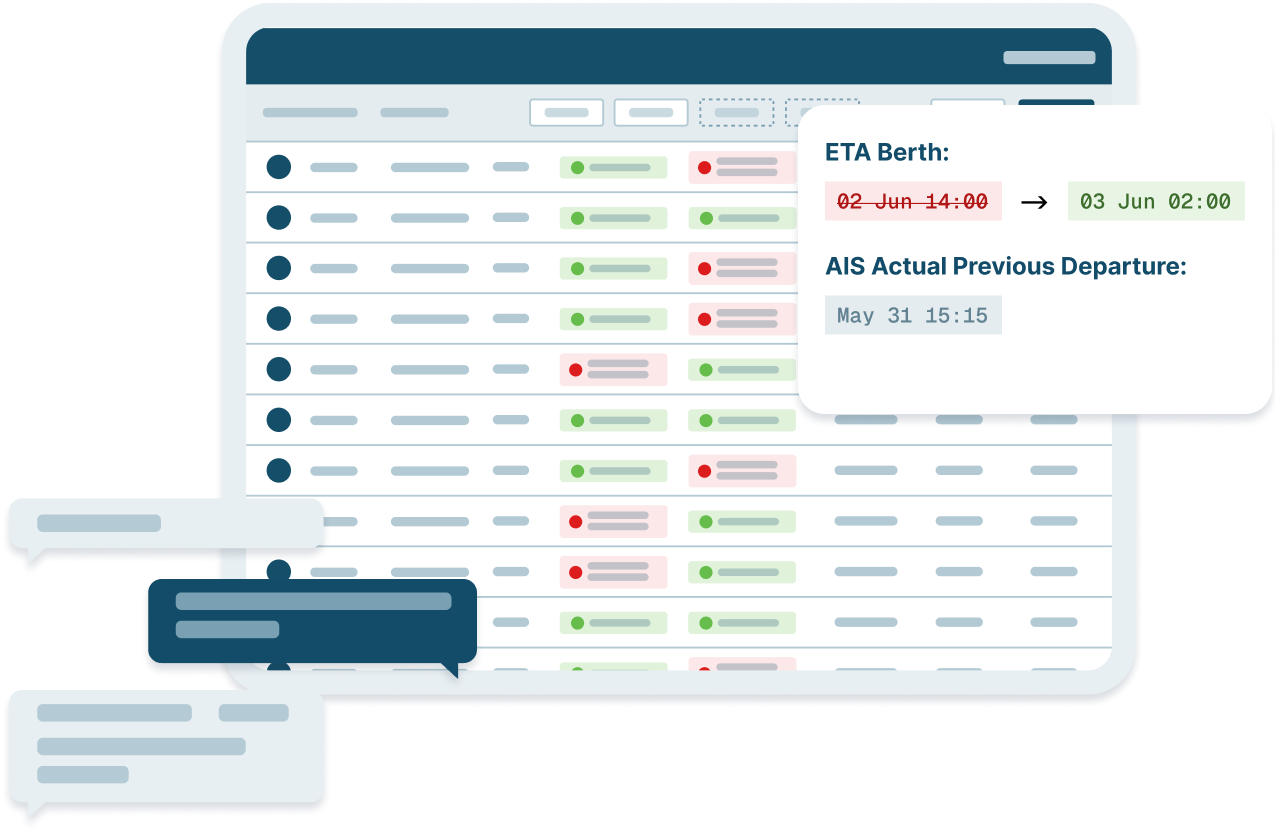
The platform uses real-time schedule data to coordinate estimated arrival and departure times between shipping lines and terminals. Changes can be recorded in a common system rather than being reconciled repeatedly through emails, spreadsheets, and telephone calls as vessel schedules move.
Portchain describes the process as a digital handshake between the two parties. The agreement is not a contractual berth guarantee, but it creates a common planning reference and a traceable record of how expected arrival and departure timings change during the approach to a port call.
The deployment is intended to improve Just-In-Time arrival planning, allowing a ship to receive a more realistic berth window earlier in its voyage. Where sufficient flexibility exists, the vessel can adjust speed rather than arriving at a congested port and waiting offshore for a berth to become available.
X-Press Feeders operates an extensive network built around short-sea and transshipment connections, calling at around 180 ports with a fleet exceeding 100 vessels. Its published figures show throughput of 5.9 million TEU during 2025, creating a large volume of recurring berth-planning interactions between feeder services and terminal operators.
Feeder reliability is particularly sensitive to those interactions because a port call often sits between other scheduled connections. A late arrival can cause containers to miss a mainline sailing, while an early vessel that has no available berth simply transfers delay from the voyage to the anchorage.
Closer digital alignment cannot remove congestion, weather disruption, or delays elsewhere in a rotation, but it can reduce the time planners spend making decisions from outdated information. A terminal that changes a berth window can update the carrier earlier, while a delayed vessel can give the terminal more time to alter its own working sequence.
Portchain Connect supports API and EDI integration as well as direct use through its interface. That allows vessel-call information to be exchanged with existing terminal and carrier systems rather than requiring planners to re-enter every change manually into a separate platform.
The software also provides notifications, AIS tracking, change logs, and alignment indicators intended to identify port calls that require intervention. The operational benefit depends on the accuracy and timing of data supplied by both parties; a common platform does little if one side continues working from information that has already changed.
Fuel use provides another incentive. Portchain states that better berth-on-arrival performance and vessel speed management can reduce bunker consumption and associated emissions, although its claimed 6% to 14% range will vary with route length, congestion, weather, vessel characteristics, and the amount of speed flexibility available on an individual voyage.
The efficiency case is particularly relevant to feeder shipping because schedules contain many relatively short legs. There may be less time to recover from a delay between neighbouring ports, while a late connection can affect cargo moving onto much longer mainline services.
Terminal planning has similar constraints. Berth allocation has to account for vessel size, crane requirements, expected container moves, nautical restrictions, labour, yard conditions, and delays affecting ships elsewhere in the sequence. Better schedule information improves that calculation without changing the physical capacity of the quay itself.
The partnership also extends Portchain’s network model. Its Connect product is designed to give carriers access to multiple terminals through a common connection rather than establishing a separate planning interface for every port, reducing the integration burden as a shipping line adds more participating facilities.
X-Press Feeders has linked the project to its wider work on fuel efficiency and decarbonisation. Those operational measures sit alongside investment in alternative-fuel vessels: one changes the energy source, while the other tries to reduce the amount of energy wasted through avoidable waiting and inefficient voyage speed.
The commercial test will be schedule performance rather than the volume of data exchanged. If berth changes reach vessels earlier and terminals receive more dependable arrival information, the useful measures will be lower waiting time, fewer missed connections, steadier crane planning, and better vessel utilisation across the feeder network.