IN Brief:
- ParcelHero correctly identified the shift towards e-commerce, lockers, and delivery-led convenience, but overstated the pace of physical retail decline.
- The real transformation has been operational: stores now function as hybrid retail and fulfilment assets within wider last-mile networks.
- Ten years on, the high street has not died — it has been forced to retool around speed, flexibility, and returns infrastructure.
When ParcelHero published 2030: The Death of the High Street in 2016, it predicted that half of existing UK shop premises would disappear between 2020 and 2030, that e-commerce would take around 40% of all retail spend by 2030, and that supermarkets’ physical-store share would slump from 42% to 24%. It was an arresting thesis, and exactly the kind of report title logistics people tend to distrust on sight. Ten years on, the verdict is mixed: ParcelHero was broadly right about the direction of travel, but far too dramatic about the speed, the casualties, and Amazon’s role in grocery.
Online retail did keep climbing, but not with the clean, relentless momentum the report implied. The ONS said internet sales accounted for 28.2% of total UK retail sales in January 2026. That is still well short of ParcelHero’s 40% end-point, though close enough to show the report was not hallucinating the shift — merely mistiming it, and underestimating how stubborn physical retail would remain.
The bigger miss was the idea of a universal retail graveyard. PwC said 2024 saw 12,804 closures and 9,002 openings across Great Britain, while Savills reported high street vacancy at 13.6% in Q2 2025, with footfall up 1.1% year on year and the market showing more churn than widespread financial stress. That is not a picture of rude health, but it is a long way from the report’s forecast that half the estate would vanish on schedule. ParcelHero was on firmer ground with department stores, however: Debenhams closed its last UK stores in May 2021, and survives now as an online-only brand.
Grocery is where ParcelHero becomes most interesting, and most wrong. It argued that Amazon Dash and Fresh could drive Amazon to 20% of the online grocery market by 2020, and that superstores would become “inconvenience stores”. Instead, Amazon shut down Dash Buttons in 2019, Reuters reported in September 2025 that Amazon’s UK grocery market share remained below 1%, and the group said it would close all 19 Amazon Fresh stores in Britain, converting five to Whole Foods. Meanwhile, Tesco’s 2024/25 results showed online sales growing 10.2% to £6.8bn, with online accounting for 13.5% of UK sales and Whoosh extended to more than 1,500 stores, including 42 large sites. The big stores did not disappear; they adapted into hybrid retail and fulfilment assets.
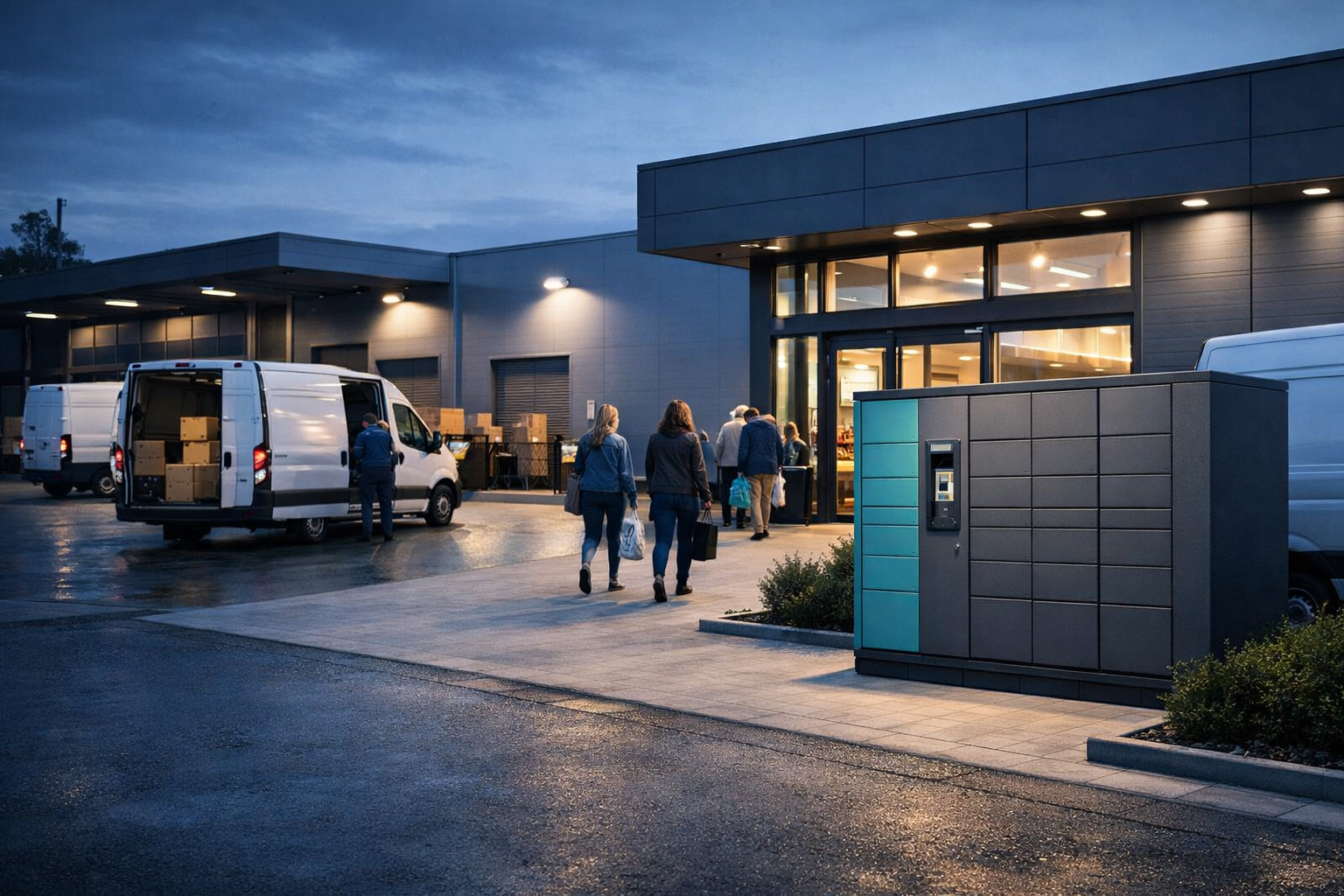
ParcelHero’s strongest call was on convenience infrastructure. The report said home deliveries, collection points, and lockers would strip away the store’s old convenience advantage. On that score, it was ahead of the curve: InPost ended 2025 with more than 19,200 out-of-home points in the UK, including 13,721 lockers, while Kantar said online grocery reached 12.2% of Christmas sales and large-format supermarkets still held 60.3%.
The real outcome, then, was convergence rather than extinction. Retail did not simply move online. It became a network business, where stores, lockers, rapid delivery, and returns infrastructure now sit in the same operating model — which is a less dramatic story than “the death of the high street”, but a far more useful one for supply chain readers.