IN Brief:
- dnata will invest about A$32 million in a dedicated cargo terminal at Western Sydney International.
- The 5,000m² facility will include a semi-motorised materials handling system and specialist capability for time- and temperature-sensitive freight.
- The project adds new capacity to a fast-growing freight corridor as Western Sydney builds out its airport, intermodal, and logistics estate.
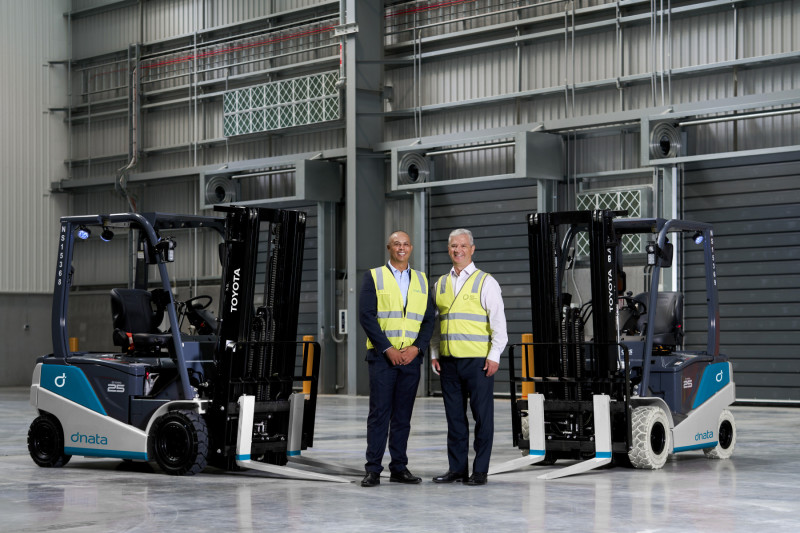
dnata is investing around A$32 million in a dedicated cargo terminal at Western Sydney International Airport, with freighter operations scheduled to begin in July 2026. The company will operate from a 5,000m² warehouse in the airport’s 24-hour Cargo Precinct, supported by a further 4,000m² of surrounding land. Western Sydney International will hand over the site as a cold shell, with dnata responsible for the fit-out, infrastructure installation, and the addition of a semi-motorised materials handling system.
About A$6 million of the investment is being directed towards specialist equipment and operational technology, including systems designed to support pharmaceuticals and other time- and temperature-sensitive consignments. At maturity, the facility is expected to handle up to 60,000 tonnes of cargo a year. dnata says the operation will create around 50 direct jobs in its initial phase, with further activity expected across freight forwarding, cargo handling, transport, and support services in Western Sydney as volumes build.
The project strengthens the cargo proposition at a new airport that is being developed with freight in mind from the outset. Airports that bolt cargo onto a passenger-led model often inherit constraints around landside access, terminal design, and operating windows. Western Sydney is taking the opposite route, building a 24-hour freight precinct into the wider shape of the airport and linking it into one of Australia’s most active industrial and distribution corridors.
That creates room for handlers to design operations around current network demands rather than around legacy layouts. For dnata, that means building acceptance, screening, build-up, breakdown, and specialist handling processes into a purpose-shaped environment. For airlines and forwarders, it offers another gateway option in a market where flexibility has become more valuable across healthcare, e-commerce, perishables, and general freight flows.
The site also sits within a broader shift in Australian logistics infrastructure, where cargo facilities are being planned as part of much larger freight ecosystems rather than as standalone airport assets. Western Sydney’s Aerotropolis, surrounding logistics parks, and connections into road and intermodal networks give the terminal a wider role than local uplift alone. The more effectively those links are built out, the more likely the precinct is to develop into a meaningful alternative routing and distribution point rather than a peripheral overflow site.
Air cargo operators have spent the past several years dealing with a freight mix that has become both more demanding and less predictable. Healthcare products need tighter handling control. E-commerce creates sharp peaks and service pressure. Ocean freight disruption can force urgent mode shifts with little warning. Facilities able to manage multiple freight types without excessive rehandling or layout inefficiencies are in a better position to absorb that volatility.
dnata’s investment places that capability inside a market where cargo demand is unlikely to become simpler. Western Sydney International still has to prove how quickly it can convert planned infrastructure into dependable throughput, but the direction is clear. Cargo is being treated as core airport infrastructure rather than secondary activity, and handlers are being given the space to build accordingly.