IN Brief:
- DHL Supply Chain is adding 10 dedicated North American data centre logistics sites.
- The network will provide more than 7m sq ft of specialist warehouse capacity in 2026.
- Services include white-glove handling, rack pre-configuration, and warehouse-to-site transport.
DHL is expanding its North American data centre logistics infrastructure with 10 dedicated warehouse sites totalling more than 7m sq ft of capacity.
The DHL Supply Chain sites are scheduled to go live in 2026 and are designed for hyperscale and colocation data centre operators accelerating infrastructure deployment. The facilities will provide white-glove handling, rack configuration services, and specialised warehouse-to-site transport.
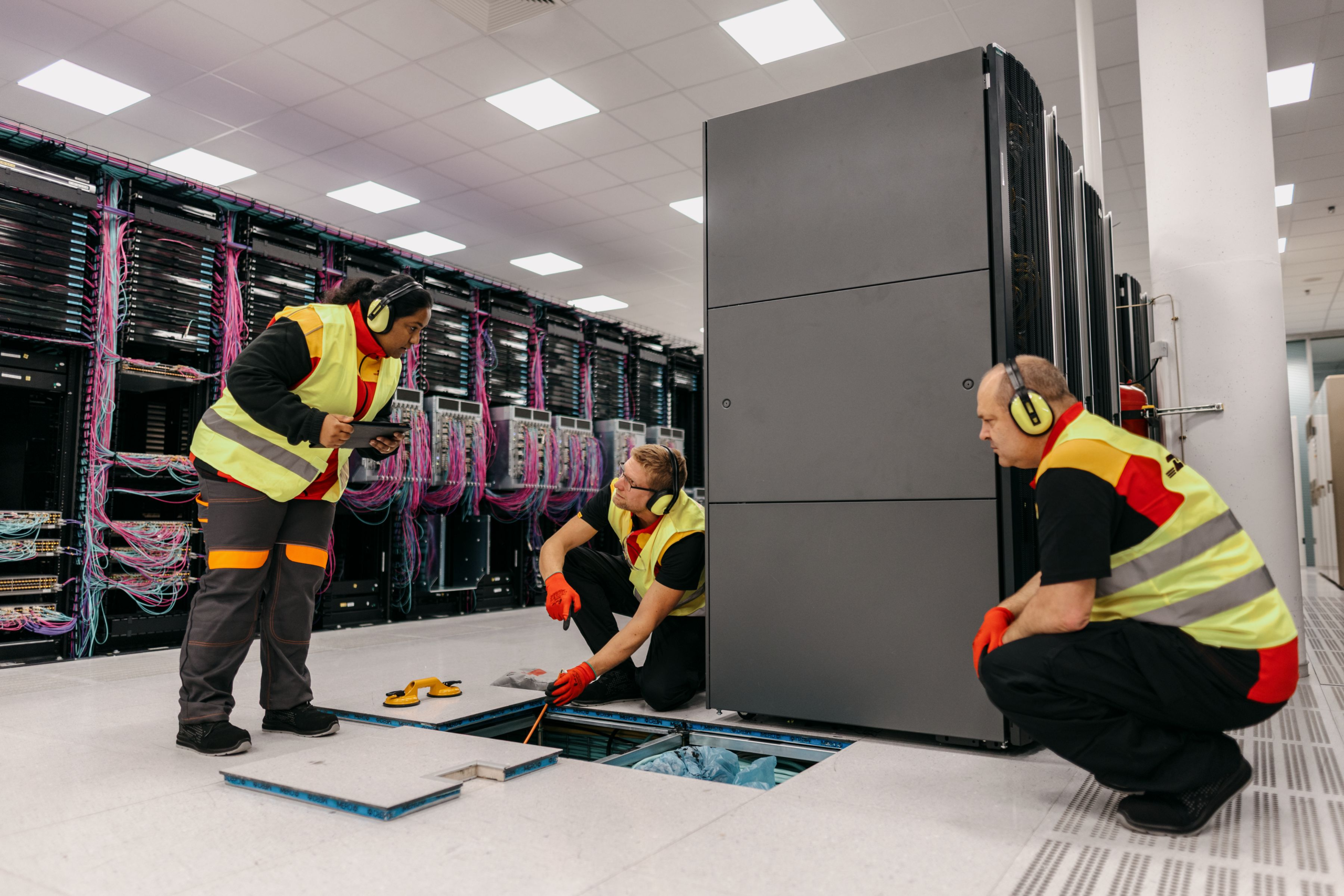
The network is intended to handle high-value IT hardware, including servers, power modules, and networking systems. Rack configuration services will move integration and testing activity out of live construction environments and into secure warehouse settings, reducing on-site complexity and lowering the risk of installation delays.
Specialised transport will support the movement of oversized or sensitive components through congested metro areas, remote greenfield locations, and active construction zones. DHL Global Forwarding will support international movement of hardware into the North American network.
The expansion follows rapid growth in data centre construction driven by AI, cloud computing, and enterprise digital infrastructure. Data centre logistics is becoming a dedicated industrial supply chain category with specific handling requirements, security expectations, build schedules, and service-risk profiles.
The operational challenge differs from standard warehouse distribution. A delayed server rack, power module, or network component can affect a wider construction sequence. Data centre projects involve tightly timed contractor activity, specialist installation windows, and expensive assets that must be protected from shock, static, moisture, misrouting, and theft.
White-glove logistics is becoming part of the construction process. Configuring racks and preparing equipment in controlled warehouse environments reduces the amount of work performed inside congested data halls or construction sites. That can improve sequencing, reduce rework, and protect equipment before final installation.
The 7m sq ft footprint also shows the physical scale behind digital infrastructure. Data centres are often measured in compute power, megawatts, or AI capacity, but their growth depends on heavy, fragile, and globally sourced equipment moving through logistics networks. Servers, cabinets, cooling systems, switchgear, batteries, and power infrastructure all require planning before a facility goes live.
The preference for end-to-end logistics provision is also strengthening. Data centre operators are dealing with global manufacturing networks, compressed build schedules, and cross-border compliance requirements. Fragmented provider models can increase handover risk where high-value assets move between air freight, ocean freight, storage, configuration, road transport, and site delivery.
The expansion also shows how specialist industrial demand is reshaping warehouse use. Large-scale facilities are no longer serving only retail, e-commerce, or general manufacturing inventory. They are increasingly being used as staging, configuration, and mission-critical deployment centres for digital infrastructure.
Hardware supply chains for data centres span Asia, Europe, and the Americas, while deployment markets compete for components, technical labour, energy connections, and transport capacity. Dedicated logistics networks give operators more control over build schedules in the face of equipment scarcity and infrastructure constraints.
DHL’s investment gives data centre logistics a larger dedicated platform in North America and strengthens a model built around warehouse capacity, technical services, secure handling, and project delivery discipline.