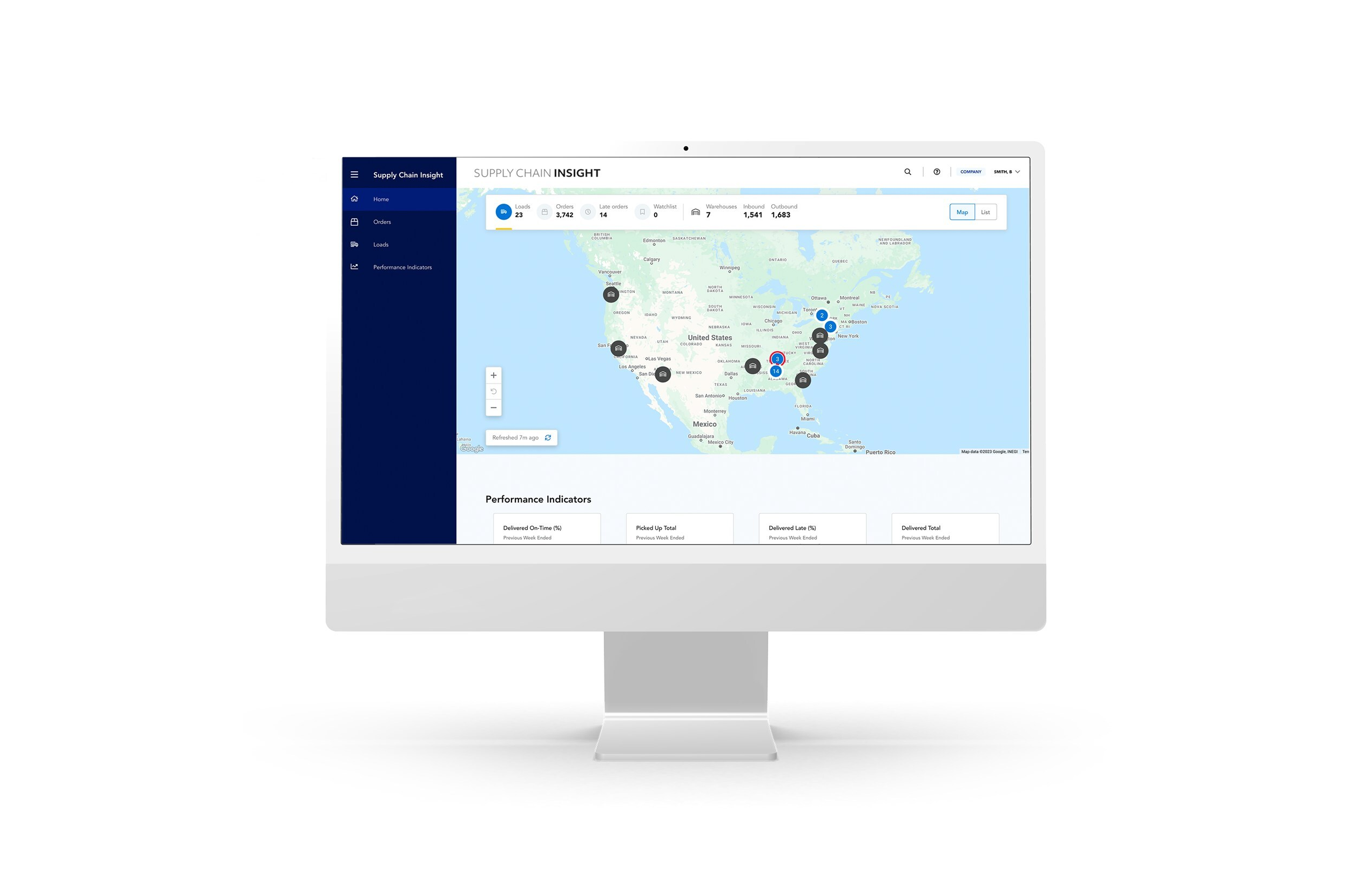
IN Brief:
- Penske Logistics has launched Supply Chain Insight for real-time supply chain visibility.
- The platform connects transportation, warehouse, partner, load, order, inventory, and KPI data.
- The system includes a mobile app, more than 85 KPIs, and an AI assistant for natural-language queries.
Penske Logistics has launched Supply Chain Insight, a cloud-based platform and mobile application designed to give customers a unified view across transport and warehouse operations.
The platform connects load, order, inventory, warehouse, carrier, and partner data in a single environment. It allows users to monitor shipments, review item-level order information, track warehouse status, access documents, and measure performance through more than 85 pre-built and customisable key performance indicators.
Supply Chain Insight has been built on Microsoft Azure and Snowflake. Penske said the system includes an AI assistant that allows users to ask natural-language questions about operations rather than relying only on dashboard navigation or manual report requests.
The platform sits above Penske’s ClearChain operational technology layer. ClearChain manages execution data, while Supply Chain Insight aggregates that information with external warehouse, carrier, and partner data to create a broader network view.
Supply chain visibility has become a crowded technology category, but operational fragmentation remains widespread. Transport systems, warehouse platforms, customer portals, spreadsheets, emails, and third-party carrier tools often hold different pieces of the same transaction. Delays, order changes, inventory mismatches, and service failures can become harder to resolve when teams have to move between systems before acting.
Penske’s platform is designed to connect those operational layers. A single view across transport and warehousing can improve exception handling by showing whether a delivery problem is caused by carrier performance, order status, inventory availability, warehouse release, or upstream supplier activity.
The mobile application is also significant. Logistics decisions are not always made from a desk, particularly in warehouse, fleet, regional management, and customer service roles. Mobile access can speed up response when users need to check shipment status, investigate an exception, or handle a customer escalation away from the main system interface.
The inclusion of partner data broadens the platform’s usefulness. Many supply chains involve a mix of owned assets, 3PL-managed facilities, outside carriers, and customer-specific networks. Visibility tools that stop at one organisation’s boundary often fail to show the full cause of disruption.
The AI assistant brings Penske into a wider software trend, as logistics providers add conversational access to operational data. The value of that function will depend on data structure, permissions, response accuracy, and whether users can move from a query to an action without creating new manual steps.
Supply Chain Insight gives Penske a stronger digital layer around its logistics services. For customers running complex networks, the platform offers a way to connect performance monitoring with daily execution. The next measure will be whether unified data reduces exception time, improves service performance, and helps convert visibility into lower operating cost.