IN Brief:
- HD Hyundai XiteSolution has secured industrial vehicle orders across Algeria, the UAE, and Syria.
- The largest contract covers 316 vehicles for the Algerian government, including heavy-duty forklifts for ports, shipyards, and construction sites.
- The orders underline rising demand for large materials handling equipment in emerging infrastructure and logistics markets.
HD Hyundai XiteSolution has secured a series of forklift and industrial vehicle orders across the Middle East and North Africa, expanding its materials handling footprint in markets linked to ports, logistics centres, shipyards, construction, and industrial infrastructure.
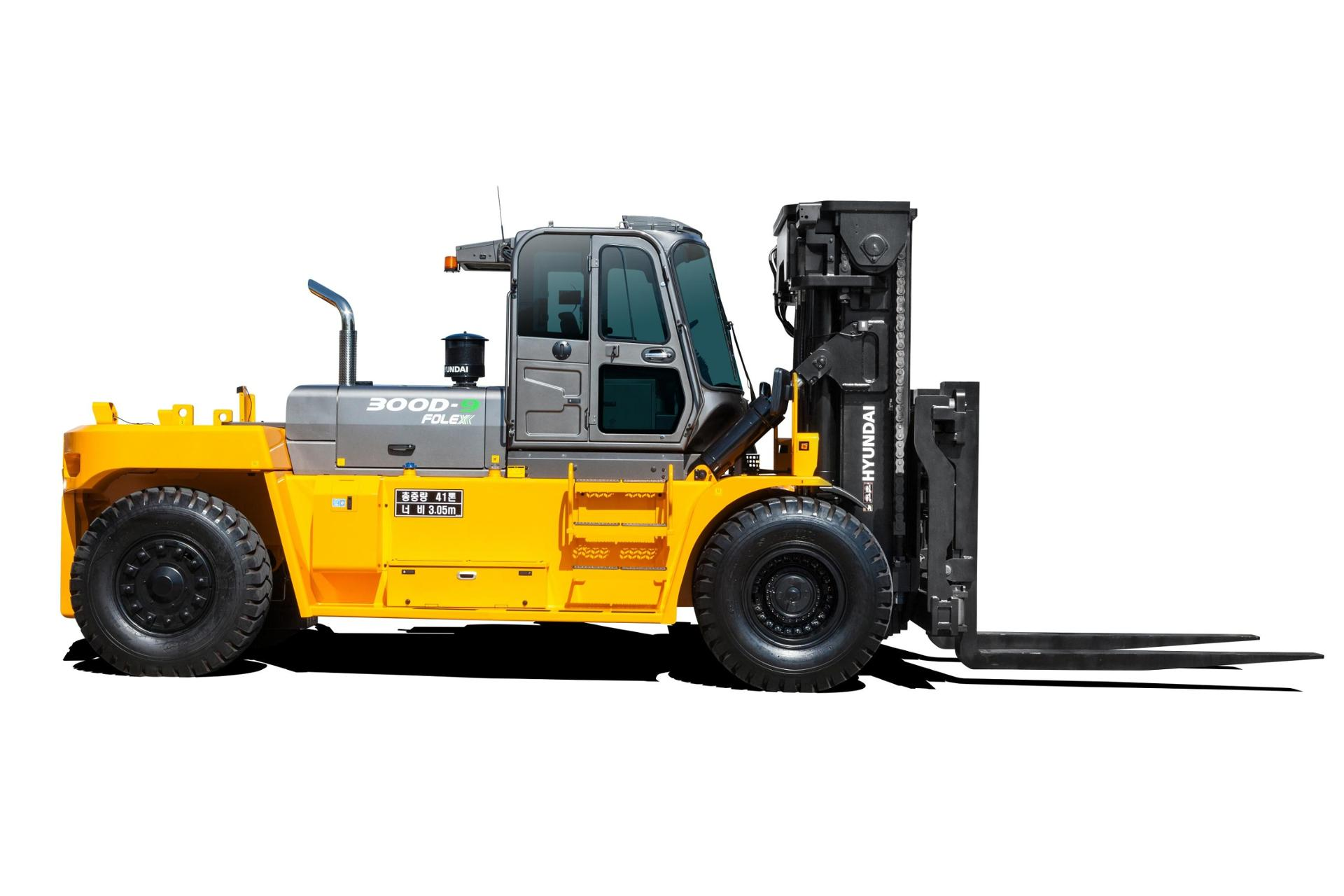
The largest agreement is a 37bn won contract with the Algerian government for 316 industrial vehicles, with deliveries due to be completed in phases by August. The order includes 10-tonne, 25-tonne, and 30-tonne forklifts, giving the customer heavy-duty equipment for handling large and irregular loads across construction sites, shipyards, logistics yards, and port facilities.
The company has also secured additional Middle Eastern contracts worth around 4bn won. These include approximately 50 small and mid-sized forklifts for an automotive parts manufacturer in the United Arab Emirates and 40 units for a logistics centre operator in Syria.
The Algerian contract gives HD Hyundai XiteSolution a substantial heavy-equipment reference point in a region where logistics and infrastructure spending are increasing demand for higher-capacity handling machinery. Large forklifts sit at the more specialised end of the materials handling market, where operating conditions are harder, loads are heavier, and equipment selection is shaped by durability, service support, and fleet uptime.
Ports, industrial yards, steel handling operations, shipbuilding facilities, and major construction programmes all rely on machinery that can work across uneven surfaces, exposed environments, and high-utilisation duty cycles. In those settings, forklift choice is rarely a simple procurement exercise. Buyers need equipment that can be supported locally, maintained quickly, and integrated into broader site operations where delays can disrupt vessel calls, construction schedules, or manufacturing flows.
The UAE order adds a different operating profile. Automotive parts manufacturing requires reliable movement of components, racks, containers, packaging, and production materials between goods-in, storage, line-side staging, and dispatch areas. Even where automation is being introduced, forklifts remain embedded in receiving, replenishment, buffer storage, exception handling, and outbound activity.
The Syrian logistics centre order, although smaller, shows demand for conventional warehouse and distribution equipment in markets building or restoring logistics capacity. In those environments, operators often prioritise availability, serviceability, and flexible use across mixed handling tasks rather than highly specialised automation.
The orders arrive as materials handling investment is being pulled in two directions. Inside warehouses, automation, shuttle systems, robotics, and dense storage are reshaping high-throughput operations, as seen in the growing attention given to pallet shuttle systems at LogiMAT and MODEX. Across ports, yards, construction logistics, and industrial sites, however, heavy-duty forklifts and robust mobile equipment remain central to physical flow.
That split is shaping supplier strategies. Equipment manufacturers need to serve digitally managed warehouses while still supplying the heavy, outdoor, and industrial machinery needed for infrastructure-led growth. HD Hyundai XiteSolution’s latest orders fall firmly into the second category, with lifting capacity and rugged deployment carrying more weight than software-led optimisation.
Emerging infrastructure markets are also placing more emphasis on aftersales coverage. Large forklift purchases create long-term requirements for maintenance, spare parts, operator training, and technical support. Suppliers that can combine equipment supply with a credible local support model are better positioned to win repeat work as fleets expand.
For HD Hyundai XiteSolution, the order mix strengthens both revenue and market positioning. The Algerian contract gives the company a high-capacity government customer, while the UAE and Syria deals broaden sector exposure across automotive manufacturing and logistics centre operations. Heavy-duty units should also support profitability compared with lower-capacity warehouse models.
The broader market direction is clear enough: logistics and industrial supply chains are becoming more equipment-intensive at both ends of the operation. Automated storage may dominate the conversation inside modern distribution centres, but forklifts still decide whether goods move efficiently through ports, yards, factories, construction sites, and mixed-use logistics facilities. In markets where infrastructure spending is rising, that practical machinery base is still expanding.