IN Brief:
- Brussels Airport has begun construction of a 14,000m² cargo-zone logistics facility.
- Yusen Logistics and Air Promotions Agencies will occupy the site after completion in 2027.
- The project strengthens pharma and general cargo capability at Brussels Airport.
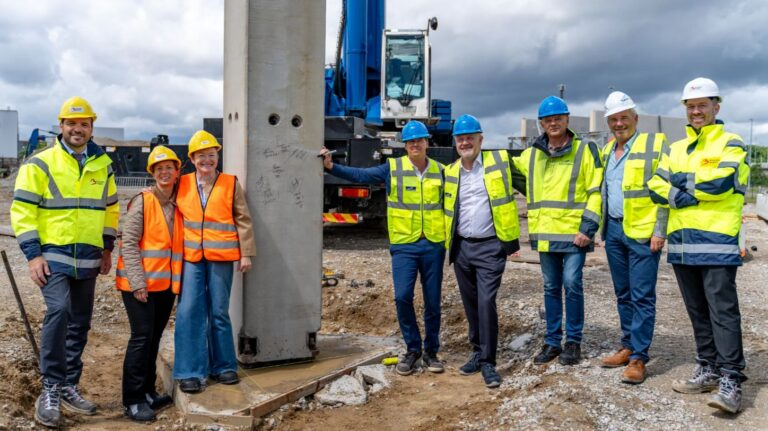
Brussels Airport has started construction on a new 14,000m² logistics facility in its cargo zone, with Yusen Logistics and Air Promotions Agencies set to occupy the site after completion in 2027.
The project is being developed in the eastern part of the airport’s cargo zone and will support pharmaceutical logistics and general cargo operations. Yusen Logistics will use the facility for pharma-related activity, while Air Promotions Agencies will expand its general cargo capability.
Brussels Airport has built a strong position in pharma airfreight, supported by specialist handling facilities, temperature-controlled services, and cargo community expertise. The new logistics building adds capacity for operators that need proximity to airside operations, reliable handovers, and compliant storage environments.
Airport cargo infrastructure is becoming more specialised as temperature-sensitive freight, healthcare products, ecommerce, and high-value industrial cargo place greater demands on handling and storage. Traditional transit sheds are being replaced or upgraded to support temperature control, security, digital visibility, cross-dock efficiency, and faster links between road feeder networks and aircraft operations.
Yusen Logistics’ presence gives the project a direct connection to global healthcare supply chains. Pharmaceutical logistics depends on controlled temperatures, validated processes, trained staff, and documentation that can withstand regulatory scrutiny. A facility inside a major air cargo zone reduces external handovers and supports tighter control between storage, handling, and uplift.
Air Promotions Agencies’ general cargo role gives the development a broader operating base. European cargo airports cannot rely solely on one commodity type. Industrial components, ecommerce parcels, perishables, machinery, and consolidated freight all compete for handling capacity, and mixed cargo capability helps airport communities respond to shifting demand across sectors.
The cold-chain shift is also visible in Cold Chain Technologies expands EcoFlex into Europe, where packaging, reuse, traceability, and regional fulfilment are being built into healthcare logistics. Brussels Airport’s new facility adds the infrastructure layer to that same movement, with buildings, operators, and airfreight access being pulled into a more controlled system.
European cargo gateways are competing for specialist freight, and the strongest sites are those able to combine air capacity with logistics real estate, digital cargo community systems, road access, and sector-specific handling. Airports with limited cargo land risk losing higher-value flows to competitors that can offer expansion capacity and facilities matched to healthcare and industrial requirements.
The eastern cargo-zone development gives Brussels Airport additional long-term capacity and reinforces the role of logistics partners within the airport ecosystem. Cargo airports increasingly need anchor operators that bring volume, specialist expertise, and sector credibility. Pharma logistics is particularly sensitive to disruption, so purpose-built space for experienced operators can influence routing decisions.
Completion is scheduled for 2027. As pharmaceutical supply chains decentralise manufacturing, increase biologics volumes, and require more controlled international distribution, cargo airports will need to provide more than runway access. The buildings, systems, and operators around the aircraft will increasingly determine whether sensitive freight remains inside validated conditions from arrival to departure.