IN Brief:
- Gdansk will be added to the Ocean Alliance AEU7 Europe–Far East service from August.
- The service links Northern Europe with major Asian ports including Shanghai, Xiamen, Hong Kong, Yantian, Cai Mep, and Singapore.
- The move strengthens Poland’s role as a Baltic gateway for containerised trade with Asia.
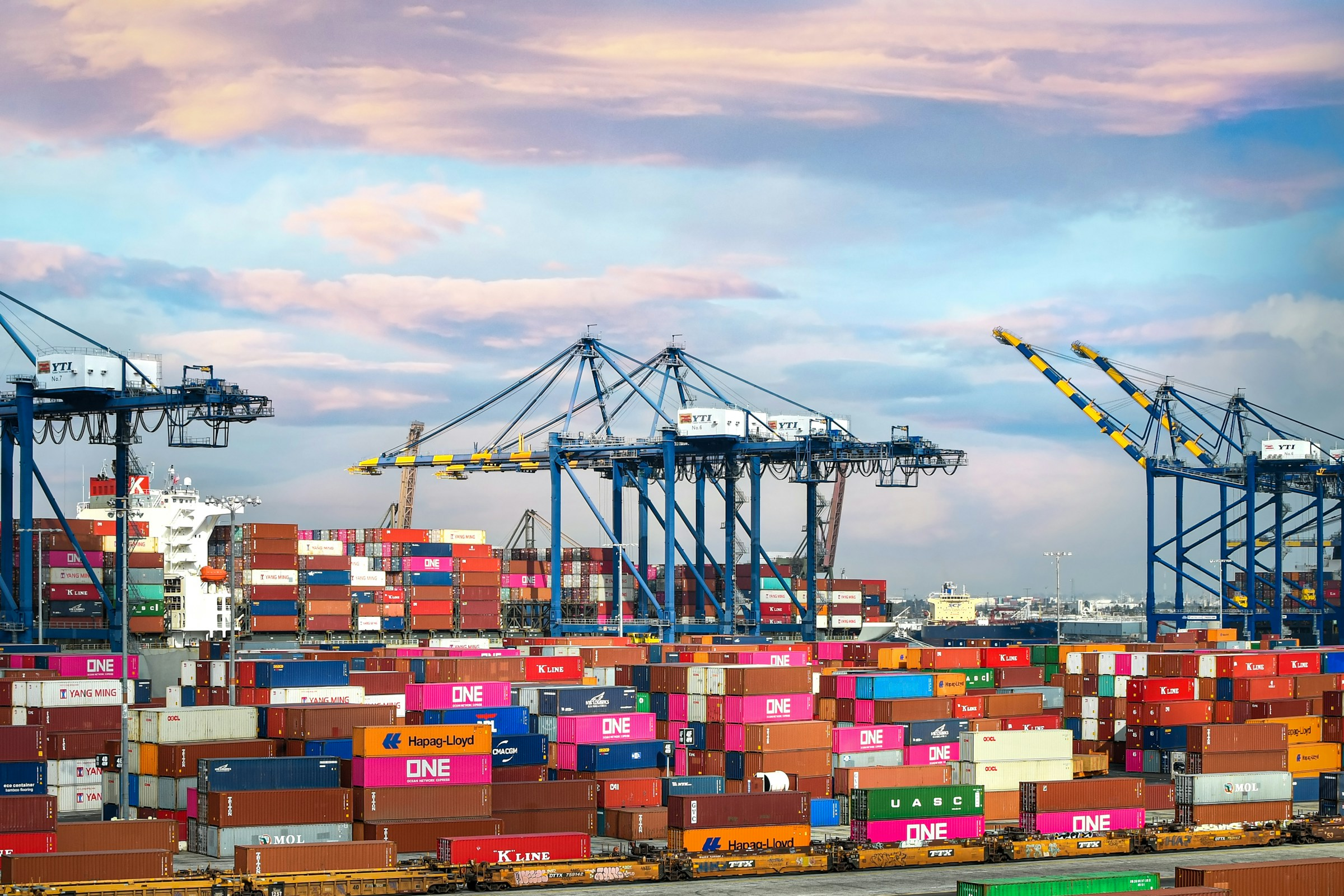
COSCO SHIPPING Lines and OOCL will extend the Ocean Alliance AEU7 Europe–Far East service into the Baltic with a new call at Gdansk from August.
The extension adds another direct Asia connection for Poland and the wider Baltic region, improving access to a service that links Northern Europe with key Far East origin and transshipment points. The rotation includes Gdansk, Rotterdam, Hamburg, Zeebrugge, Felixstowe, Shanghai, Xiamen, Hong Kong, Yantian, Cai Mep, and Singapore.
The service is operated by COSCO SHIPPING Lines and OOCL as part of the wider Ocean Alliance network, which also includes CMA CGM and Evergreen Marine Corporation. Adding Gdansk gives the alliance a stronger Baltic position at a time when European importers are reviewing port routings, inland transport options, and exposure to congestion in traditional North European gateways.
Gdansk has become increasingly important in European container logistics because of its access to Central and Eastern European hinterlands. Direct deep-sea calls reduce reliance on feeder connections from North Sea hubs and can shorten the number of handovers between Asian origin ports and inland European distribution points. For shippers moving high-volume retail, industrial components, consumer goods, machinery, and automotive cargo, that can support more resilient network design.
The change also strengthens the Baltic Hub’s position as a container gateway for Poland, Czechia, Slovakia, Hungary, Ukraine-linked trade, and parts of Germany. The ability to route cargo directly into the Baltic can reduce exposure to congestion or schedule disruption at ports where inland connections are already under pressure. It also gives forwarders and BCOs a stronger argument for splitting volume across multiple European gateways rather than relying on a single port pair.
The service development follows a broader period of investment in port-linked infrastructure and alternative routing across Europe. IN Supply recently covered Hyundai Glovis plans Amsterdam vehicle logistics hub, where a major finished-vehicle logistics terminal is being developed to support storage, inspection, ro-ro berthing, rail, and inland distribution. Although the cargo segments differ, both developments point toward a European network that is becoming more specialised by gateway, cargo type, and hinterland function.
For Asia-Europe shippers, the Gdansk addition sits alongside a difficult rate and capacity environment. Peak season surcharges, earlier ordering, and fuel-cost pressure are already affecting long-haul ocean freight planning. A direct Baltic call does not remove those cost pressures, but it adds routing choice at a time when flexibility is increasingly valuable.
That flexibility is particularly relevant for manufacturers and distributors serving Central and Eastern Europe. Cargo landed closer to final distribution markets can reduce inland miles, shorten transfer times, and improve the reliability of planned delivery windows. It can also help companies avoid moving containers through congested corridors simply because legacy contracts or historical routing patterns favour older gateways.
The operational gain will depend on schedule reliability, terminal performance, rail and road capacity, customs execution, and the ability of logistics providers to build competitive inland products around the new call. Direct calls can lose value if containers are delayed after discharge, so port-side and hinterland coordination will determine how much of the network benefit reaches cargo owners.
The extension also reflects the way ocean carriers are using alliance networks to make selective adjustments rather than wholesale redesigns. Adding a port call to an existing rotation can open a new gateway without building a separate service from scratch. That approach gives carriers a way to test and strengthen coverage while maintaining the core economics of large-vessel Asia-Europe loops.
Gdansk’s inclusion in the AEU7 rotation gives Poland and the Baltic region a more direct place in Asia-Europe container flows. The practical impact will be seen in how quickly shippers, forwarders, and inland operators convert the new call into reliable door-to-door products. In a market where cost and schedule risk keep shifting, another deep-sea option into Northern Europe is more than a line on a schedule.