IN Brief:
- Adani Mundra Airport has launched scheduled Star Air services connecting Kutch with major Indian cities.
- The airport adds a faster air corridor beside Mundra’s port, industrial, and special economic zone infrastructure.
- The development strengthens western India’s shift toward port-led multimodal logistics and industrial connectivity.
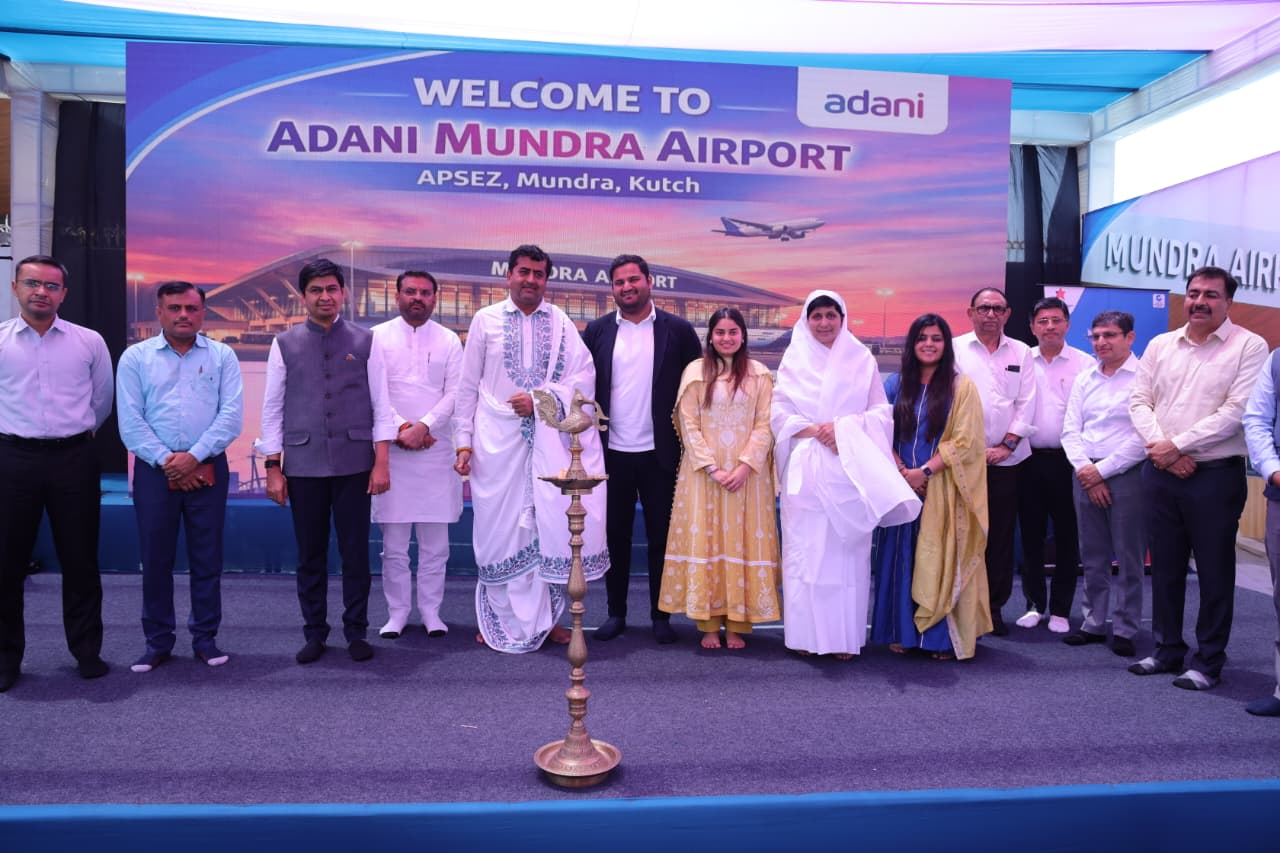
Adani Group has launched scheduled flight operations at Mundra Airport, adding an aviation link to one of India’s most significant port-led industrial zones.
The first scheduled services, operated with Star Air, connect Mundra with Mumbai and Goa, while the wider route network links Kutch with Bengaluru, Surat, Hindon, Belagavi, Kolhapur, and Nanded. The airport’s 1,900-metre runway and passenger terminal now sit alongside a port and special economic zone that already carry considerable industrial and trade weight.
Mundra’s logistics value is rooted in concentration. The port, SEZ, road links, industrial land, and associated services have made the area a major gateway for import-export activity, and scheduled flights shorten the distance between that cargo base and the commercial teams, engineers, auditors, project managers, customs specialists, and service staff who keep complex industrial operations moving.
Air connectivity also supports the less visible parts of logistics execution. Technical intervention, urgent documentation, project meetings, high-value spares, production support, and quality assurance all rely on the movement of people and small consignments as well as bulk cargo. A port cluster without fast air access can still move volume, but it carries a slower commercial rhythm when problems need rapid attention.
The development lands in a corridor already exposed to sharper cost scrutiny. Higher handling charges at Mundra have placed landed-cost pressure back into the spotlight, with recent port cost changes showing how gateway economics can shift even where maritime scale is well established. Scheduled air services do not offset those charges, but they widen the support infrastructure around the port and improve the region’s ability to function as a logistics cluster rather than a single-mode gateway.
India’s western coastline has become increasingly central to manufacturing, energy, chemicals, agricultural exports, engineering goods, automotive flows, and containerised trade. Mundra’s position inside that geography gives the airport more than a passenger role. As industrial regions mature, the transport mix tends to deepen: road and sea provide the base, while air, rail, warehousing, customs support, and professional services turn that base into a more complete operating environment.
Scheduled flights also reduce dependence on longer surface journeys to reach major aviation hubs. That can improve access for customers, suppliers, and decision-makers working across distant production or export networks. In project-led industrial supply chains, where commissioning schedules and technical issues often move faster than conventional travel plans, the ability to get people into the region directly can prevent small delays spreading across wider operations.
The freight case will develop more slowly than the passenger network, particularly if dedicated cargo facilities, customs capability, temperature-controlled handling, and express freight services are expanded over time. Even so, regular passenger services can support bellyhold movement for urgent documents, parts, samples, and other low-volume, higher-value consignments where speed outweighs volume economics.
Mundra’s advantage is that demand does not need to be manufactured from scratch. The port and industrial base are already there, and the airport extends the infrastructure available to companies operating in and around the cluster. That distinction is important: logistics assets perform best when attached to real cargo flows, production ecosystems, and recurring commercial movement.
The launch also reflects a broader Indian infrastructure pattern in which ports, airports, logistics parks, industrial corridors, and road links are being planned as overlapping systems. Individual assets still have to stand up commercially, but the direction is clear. Trade corridors are being built around multiple modes, shorter intervention times, and more resilient access to domestic and export markets.