IN Brief:
- The Southern Tyrrhenian and Ionian Sea Port System Authority has approved its 2026–28 operational plan.
- The plan covers Gioia Tauro, Corigliano Calabro, Crotone, Vibo Valentia, and Palmi.
- Priorities include intermodal infrastructure, cold ironing, port access, employment growth, investment attraction, and digitalisation.
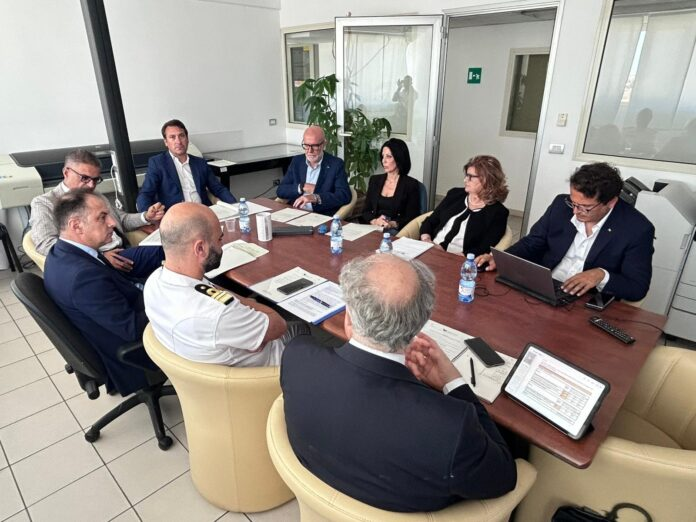
The Southern Tyrrhenian and Ionian Sea Port System Authority has approved its 2026–28 operational plan, setting out development priorities across Gioia Tauro, Corigliano Calabro, Crotone, Vibo Valentia, and Palmi.
Gioia Tauro receives the largest logistics intervention in the plan through a €10m interport facility intended to strengthen its role as Southern Italy’s principal logistics hub. The wider programme covers intermodal connections, energy transition, investment attraction, employment growth, port access, digitalisation, and waterfront redevelopment across the port system.
Cold ironing at Gioia Tauro’s eastern quay is a central element of the plan. Shore-side power will allow vessels at berth to connect to electricity instead of running auxiliary engines, reducing local emissions during port stays. Total planned investment at Gioia Tauro for 2026 stands at €117.23m.
The plan also allocates work beyond the main container hub. Vibo Valentia Marina is due to receive upgrades to the Cortese Dock, operational areas, entrances, and longer-term waterfront and quay assets. Crotone will see work on breakwater redevelopment, entrance dredging, fire prevention systems, and waterfront improvements. Corigliano Calabro will receive funding for access road modernisation, administrative office redevelopment, and sailing-related facilities.
Gioia Tauro handled approximately 4.49m TEU in 2025, giving the authority a strong anchor for wider regional development. The plan projects employment growth of 19.5% through 2026 across the port system, equivalent to around 310 new jobs. Labour, technical skills, maintenance capability, safety oversight, and administration all influence whether infrastructure investment turns into reliable cargo movement.
European port investment is increasingly built around system performance rather than berth capacity alone. Southampton’s latest crane programme addresses larger container ships and quay productivity, while Southern Italy’s plan reaches across intermodal access, shore power, port redevelopment, and regional employment. The cargo base differs, but the operating question is similar: how quickly and cleanly cargo can move between vessel, terminal, hinterland, and customer.
The Gioia Tauro interport project could have the strongest logistics effect. Maritime gateways gain commercial depth when they connect efficiently with inland freight corridors. Road, rail, customs processes, storage, and distribution capacity determine whether a container port functions only as a transhipment node or as a broader logistics platform.
Cold ironing adds a parallel competitive pressure. Environmental performance is becoming more visible in carrier planning, customer reporting, procurement, and local permitting. Ports that reduce berth emissions can improve air quality around operational areas while supporting shipping lines and cargo owners that need stronger emissions data across the full transport chain.
Digitalisation has also been placed among the authority’s challenges, alongside staffing and equality. That inclusion is not cosmetic. Modern port operations depend on appointment systems, terminal data, customs coordination, berth planning, cargo visibility, gate management, and integration with inland carriers. Concrete, quay walls, and cranes need a matching digital layer if investment is to translate into predictable flow.
Southern Italy’s maritime position gives the port system a natural role between Mediterranean shipping routes and European inland corridors. Turning that geography into sustained logistics value requires execution across several fronts at once: investment delivery, rail and road links, customer confidence, clean energy infrastructure, and enough skilled people to operate and maintain the system.
The plan’s multi-port scope is also important. Gioia Tauro provides scale, but regional resilience depends on the smaller ports as well. Corigliano Calabro, Crotone, Vibo Valentia, and Palmi each support local economic functions, and their access, safety, and redevelopment projects contribute to a wider Southern Italian logistics network.
The 2026–28 programme gives the authority a defined investment path. Its success will rest on whether planned works produce faster cargo movement, cleaner berth operations, stronger intermodal links, and a port system capable of turning Mediterranean position into practical supply chain performance.