IN Brief:
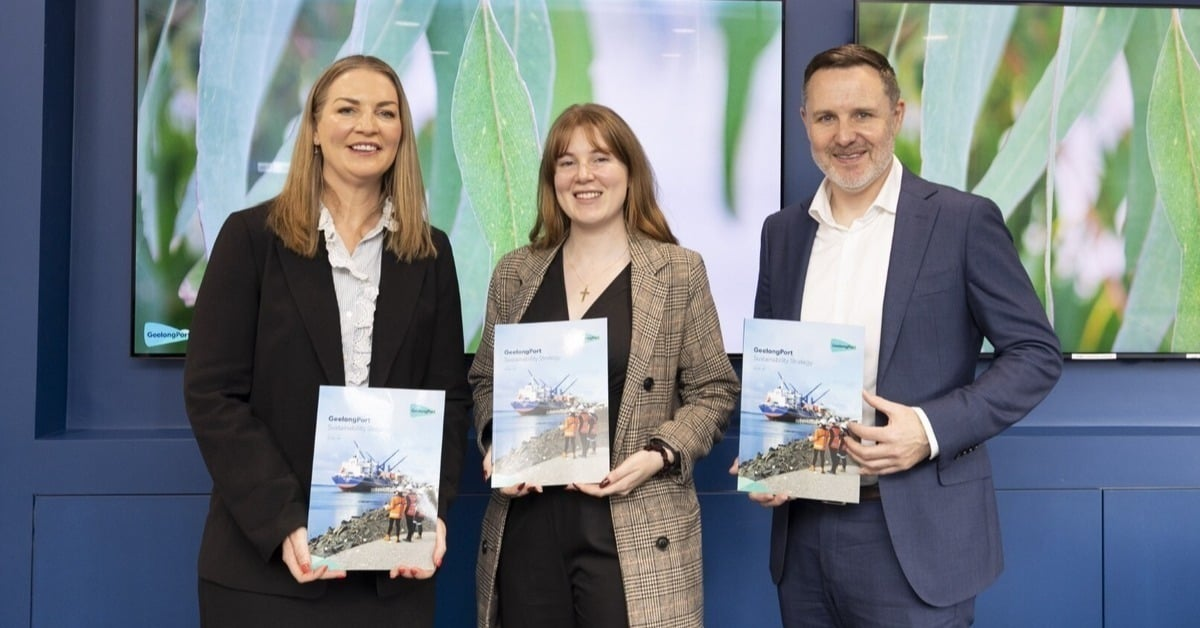
- GeelongPort has launched its inaugural Sustainability Strategy 2026–30.
- The port is targeting net zero Scope 1 and 2 emissions by 2030.
- The strategy links sustainability with asset resilience, procurement, capital allocation, and customer engagement.
GeelongPort has launched its Sustainability Strategy 2026–30, setting a four-year framework for emissions reduction, resilient infrastructure, governance, procurement, and partnership across Victoria’s second-largest port.
The port is targeting net zero Scope 1 and Scope 2 emissions by 2030, while working with customers, tenants, and suppliers on Scope 3 emissions across the wider port supply chain. The strategy is built around three directions: sustainable value leadership, resilient assets and systems, and people and partnerships.
GeelongPort handles more than 13 million tonnes of cargo each year across energy, construction, bulk commodities, tourism, and regional industry. That cargo base makes decarbonisation a practical infrastructure challenge rather than a peripheral environmental programme. Port emissions sit inside berth activity, cargo handling, buildings, vehicles, tenant operations, road movements, energy systems, and procurement decisions.
The Scope 3 element broadens the strategy beyond assets directly controlled by the port. Customers, tenants, suppliers, and transport partners will shape much of the emissions profile attached to cargo movement. Port operators can reduce their own power use and equipment emissions, but wider decarbonisation requires cooperation across vessel operators, landside transport, cargo owners, contractors, and industrial users.
Carbon planning is becoming more embedded in logistics design. DP World’s EcoRoute programme places emissions measurement, route design, modal choice, and carbon insetting inside freight planning, while GeelongPort’s approach works from the infrastructure side of the same transition. Both developments show how emissions are moving from annual reporting into daily network decisions.
Resilient assets form the other side of GeelongPort’s strategy. Climate exposure can affect ports through heat, storms, flooding, sea-level pressure, drainage, corrosion, road access, berth availability, and emergency response. A port that cuts emissions but leaves critical assets exposed to climate risk will still struggle to provide reliable trade infrastructure through the next decade.
Regional ports carry a particular burden because the cargoes they serve are often difficult to reroute without cost. Construction materials, bulk commodities, energy cargoes, and project movements rely on specific berth, handling, storage, and road access configurations. When a regional gateway is disrupted, the alternative is rarely neat or cheap.
Embedding sustainability into procurement and capital allocation gives the strategy a route into operational discipline. Equipment purchases, building works, maintenance cycles, contractor selection, berth investment, energy procurement, and tenant agreements all influence emissions and resilience. Without those links, sustainability strategies can become detached from the decisions that determine port performance.
The partnership strand also carries operational weight. Traditional Owners, local communities, customers, suppliers, and workforce groups are all affected by port development and environmental stewardship. Cultural heritage, biodiversity, local employment, and safe operations sit alongside cargo movement in the licence to operate, particularly where ports are close to urban or environmentally sensitive areas.
GeelongPort’s strategy also reflects the changing procurement expectations placed on logistics infrastructure. Cargo owners are under pressure to quantify emissions and reduce supply chain risk, and the ports they use increasingly form part of that assessment. A gateway that can provide clearer emissions data, stronger environmental governance, and resilient infrastructure may hold an advantage where service options are otherwise similar.
The next test will be delivery. Net zero targets and sustainability frameworks only gain commercial value when they alter investment, maintenance, energy use, supplier behaviour, and customer collaboration. Port operations are capital-intensive, long-lived, and difficult to reconfigure quickly, which gives early planning more value than last-minute compliance.
GeelongPort has placed sustainability inside the operating framework that will shape its next four years. In practical terms, the strategy treats climate performance, asset resilience, and trade continuity as overlapping port functions — a necessary approach for infrastructure that must remain reliable while the conditions around it continue to change.