IN Brief:
- Loconi Intermodal has started construction of a new terminal at Zbąszynek in western Poland.
- The site will include four handling tracks, a 4,500 TEU yard, and two electric RTG cranes.
- The terminal will strengthen inland intermodal capacity between Polish ports, road networks, and Central European freight flows.
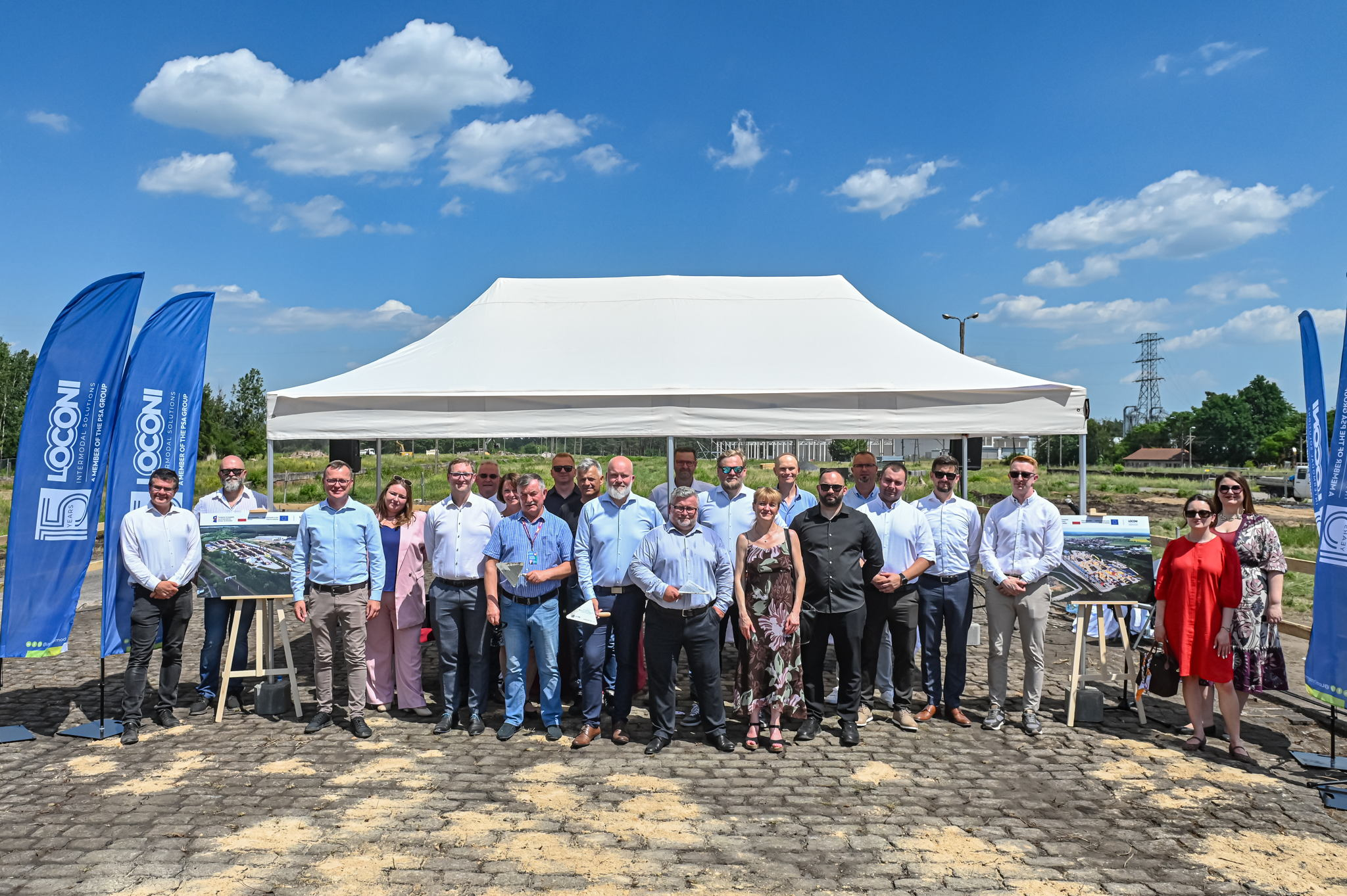
Loconi Intermodal has broken ground on a new terminal at Zbąszynek in western Poland, expanding rail-linked container capacity across one of Central and Eastern Europe’s most important logistics corridors.
The 9.4-hectare site will sit next to the E20 railway line, part of the TEN-T network, with access to the A2 motorway and S3 expressway. The terminal is scheduled to become operational in the first quarter of 2028, with Adamietz appointed as general contractor.
The facility will include four handling tracks, capacity to handle two full-length trains, a 4,500 TEU container yard, and two electric rail-mounted gantry cranes. More than PLN 76m in EU co-funding has been secured through the FEnIKS programme, aligning the project with European investment priorities around rail freight, intermodal capacity, and lower-emission transport infrastructure.
Loconi already handles about 300,000 TEU annually and operates more than 3,000 trains to and from Polish ports across six routes. Zbąszynek will add another inland node to that network, supporting container flows between seaports, road transport, and manufacturing regions across Poland and neighbouring markets.
Intermodal terminals are becoming more valuable as manufacturers, retailers, and freight forwarders seek alternatives to road-only long-haul transport. Rail freight depends on reliable schedules, sufficient volume, terminal performance, and efficient first- and last-mile road links; where those elements align, it can reduce mileage, ease road pressure, and improve access to congested port gateways.
Western Poland gives the project a strong operating base between Baltic port gateways, German markets, and Central European manufacturing corridors. The combination of rail and road access allows the terminal to balance long-distance freight movement with regional distribution, while its position on the TEN-T network connects the site to wider European modal-shift policy.
Port infrastructure investment increasingly has to be matched inland. New handling capacity at gateways, such as Southampton’s crane investment, improves quayside performance, but containers still need reliable routes beyond the port. Loconi’s terminal addresses that onward movement by adding inland capacity closer to production and consumption points.
The electric RTG cranes give the project a decarbonisation component without separating sustainability from productivity. Electric handling equipment can reduce local emissions and support lower-carbon freight options, but terminals also need grid capacity, maintenance capability, charging resilience, and skilled operators. Equipment choice and energy planning are now part of terminal design, not post-build enhancements.
Service reliability will determine how much cargo the terminal can draw from road-only routes. Intermodal users need dependable train slots, predictable cut-off times, fast gate processing, clear container visibility, and smooth handovers between rail operators, truckers, ports, and customs processes. The most effective terminals increasingly function as data nodes as well as handling sites.
Central and Eastern Europe’s logistics infrastructure is being reshaped by manufacturing investment, nearshoring, and changing trade patterns. Poland has been one of the main beneficiaries, with warehouse development, road upgrades, rail investment, and intermodal growth advancing together. Zbąszynek adds another layer to that network, giving shippers more choice in how freight moves between ports and inland markets.
The project will not remove the need for road transport, but it should strengthen the rail option in a corridor where freight flows are growing in scale and complexity. Its success will depend on whether shippers see enough reliability, cost control, and emissions benefit to make intermodal movement a routine part of their network planning.