IN Brief:
- Chancerygate is developing 96,000ft² of Grade A urban logistics space in Dartford.
- The Questor 96 scheme will include seven units and a 1.08-acre open storage plot.
- The development adds smaller-format logistics capacity with sustainability features and strong South East road access.
Chancerygate is developing 96,000ft² of Grade A urban logistics space at Questor 96 in Dartford, adding smaller-format industrial and distribution capacity to a South East market where well-connected units remain under pressure.
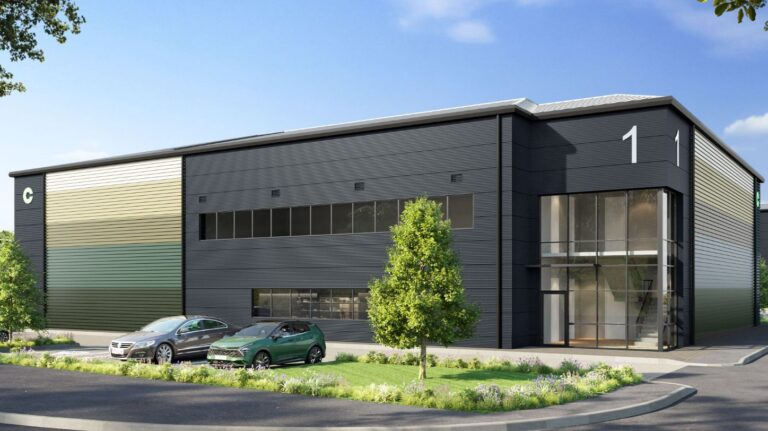
The scheme, on Hawley Road, will comprise seven units ranging from about 5,640ft² to 31,301ft², together with a 1.08-acre open storage plot. First occupiers are expected in early 2027, with the development positioned for logistics, trade counter, light industrial, and urban distribution use.
Questor 96 forms part of Chancerygate’s wider activity at Questor Industrial Estate, a location already occupied by distribution and industrial businesses including DPD, Storepak, and Proper Music Distribution. The site sits close to Dartford and provides access to the M25, the Dartford Crossing, and the wider South East road network.
The specification includes BREEAM Very Good, a minimum EPC A rating, electric vehicle charging, and solar provision. Those features are moving from optional enhancements to core lease considerations, particularly where fleet electrification, energy cost control, and corporate carbon reporting are shaping property decisions.
Dartford’s geography gives the scheme a distinct urban logistics role. The area acts as a pressure point between London, Kent, Essex, and national motorway routes, with the Dartford Crossing still one of the most heavily used freight links in the country. Operators serving London and the South East need sites close enough to demand for efficient delivery rounds, yet large enough to handle vehicle movements, stock flow, and yard activity.
Smaller urban logistics units are being pulled in several directions at once. Retailers and parcel operators need regional delivery density. Trade suppliers need accessible branch networks. Manufacturers need overflow, spares, returns, and service logistics space. Contractors and field-service businesses need secure storage close to project locations. That range of demand has kept well-located industrial stock attractive even when larger warehouse markets have softened.
Open storage gives the development a wider operating base. Outdoor space can support fleet parking, plant, building materials, containers, equipment holding, and bulky goods operations that do not fit neatly into conventional warehousing. Including a dedicated plot makes the scheme more useful to construction supply, infrastructure, transport, and industrial service users.
Recent warehouse investments, including AUTODOC’s Manchester warehouse, show how stock positioning is being used to improve service resilience. Questor 96 is a different property format, but it follows the same distribution logic: goods need to be held closer to demand, transport routes, and service points without locking occupiers into oversized facilities.
The sustainability features should also help occupiers manage future compliance and cost. EPC requirements are tightening, and landlords are under growing pressure to prevent assets from becoming obsolete before leases expire. EV charging, solar provision, and stronger building performance now influence fleet planning, site energy resilience, and retrofit risk.
Speculative development is becoming more selective as a result. Developers are still building ahead of named occupiers, but the strongest schemes are close to demand, flexible in unit size, and specified to avoid near-term obsolescence. Questor 96 sits in that category, offering occupiers a combination of location, yard functionality, and energy-conscious design rather than relying on square footage alone.
The development adds useful supply to Dartford’s industrial market and sharpens the point that the most valuable logistics buildings are not always the largest. In dense regional markets, the buildings that remove miles, improve service coverage, and avoid becoming energy liabilities can carry the stronger long-term value.