IN Brief:
- Flytrex is supporting nearly 10,000 coordinated drone flights per month in shared airspace.
- The Dallas-Fort Worth operating model uses automated route coordination with Wing under FAA UTM evaluation.
- Flytrex has completed more than 200,000 drone deliveries across the United States.
Flytrex is coordinating nearly 10,000 drone flights per month in shared airspace, marking a significant step in the development of automated traffic management for commercial last-mile delivery.
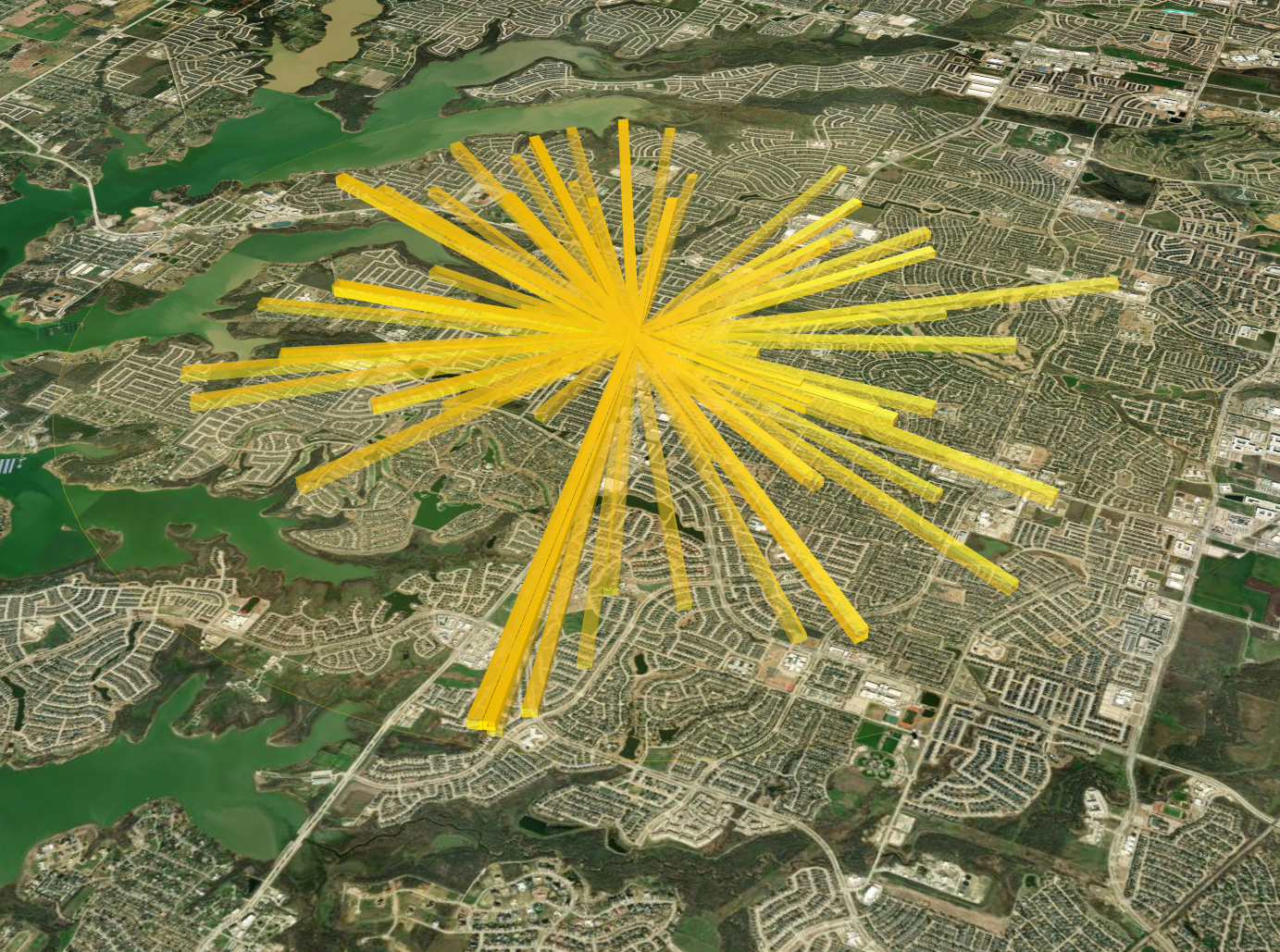
The activity is taking place across shared operating zones in the Dallas-Fort Worth metroplex, where Flytrex and Wing exchange real-time flight data to coordinate routes and avoid conflicts without manual intervention. The operations are running under the US Federal Aviation Administration’s UTM Operational Evaluation programme and are built around the ASTM F3548-21 interoperability standard.
Between January and February 2026, Flytrex and Wing completed around 8,000 drone deliveries across overlapping delivery areas in Little Elm and Wylie, Texas. The operators conducted simultaneous flights on 30 of 31 operational days, with automated deconfliction across all flight operations and no airspace conflicts. Combined daily operations increased 215% month-on-month.
The Wylie operating area is one of the closest commercial drone environments in the United States, with Flytrex and Wing facilities 1.36 miles apart. Flytrex has now completed more than 200,000 drone deliveries across the United States as it expands autonomous services in suburban communities.
The company has also extended its retail delivery model through a partnership with Little Caesars in Wylie, Texas. The service uses Flytrex’s Sky2 drone to deliver larger food orders, including two large pizzas and sodas, with ordering integrated into existing Little Caesars point-of-sale systems through the Flytrex app.
Commercial drone logistics can only scale if multiple operators can work in the same geography without creating unsafe or inefficient flight patterns. A single operator serving a tightly controlled area is one problem. Multiple operators running simultaneous delivery missions above overlapping neighbourhoods create a denser infrastructure challenge, with routing, flight separation, launch timing, customer windows, weather, and local safety procedures all having to work together.
Automated route allocation, four-dimensional trajectory planning, and real-time deconfliction are becoming essential parts of the model. Traditional air traffic control was not designed to manage dense low-altitude delivery networks involving frequent short flights, autonomous dispatch, and high repetition across suburban routes. Digital airspace management gives the sector a route toward scale without depending on manual coordination for every flight.
Heavier autonomous cargo operations are moving along a related path, with Indonesian validation for AutoFlight cargo eVTOL operations showing how runway-free aerial logistics is beginning to form around certification, infrastructure, and regulated use cases. Flytrex sits at the lighter end of aerial delivery, but both developments show that aircraft alone do not create logistics networks. Dispatch, route control, ground infrastructure, maintenance, loading, customer integration, and regulation must work together.
Last-mile drone delivery is most likely to develop in defined service zones where payload, distance, weather, airspace, and customer density support repeatable operations. Food, convenience items, healthcare products, urgent spares, and small ecommerce orders may all fit particular missions, but the economics depend on more than flight speed. Operators need high utilisation, reliable landing or drop zones, safe charging or battery swap processes, and software integration with retail and fulfilment systems.
The Little Caesars integration shows how point-of-sale connectivity becomes part of drone delivery viability. Orders that have to be manually rekeyed or managed outside normal store systems increase friction. Direct integration allows the delivery mode to sit closer to the existing retail workflow, reducing the risk that drone service becomes a separate operational burden.
Shared airspace also places more pressure on local governance and public acceptance. As drone networks expand, communities will need clear rules around noise, safety, landing areas, privacy, weather limits, emergency procedures, and operator accountability. Automated systems can manage flight separation, but growth will also depend on whether residents, regulators, and local authorities accept higher-frequency low-altitude operations.
Drone delivery will not replace van networks across broad product categories, but it can add a faster, lower-payload option in markets where geography, customer density, and service expectations fit. The airspace coordination milestone suggests that the technology stack around drone logistics is maturing from isolated delivery trials toward multi-operator operating environments.
The next measure will be whether monthly flight volumes can keep rising while maintaining safety performance, customer reliability, and cost discipline. Flytrex’s Dallas-Fort Worth activity shows that shared low-altitude delivery networks are moving from demonstration into higher-frequency operations. Repeatability, not novelty, will determine the logistics value.