IN Brief:
- Dubai Customs and Emirates SkyCargo operated an integrated logistics bridge across two major Dubai airport cargo facilities.
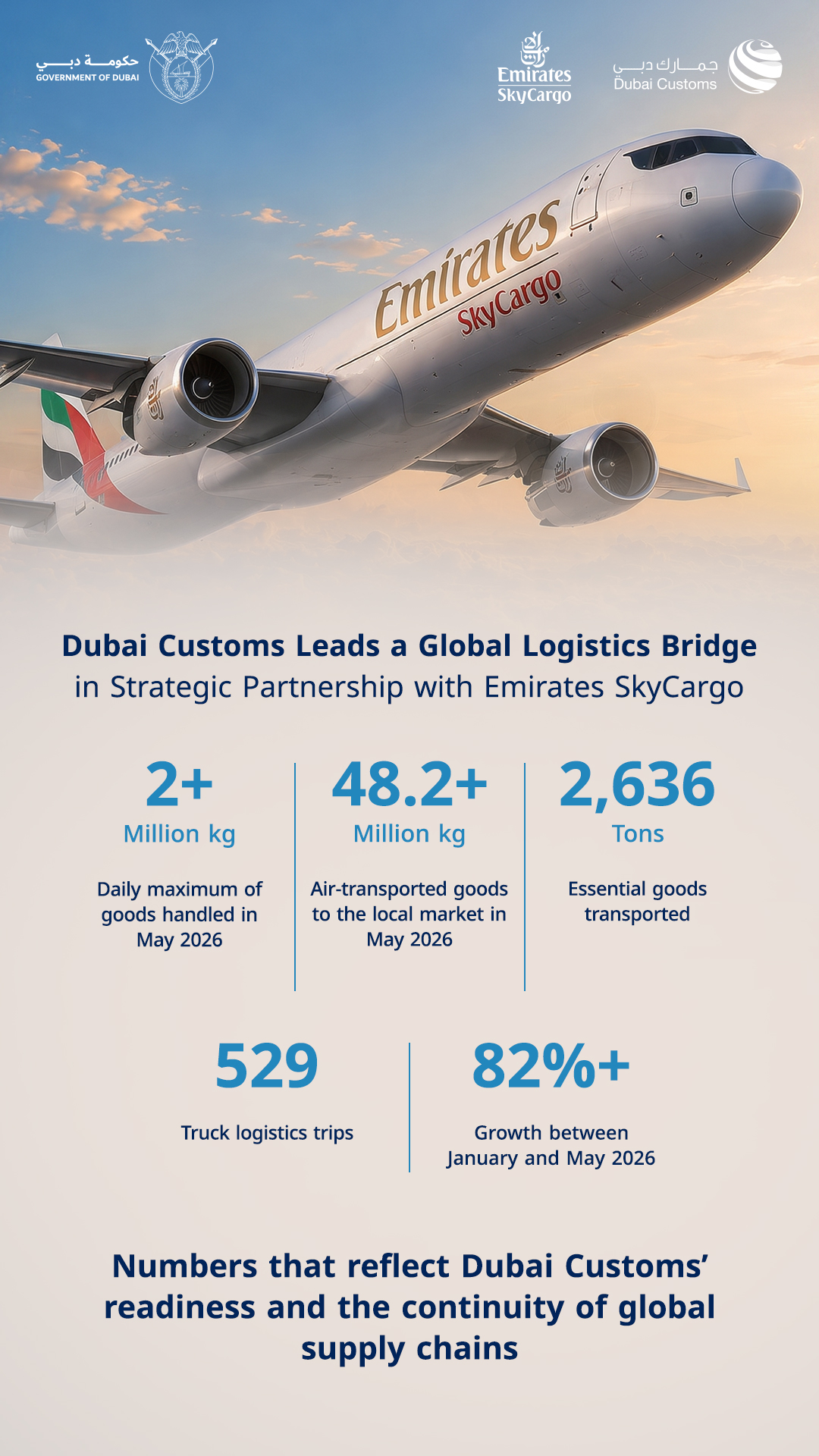
- Imported goods cleared through the facilities rose from 26.6 million kg in January to 48.3 million kg in May 2026.
- The bridge supports customs clearance, air cargo resilience, and essential goods flows across the Gulf region.
Dubai Customs and Emirates SkyCargo have operated an integrated logistics bridge across Dubai International Airport Cargo Village and Al Maktoum International Airport Air Cargo Centre, strengthening clearance capacity across two of the emirate’s core airfreight facilities.
The bridge was used to accelerate customs processing, improve operational capacity, and maintain supply continuity for essential cargo moving through Dubai and into the Gulf region. Food, pharmaceutical preparations, and general merchandise were among the goods handled through the system.
Operational indicators show a sharp increase in throughput. Imported goods cleared through the two facilities rose from 26,559,019 kg in January 2026 to 48,259,442 kg in May, an increase of more than 82%. The daily maximum of goods handled also rose from 1,236,537 kg in January to 2,106,645 kg in May.
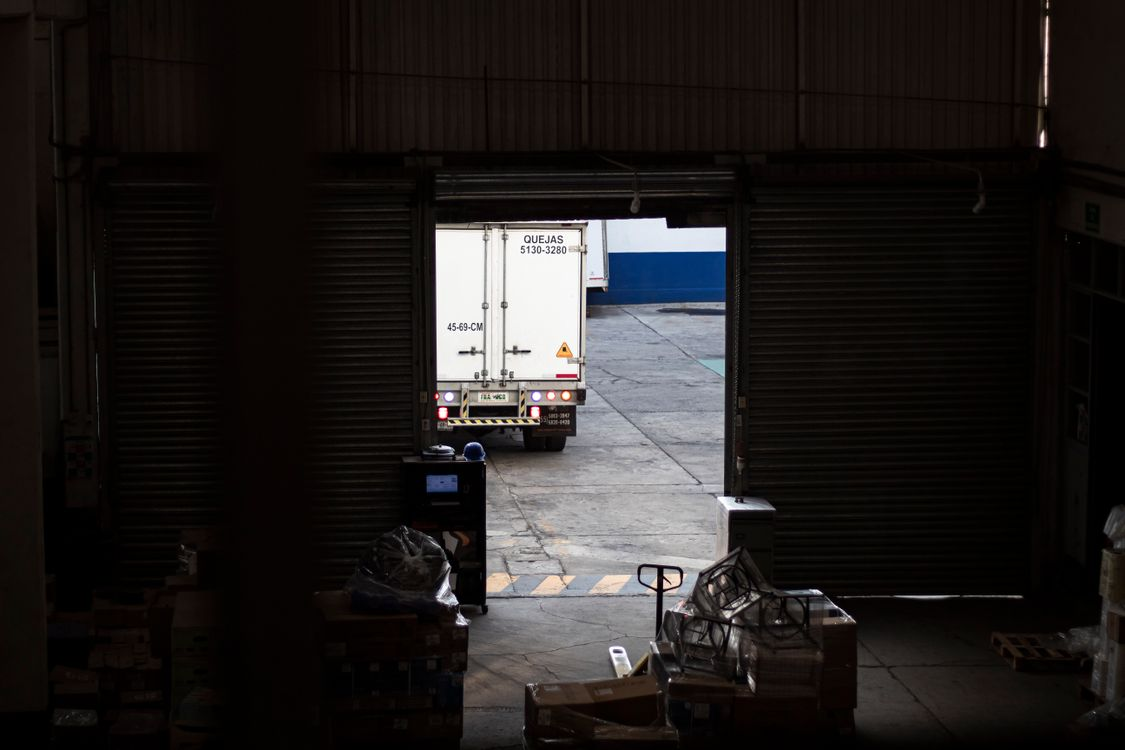
Support operations through May 2026 included 529 truck logistics trips transporting 2,636 tonnes of essential goods. By linking clearance activity and cargo movement across the two airport sites, Dubai has created a more coordinated operating model for air cargo during periods of higher volume and regional pressure.
Airfreight relies on more than aircraft capacity. A shipment may land quickly, but slow clearance, incomplete documentation, or weak coordination between facilities can still turn an urgent movement into an operational problem. The Dubai bridge addresses that gap by treating customs processing and cargo flow as connected parts of the same network.
Food and pharmaceutical logistics place particularly heavy demands on that network. Medicines and healthcare products require tighter control over handling, documentation, security, and temperature-sensitive processes. Food cargo faces shelf-life pressure, inspection requirements, and demand spikes that leave little room for delay.
Regional conditions have placed additional attention on Gulf logistics infrastructure. Maritime uncertainty around the Strait of Hormuz and continued Red Sea disruption have shown how quickly risk around shipping corridors can influence fuel costs, insurance, routing choices, and carrier schedules. Air cargo cannot replace ocean freight at scale, but it can protect time-sensitive flows when slower modes become exposed.
Dubai’s logistics position depends on the ability to connect air, sea, road, free-zone, customs, and regional distribution capacity. The logistics bridge strengthens the customs and airfreight element of that proposition, where processing speed and administrative certainty can decide whether a hub remains useful under pressure.
The model also fits a wider shift in trade facilitation. Customs capability is increasingly being treated as infrastructure in its own right, alongside roads, ports, airports, and warehouses. Digital records, integrated clearance procedures, and coordinated operating centres can improve the performance of physical assets by removing avoidable administrative dwell time.
For regional distributors, the difference between a fast aircraft movement and a fast end-to-end movement is often measured at the clearance stage. Goods that sit waiting for release are not available for production, retail replenishment, healthcare delivery, or food supply. Faster customs handling turns air cargo speed into usable inventory.
The system’s long-term value will depend on repeatability. A bridge that can absorb higher volume over several months, while maintaining processing speed and service quality, becomes more than a temporary workaround. It becomes a tested operational route for future pressure points.
Dubai’s air cargo role has always rested on geography, but geography alone is no longer enough. The more volatile trade becomes, the more hub competitiveness depends on coordination between government systems, private operators, and multimodal infrastructure. The Dubai Customs and Emirates SkyCargo bridge places that coordination at the centre of the airfreight operation.