IN Brief:
- Amazon Australia has agreed to purchase 17.2 hectares of land in Bradfield, Western Sydney.
- The company has invested almost $2bn in Western Sydney since opening its Moorebank fulfilment centre in 2018.
- A State Significant Development Application has been lodged for an additional robotics fulfilment centre.
Amazon Australia has agreed to purchase 17.2 hectares of land in Bradfield, Western Sydney, extending a logistics footprint that already includes fulfilment and operational sites across Moorebank, Kemps Creek, Regents Park, and Horsley Park.
The agreement adds further weight to Western Sydney’s role in Amazon’s Australian network. Since opening its first Sydney fulfilment centre at Moorebank in 2018, the company has invested almost $2bn in the region, with operations now spanning fulfilment, logistics, technology, and management roles.
Amazon opened a robotics fulfilment centre in Kemps Creek in 2022, followed by a logistics site in Regents Park and a fulfilment centre in Horsley Park in 2025. Another Horsley Park fulfilment centre is due to open later in 2026, while a State Significant Development Application has been lodged for an additional robotics fulfilment centre to complement the Kemps Creek site.
Western Sydney combines population growth, industrial land, road connectivity, and proximity to major freight infrastructure. Those characteristics make it a natural base for high-volume fulfilment, but the scale of Amazon’s investment shows that the region is becoming more than a simple warehouse location.
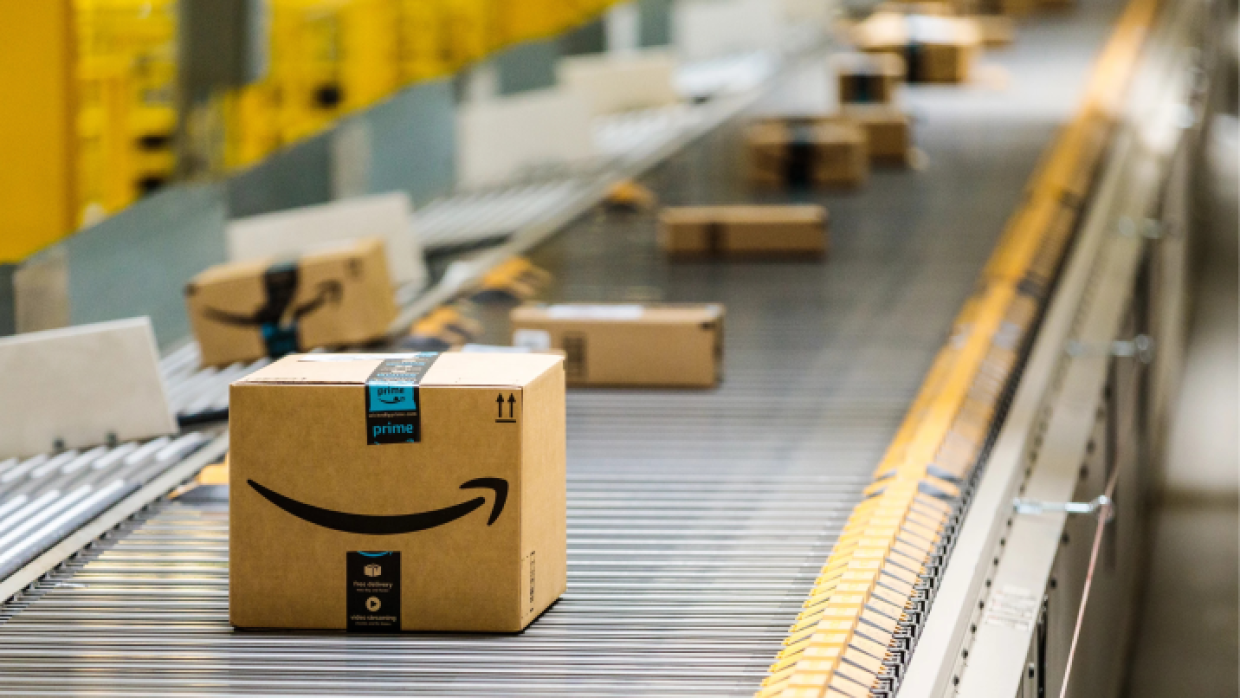
Large-format fulfilment operations now depend on the interaction between building design, parcel flows, automation, labour availability, yard capacity, and transport access. A robotics fulfilment centre is not only a storage facility; it is a dense operating system that needs power, data, maintenance capability, safety design, carrier integration, and accurate inbound supplier performance.
Amazon’s European delivery strategy has also been moving further into physical access points, including its locker expansion with MyFlexBox in Germany. That last-mile development sits at the customer-facing end of the network, while the Bradfield land agreement strengthens the upstream fulfilment capacity that makes dense delivery networks workable.
Retail fulfilment in Australia has its own operational demands. Metropolitan demand is concentrated, domestic distances are long, and consumers expect rapid delivery without seeing the complexity behind inventory placement. Stock has to be positioned close enough to demand to protect service levels, but not so close that the network becomes overbuilt and inefficient.
Robotics can help manage that balance by improving storage density, reducing walking time, and increasing the speed at which inventory can be accessed. It also changes the skills profile of the warehouse. Maintenance technicians, control-room staff, systems specialists, and trained operations managers become as important as conventional pick-and-pack labour.
The Bradfield agreement also places Amazon within a wider industrial and infrastructure story around Western Sydney. The region’s freight appeal is being shaped by road investment, the developing aerotropolis, Western Sydney International Airport, and land-use planning aimed at employment and logistics growth. Even when fulfilment centres are not built around air cargo, proximity to a major infrastructure cluster gives operators more network options over time.
Supplier requirements tend to tighten as automated fulfilment grows. Labelling accuracy, pallet quality, packaging integrity, booking discipline, and inventory data all become more important because errors move quickly through high-speed facilities. Automation raises the ceiling on throughput, but it also reduces tolerance for weak inbound execution.
The distinction between conventional warehousing and modern fulfilment is becoming sharper. A conventional warehouse can be adapted around manual handling and storage. A robotics-led fulfilment centre requires early alignment between real estate, software, equipment, traffic flow, and service design. Decisions made at the planning stage shape productivity for years.
Amazon’s Bradfield move therefore extends more than its land bank. It reinforces a fulfilment model built around dense regional infrastructure, robotics-enabled processing, and a Western Sydney cluster that can serve long-term Australian demand. The region’s logistics gravity is increasing, and Amazon is placing additional capacity directly inside it.