IN Brief:
- The centre will contain approximately 18,800 automated storage locations.
- Miniload cranes and automated VNA trucks will handle inventory.
- Commissioning is scheduled for the second quarter of 2027.
Jungheinrich will design and build a fully automated distribution centre for rolling-bearing and linear-technology specialist Eisenhart Laeppché in Wilhelmshaven, Germany.
The greenfield project combines automated small-parts and pallet storage with goods-to-person picking, conveyors, racking, workstation equipment, material-flow controls, visualisation, and the Jungheinrich Warehouse Management System. Commissioning is scheduled for the second quarter of 2027.
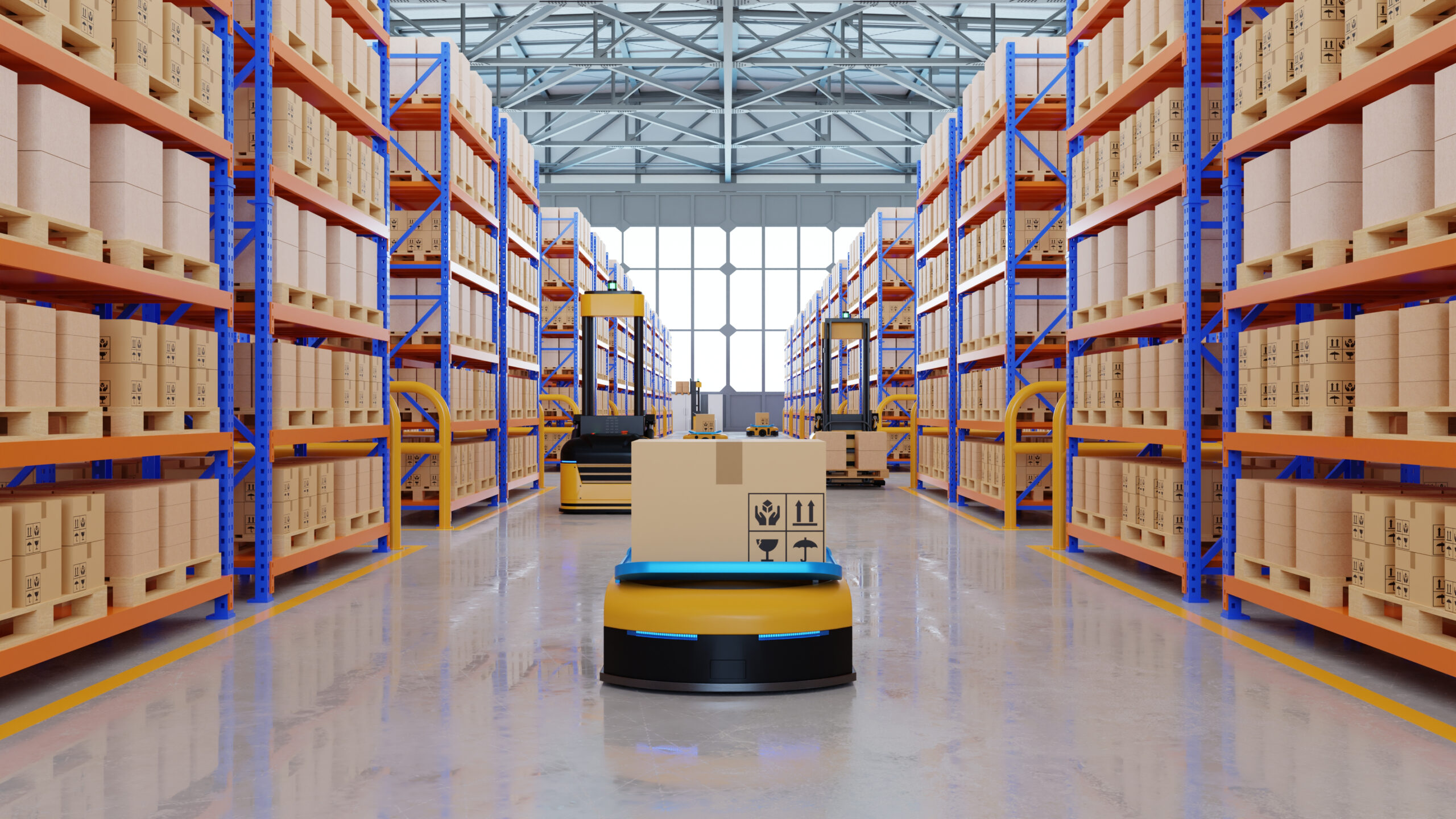
An automated miniload warehouse will provide 14,904 double-deep container locations, served by three STC 2B1A stacker cranes. High-dynamic travel and energy-efficient drives will support storage and retrieval while feeding containers into the picking operation.
A separate automated very-narrow-aisle warehouse will contain 3,870 pallet locations within racking approximately 9.7m high. Two automated EKX 516ka trucks will work inside the aisles, bringing combined capacity across the container and pallet systems to nearly 18,800 positions.
Six goods-to-person workstations will sit downstream of the storage systems, with four handling containers and two serving pallets. Inventory will travel to employees at fixed positions, reducing walking and searching while allowing stations to be designed around repetitive reach, presentation, and order-verification tasks.
Rising small-parts volumes had pushed Eisenhart Laeppché’s existing manual picking process towards its economic and organisational limits. The new centre is intended to shorten lead times, raise throughput, improve working conditions, and provide capacity for further growth without expanding manual travel proportionately.
Expansion has been considered within the initial design, because the miniload system can accept two further aisles and the pallet warehouse can accommodate as many as three additional automated EKX trucks. Future capacity can therefore be installed within the established operating architecture rather than requiring another immediate move.
The combined container and pallet configuration reflects the varied inventory found in industrial component distribution. Bearings and smaller linear-motion products require dense storage and rapid order assembly, while larger products, replenishment stock, and inbound deliveries continue to move on pallets.
Treating those flows as a single controlled operation avoids creating automation islands that maintain separate queues, priorities, and stock records. The warehouse-management system must coordinate replenishment, picking, order urgency, conveyor routing, and equipment availability across both formats.
Storage density provides limited value when master data is inaccurate or replenishment reaches the picking system late. Product dimensions, weights, packaging types, velocity profiles, and minimum stock levels all need to reflect physical reality, because automated equipment applies the rules it receives consistently even when those rules are wrong.
Jungheinrich has been extending connectivity across its automation portfolio, including work with HMS Networks to improve PowerCube communication and diagnostics. The Eisenhart project applies that wider emphasis at facility scale, with software linking stacker cranes, automated trucks, conveyors, and picking stations.
Industrial service-centre investment is following a similar pattern elsewhere. Trelleborg’s automated European service centre also places controlled storage and rapid dispatch behind a regional component-supply operation, where availability and response time frequently determine whether a customer’s production line remains running.
Greenfield construction gives Eisenhart Laeppché scope to design column spacing, floor tolerances, clear height, fire protection, charging infrastructure, maintenance access, and conveyor routes around the machinery. Brownfield projects usually require equipment to fit around structural and operational constraints inherited from another process.
That freedom does not remove commissioning risk, because mechanical installation, controls, inventory migration, location logic, interfaces, and employee training must stabilise before customer orders are transferred. A technically complete system can still underperform when stock records, product packaging, or process responsibilities do not match the assumptions embedded in the design.
Parallel inventory, phased migration, and fallback arrangements will be needed while throughput rises. Employees accustomed to manual picking must also learn to manage system-directed work, exceptions, quality checks, and equipment interruptions without bypassing controls introduced to preserve accuracy.
Automation will concentrate labour rather than remove it from the operation. Machinery absorbs repetitive internal travel, while employees remain responsible for verification, packing, quality, unusual products, damage, and exceptions that lack the uniformity required by fixed handling routines.
Industrial distributors increasingly compete on availability, consistency, and response speed alongside unit price. Eisenhart Laeppché’s investment places scalable automated storage behind that service proposition, replacing a manual process before growing order volume turns it into a permanent constraint.