IN Brief:
- Hamburg will be removed from the East Med Express rotation and replaced by Wilhelmshaven from week 36.
- The revised loop links Felixstowe, Wilhelmshaven, Bremerhaven, Antwerp, Piraeus, and four Turkish ports.
- Shippers must review inland routings, cut-off times, feeder connections, and German import or export arrangements.
Hapag-Lloyd will replace Hamburg with Wilhelmshaven on its East Med Express service from week 36, changing the German gateway used by the northern Europe–Mediterranean loop.
The revised rotation will call at Felixstowe, Wilhelmshaven, Bremerhaven, Antwerp, Piraeus, Izmit, Istanbul, Gemlik, and Aliaga. The first listed Wilhelmshaven call is scheduled for the Columbine Maersk, voyage 636 southbound and 633 northbound.
Hamburg will no longer receive a direct EMX call once the new rotation begins. Hapag-Lloyd said the adjustment is intended to improve schedule reliability, operating efficiency, and connections with its feeder network.
The service carries containerised cargo between the UK, continental Europe, Greece, and Türkiye, serving automotive, machinery, chemicals, textiles, food, retail, and general manufacturing supply chains. Four Turkish calls retain access to several of the country’s largest industrial and consumer regions.
Replacing one port within an established loop changes the physical route taken by every affected import and export container. Cargo previously collected from or delivered to Hamburg must instead be planned through Wilhelmshaven or moved onto another service retaining a Hamburg call.
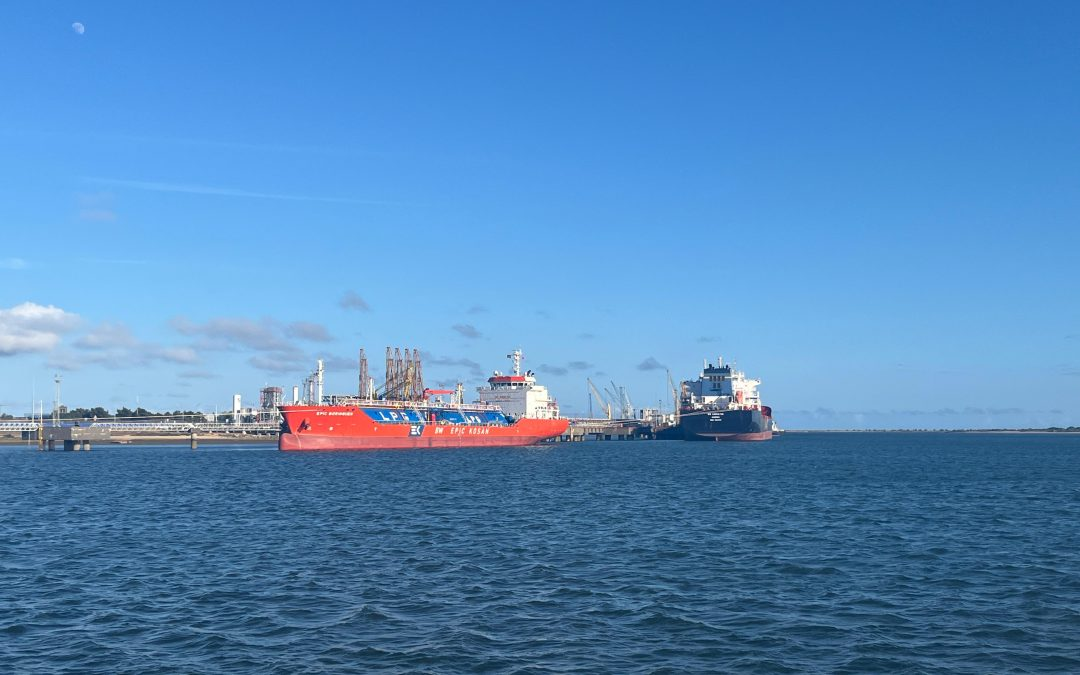
Wilhelmshaven offers deep-water access and has been developed as Germany’s principal deep-water container gateway. Large vessels can reach the terminal without the river-navigation and draught constraints associated with some other northern European ports.
Hamburg retains a much larger logistics cluster, extensive rail connections, a dense forwarding community, and proximity to numerous depots, warehouses, and cargo owners. Its removal from one service does not alter that wider position, but it changes the economics for shipments allocated specifically to the EMX loop.
The effect will differ by inland origin or destination. Some cargo may gain a shorter or less congested route through Wilhelmshaven, particularly where rail services align with the final location, while other shipments will incur additional road distance, handling, or repositioning.
Forwarders will need to compare the complete door-to-door cost rather than the ocean rate alone. A stable sea-freight charge can be offset by longer trucking, an additional rail transfer, storage, detention, revised customs arrangements, or a more distant empty-container return.
Export bookings require particular attention during the transition. Terminal cut-off times, verified gross mass submissions, documentation deadlines, empty-equipment collection, and delivery instructions may still reference Hamburg even after the operational rotation has changed.
Imported cargo can face similar issues when transport orders, customs declarations, delivery appointments, or depot instructions were prepared around the former gateway. Early amendment reduces the risk of containers arriving at Wilhelmshaven without a matching inland movement.
Service reliability remains a persistent concern across European container networks. Large vessels operate complex rotations in which congestion, berth delays, bad weather, labour disruption, or slower-than-planned exchanges at one port can affect every subsequent call.
Carriers respond by removing calls, changing terminals, extending buffers, omitting congested ports, or transferring cargo to feeders. Such measures can protect the wider loop while moving part of the recovery task onto terminals, forwarders, hauliers, and cargo owners.
Gdansk’s addition to a Far East service showed another side of the same network adjustment, with carriers adding direct access where cargo demand, capacity, and operational priorities support a revised rotation.
Competition between German ports increasingly depends on inland performance as much as nautical access. Deep water and berth availability attract ships, but importers and exporters require dependable rail frequency, terminal dwell, depot space, truck appointments, and customs processing.
Wilhelmshaven must therefore absorb the additional EMX exchange without transferring delay into the yard or inland network. Large vessel calls concentrate demand for cranes, equipment, trains, and road slots within a relatively short operating window.
Temperature-controlled cargo requires further checks around reefer-plug capacity, inspection services, monitoring, and contingency storage. A gateway change can alter the time a refrigerated container spends on terminal, particularly when customs release or onward transport has not been rescheduled.
Retaining four Turkish ports provides broad market coverage but creates a long rotation with several opportunities for delay. Izmit, Istanbul, Gemlik, and Aliaga each serve distinct industrial regions, making schedule recovery more complex than it would be on a simple two-port shuttle.
The effective voyage should be confirmed against each booking rather than inferred solely from the announced week number. Cargo already planned through Hamburg may require amendments to contracts, transport orders, customs instructions, and inventory-arrival forecasts.
On a service map, replacing Hamburg with Wilhelmshaven appears to be a modest adjustment. Across the physical operation, it changes numerous handovers between carrier, terminal, customs agent, depot, rail operator, haulier, warehouse, and consignee.