IN Brief:
- Long Beach is the first US port to formalise SMR cooperation with MARAD.
- Work will cover commercial vessels, port assets, safety standards, and inspection procedures.
- The non-binding agreement contains no commitment to funding, procurement, or a specific reactor design.
Port of Long Beach has signed a memorandum of cooperation with the US Maritime Administration to advance small modular reactor technology for commercial vessels, ports, and other maritime assets.
Long Beach becomes the first US seaport to establish this type of formal partnership with MARAD. The two organisations will work with the US Coast Guard, Department of Energy, and Nuclear Regulatory Commission on operating protocols, safety standards, inspection processes, and the regulatory structure needed to receive and service nuclear-powered commercial vessels.
The agreement is non-binding and does not commit either organisation to funding, procurement, or adoption of a particular reactor design. Its immediate purpose is to create a framework for technical, operational, and regulatory work rather than order a vessel, reactor, or generating installation.
MARAD sought industry information in May 2026 on a US-built, scalable, and commercially viable small modular reactor for the national marine-transportation system. Long Beach has also agreed a lease allowing BlueCore Energy to assemble, test, and store maritime power modules within the port estate.
Small modular reactors are being considered for ship propulsion and port electricity because they can provide high-output power over long operating periods without conventional refuelling. Commercial use would nevertheless require extensive arrangements covering physical security, crew competence, inspection, emergency response, liability, waste, fuel management, and end-of-life treatment.
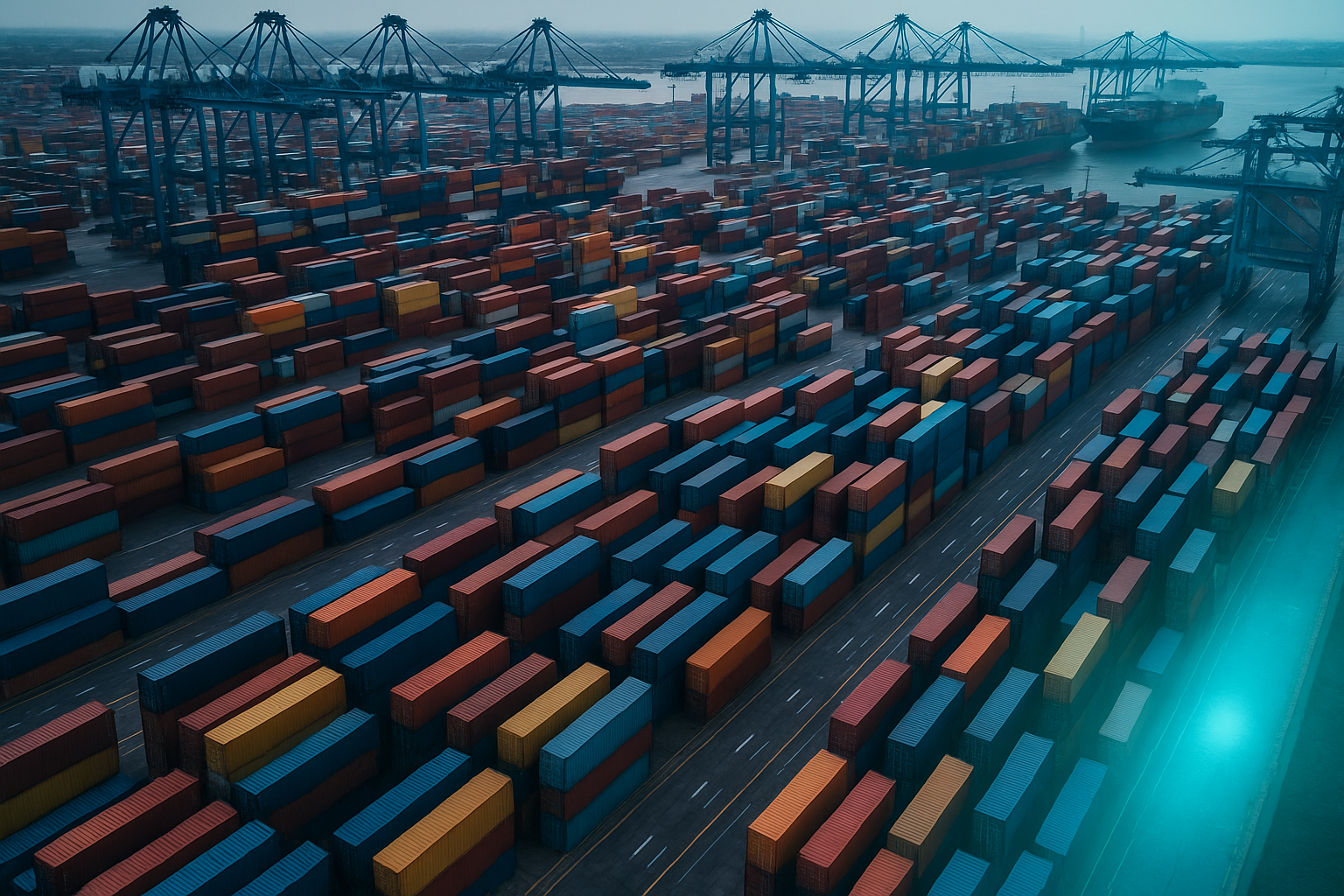
Long Beach handles approximately US$300bn of cargo annually and supports an estimated 2.7 million jobs across the United States. It also hosts two MARAD Ready Reserve vessels and is designated as a Commercial Strategic Seaport, combining routine container activity with national freight and defence-readiness responsibilities.
Electricity demand is expected to rise as cargo volumes grow and terminal equipment, trucks, rail assets, buildings, and shore-power systems electrify. The port’s longer-term planning includes a goal of doubling container throughput by 2050, increasing the need for reliable power alongside additional berth, yard, rail, and road capacity.
A firm low-carbon generating source could support part of that demand, although a nuclear installation within a major port would introduce requirements far beyond those attached to solar generation, batteries, or depot charging. Security zones, cooling, maintenance access, emergency planning, and regulatory control would have to coexist with continuous cargo and vessel operations.
Nuclear-powered ships would create another layer of complexity. Ports would need defined arrival procedures, berth restrictions, inspection responsibilities, crew requirements, incident-response plans, and rules governing maintenance or reactor-related activity while the vessel is alongside.
International acceptance would be essential because a cargo ship gains little commercial value if only a limited number of ports can receive it. Flag states, coastal authorities, insurers, classification societies, terminal operators, cargo owners, and charterers would all influence where and how such vessels could trade.
The cooperation agreement places regulation alongside engineering at an early stage. A reactor cannot be assessed only as a propulsion unit; commercial viability depends on ship construction, port access, fuel management, insurance, decommissioning, trained personnel, route flexibility, and the treatment of liability across jurisdictions.
Maritime decarbonisation is already producing several competing fuel and power pathways. Barcelona has completed a commercial-scale bioethanol bunkering operation, showing how alternative marine energy has to be incorporated into storage, documentation, transfer, safety procedures, and ordinary vessel schedules.
Nuclear propulsion would require a substantially more demanding infrastructure and regulatory model, but it also offers different operating characteristics from biofuels, methanol, ammonia, batteries, and hydrogen. Its potential is most often discussed around large vessels, long voyages, and port energy systems where continuous high-output power has particular value.
Economics remain unresolved. Small modular reactor projects must absorb development, licensing, construction, security, operation, and decommissioning costs, while commercial ships operate in markets sensitive to capital expenditure, charter flexibility, financing, and resale value.
A propulsion system designed for a vessel with a working life measured in decades would also need to remain compatible with changing trade routes and port regulations. Owners would be reluctant to commit capital if access remained restricted to a small number of specialist terminals.
Long Beach and MARAD are not yet selecting that commercial model. Their work will establish whether vessel arrival, servicing, inspection, testing, and regulation can be converted into an operating framework suitable for a busy cargo gateway.
The memorandum moves nuclear maritime power into formal US port planning, although deployment remains distant. Progress will be judged through regulatory decisions, technical standards, demonstrator projects, port-readiness work, and credible cost evidence rather than the existence of the agreement alone.