IN Brief:
- Roboteon’s platform manages several robot types and manufacturers through one orchestration layer.
- AI-supported task allocation and routing coordinate replenishment, work-in-progress, picking, and finished-goods movements.
- Integration with ERP, WMS, and MES environments is intended to reduce hard-coded interfaces and improve real-time visibility.
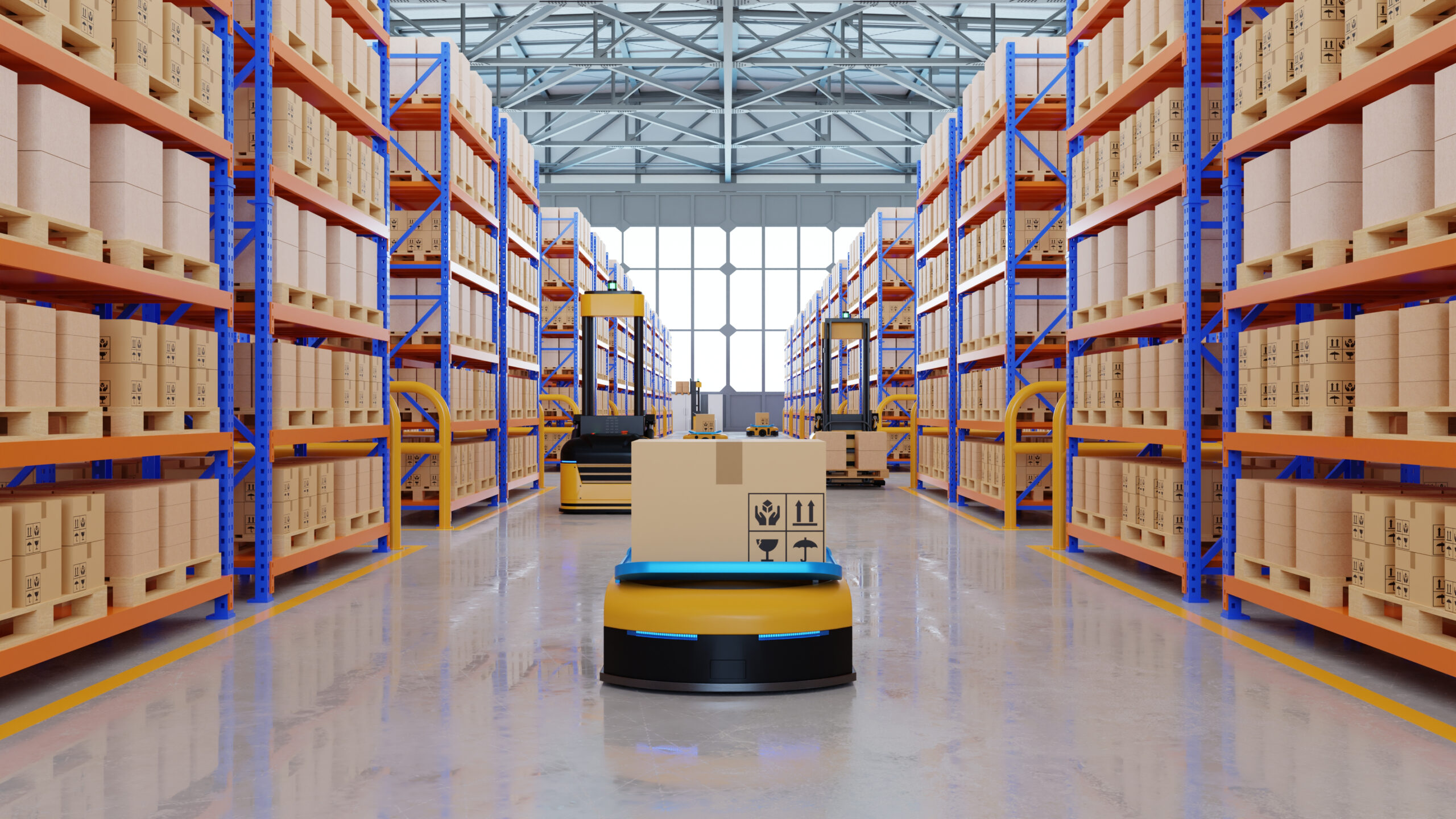
Roboteon has expanded its Robotics Fulfilment and Orchestration Platform to coordinate mixed fleets of autonomous mobile robots, automated guided vehicles, autonomous forklifts, and other materials-handling equipment.
The vendor-independent system manages machines from different manufacturers through a common software layer. It can allocate tasks, coordinate routes, monitor equipment status, and connect automated movements with enterprise resource planning, warehouse management, and manufacturing execution systems.
Processes supported by the platform include line-side replenishment, work-in-progress transfer, raw-material movement, piece, case, and pallet picking, and transport between production, storage, and shipping areas. AI-supported task assignment and routing select equipment according to availability, load type, location, operating priority, and congestion.
Mixed automation estates have become more common as warehouses and factories purchase equipment for separate applications over several investment cycles. An AMR fleet may move totes, autonomous forklifts handle pallets, and fixed conveyors connect selected zones, with each system carrying its own fleet manager, maps, interfaces, and data model.
Those systems can perform effectively within their assigned areas while remaining poorly connected with the wider operation. A WMS or MES may have to issue work through several separate interfaces, leaving supervisors to reconcile status information across multiple dashboards.
Hard-coded integration can connect the equipment initially, but subsequent changes become costly. A revised layout, additional robot supplier, new handling process, or altered product range may require development work across several interfaces before the automated flow operates correctly again.
A common orchestration layer separates the warehouse or production workflow from the commands understood by individual machines. The upstream system requests a material movement, while the platform selects suitable equipment and translates the task into the instruction format used by that robot.
Such an architecture can make future expansion less disruptive, provided the platform supports the required interfaces and the physical equipment can operate together safely. Software compatibility does not remove differences in navigation, payload, speed, charging, turning radius, load transfer, and safety behaviour.
Traffic coordination therefore extends beyond choosing the nearest available vehicle. The system must prevent congestion and deadlocks while accounting for temporary obstructions, pedestrians, manual forklifts, doors, lifts, production equipment, and shared transfer points.
A route that appears efficient within a digital map may perform poorly when several robots converge on the same aisle or workstation. Effective orchestration balances individual journey time against the throughput of the complete operation.
Real-time visibility can also help distinguish between a vehicle fault and a process constraint. When several robots wait at one location, the underlying problem may be an unavailable operator, blocked transfer station, delayed production process, full buffer, or downstream quality hold.
The platform’s integration with ERP, WMS, and MES systems allows operating priorities to be reflected in robot work. An urgent component replenishment can take precedence over a routine finished-goods movement, while cancelled or delayed production orders can release robots for other tasks.
Manufacturing environments make that prioritisation particularly demanding because material shortages can stop an expensive line. Maximising the number of robot missions completed is less useful when the system neglects a critical part required within minutes.
The widening range of autonomous industrial vehicles is visible in ABB’s expansion of its Visual SLAM forklift portfolio. As additional vehicle types become available, orchestration increasingly determines whether they function as one material-flow system or as separate islands.
Vendor independence also carries a commercial dimension. Purchasing an entire automation stack from one supplier can simplify responsibility and commissioning, while limiting later choice; a neutral control layer offers more flexibility but introduces another critical system into the operating architecture.
Availability, cybersecurity, latency, backup, and recovery therefore require close scrutiny. When every automated task passes through the orchestration platform, an outage can interrupt several fleets and processes simultaneously rather than affecting one equipment type.
Master-data quality remains equally important. Load dimensions, weights, locations, priorities, equipment capabilities, and process states must be accurate before the platform can select a suitable robot and destination.
Automation exposes poor information rapidly because machines follow the instructions they receive without the informal adjustments used by experienced manual operators. A pallet recorded with the wrong weight or destination can create a failed mission, blocked aisle, or unsafe handover.
The current phase of mobile-robot adoption is moving beyond proving that an individual vehicle can navigate from one location to another. Warehouses and factories now need mixed equipment to share tasks, infrastructure, priorities, and data without becoming locked into a single hardware supplier.
Roboteon’s expanded platform will be judged through throughput, utilisation, recovery time, congestion, and the speed at which new workflows or equipment can be introduced. A single dashboard provides convenience; coordinated material flow that adapts without extensive reintegration provides the larger operational return.