IN Brief:
- Maersk Halifax received approximately 5,000 tonnes of ISCC-certified bioethanol on 17 October.
- Golden Island supplied the fuel at Pasir Panjang during simultaneous container-handling operations.
- Singapore will use the trial to assess ethanol procedures, mass flow metering and possible adaptation of methanol bunkering rules.
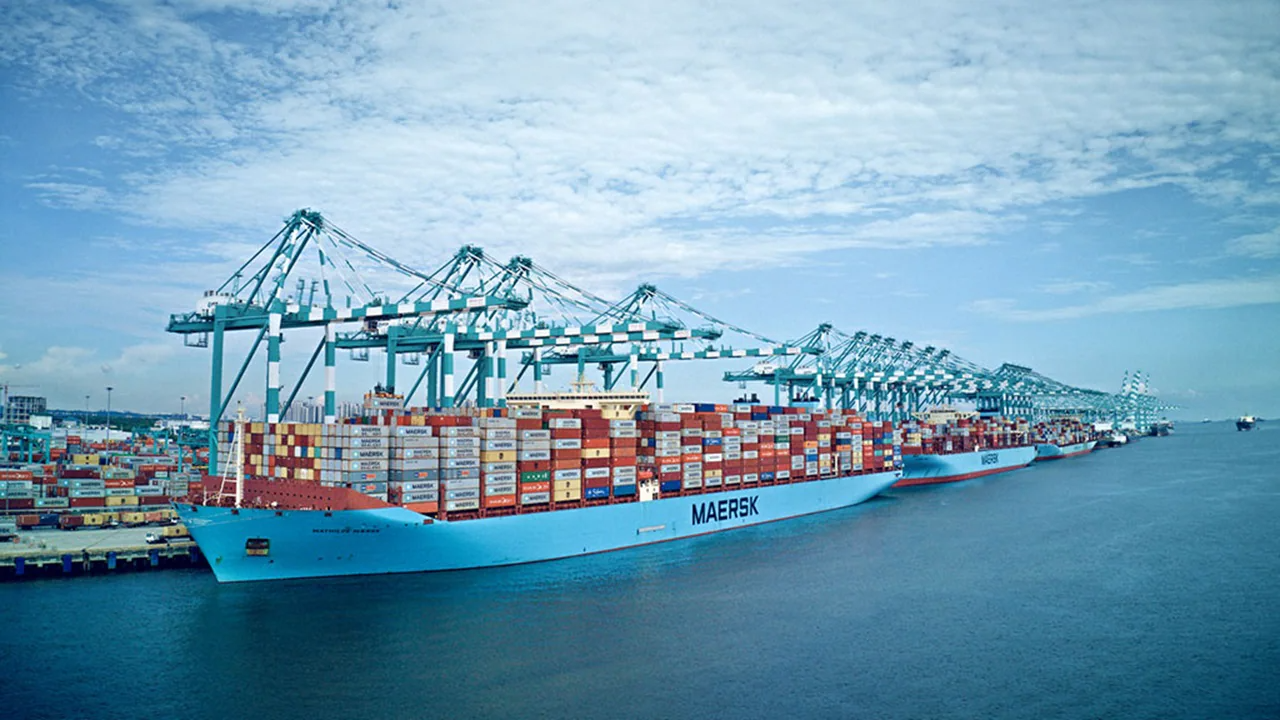
Maersk has completed an approximately 5,000-tonne bioethanol bunkering operation at Singapore’s Pasir Panjang Terminal, with fuel transfer taking place while container cargo operations continued. The operation was carried out on 17 October and announced by the shipping group on 19 October. Singapore’s Maritime and Port Authority described it as the largest volume of ethanol delivered in a single bunkering operation globally to date and the port’s first such operation.
The receiving vessel was Maersk Halifax, a Singapore-registered dual-fuel container ship that has been retrofitted for alternative-fuel operation. Golden Island supplied the bioethanol certified under the International Sustainability and Carbon Certification (ISCC) scheme from its chemical tanker Golden Centaurus, with PSA Singapore involved as terminal operator and the Maritime and Port Authority of Singapore supporting the exercise. The volume transferred was measured by a mass flow meter, rather than being reported solely from tank-level calculations.
The 17 October transfer took place alongside container cargo operations, an arrangement known as simultaneous operations, or SIMOPS. A chemical tanker supplied fuel while container cranes continued working at the same terminal. The participating organisations coordinated transfer hoses, mooring positions, personnel access, crane movements and emergency routes under a common berth plan. Cargo work and fuel delivery involve different crews and command arrangements, making the allocation of responsibilities between the supplier, receiving vessel and terminal important throughout the transfer. The completed operation provides Singapore with a practical reference from an active container berth.
Singapore’s maritime authority says the participating organisations completed hazard identification and hazard and operability assessments before the transfer. These assessments examine how departures from the planned sequence might affect simultaneous activity and establish the circumstances in which work should pause. The preparations drew on Singapore’s earlier methanol bunkering experience, while the vessels and terminal operator worked within their respective operating responsibilities. The completed assessment related to the particular ship, bunker tanker and berth arrangements used at Pasir Panjang on 17 October.
Golden Centaurus, an IMO Type II chemical tanker, delivered the certified fuel to Maersk Halifax, with a mass flow meter recording the transferred quantity for both parties. Singapore’s Technical Reference 129 governs methanol bunkering, including operating procedures, measurement, safety and personnel competence. The Maritime and Port Authority is assessing how that framework should be adapted for ethanol. The authority’s work covers the suitability of hoses, seals, piping and vessel connections for ethanol; the sequence for connecting, transferring and isolating the fuel; coordinated emergency response during cargo handling; and the training required for participating crews. Verification of mass flow meter performance with ethanol also involves calibration and the effect of transfer conditions, including temperature and density, on measurement. These findings will provide the technical basis for an ethanol-specific operating reference.
Maersk includes ethanol among the fuels it is investigating for dual-fuel vessels. Agricultural and industrial supply chains can produce, transport and store ethanol, while marine uptake depends on port availability, acceptable feedstock and production pathways, and documentation accompanying each delivered batch. The ISCC certification attached to this consignment records compliance with the applicable sustainability scheme. Lifecycle emissions performance depends on the origin, processing and transport of the fuel as well as vessel use; verified voyage-specific greenhouse gas figures were not released. Fuel procurement teams would therefore need to assess individual consignments against their contractual and sustainability requirements.
The Singapore bunkering followed an earlier Maersk ethanol transfer in the United States. It took place in a different jurisdiction, involved different fuel-supply and terminal arrangements, and used a vessel retrofitted for dual-fuel operation. Maersk also refers to previous trials aboard Laura Maersk, Antonia Maersk and Tangier Maersk. The Singapore event adds a large-volume delivery alongside active container handling, requiring the fuel supplier, terminal operator, carrier and maritime authority to co-ordinate the berth plan and operations. Experience from one port helps inform a later operation, although vessel schedules, local service providers and berth conditions determine how that experience can be applied elsewhere.
The Maritime and Port Authority will now examine the operational record from Pasir Panjang to develop a local framework for subsequent ethanol bunkering. Once that framework is established, suppliers, terminal operators and carriers can use its requirements to plan repeat services at suitable berths. Commercial provision will also require certified fuel supplies, storage and chemical tanker capacity, and sufficient demand from vessels equipped to receive ethanol. Singapore has not set a date for issuing the relevant procedures or for offering routine ethanol deliveries throughout the port. The next decisions concern formalising the port rules and determining where recurring services could be supported commercially.