IN Brief:
- PHX 3 has gained SQF certification following approximately one year of preparation.
- The site forms part of a three-warehouse Phoenix network exceeding 2.5 million ft².
- Certification is site-specific, with the separate 565,000ft² Chino facility still completing its process.
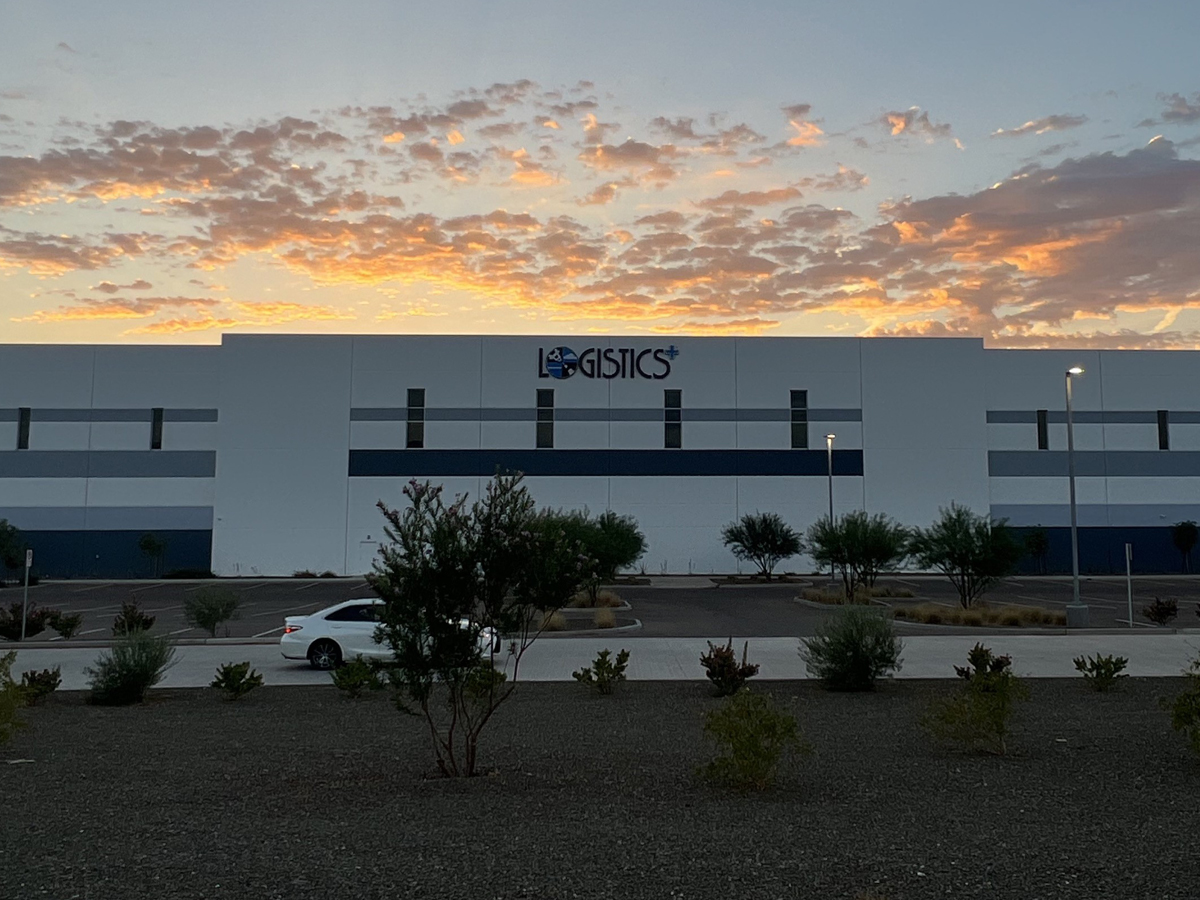
Logistics Plus has gained Safe Quality Food certification for its PHX 3 warehouse in Glendale, Arizona, adding an independently audited food safety system to its western US warehousing operation.
The company expects its 565,000ft² facility in Chino, California, to complete SQF certification in the coming weeks. Until that process is completed, the certification applies to the Phoenix site and should not be presented as a network-wide credential.
PHX 3 is one of three Logistics Plus warehouses in the greater Phoenix market. Together, the facilities provide more than 2.5 million ft² of storage and fulfilment space, with access to West Coast import and export flows and distribution across the Southwest.
The Safe Quality Food programme is recognised by the Global Food Safety Initiative and includes a code for storage and distribution operations handling chilled, frozen, dry, stable, pre-processed, packaged, and other food products. Certification requires a documented system assessed by an independent certification body.
Tom Kelly, vice-president of warehouse operations at Logistics Plus, said the Phoenix certification followed about a year of work by the warehouse team. He said food and beverage customers increasingly expect the standard.
The work behind certification reaches further than keeping a warehouse clean. Storage and distribution controls cover product identification, traceability, withdrawal and recall readiness, employee training, sanitation, pest prevention, storage conditions, documented procedures, and corrective action.
For a third party logistics provider, those requirements have to work across several customers, product types, and ownership arrangements. The warehouse may not own the goods, but it controls where they are placed, who handles them, how stock is rotated, which conditions are recorded, and how quickly affected inventory can be located.
Inventory accuracy therefore becomes part of food safety rather than simply a productivity measure. A pallet recorded under the wrong location, lot, or status can obstruct a recall, allow blocked stock to move, or leave a customer unable to prove where affected product was held and dispatched.
The same principle applies to changes in condition. Damaged packaging, evidence of pests, temperature excursions, water ingress, contamination risk, or a failed cleaning process need clear quarantine and escalation procedures.
Warehouse teams must know when they can correct a routine issue and when product has to remain isolated pending a decision from the customer or quality function. Those actions need to be recorded so that the final disposition can be traced.
Logistics Plus says the Phoenix facilities include warehouse management capability, secured premises, trailer parking, racking, and pick, pack, and ship services. Those assets support food-grade operations only when system records match physical practice across receiving, storage, order selection, loading, and dispatch.
Certification can reduce duplicated customer audits, although it does not remove a brand owner’s responsibility to qualify and monitor its logistics providers. Customers still need to confirm that the certificate covers the correct site, activities, and products.
Additional requirements around allergens, temperature, retailer standards, or product-specific handling also need to be reflected in operating agreements. A general certificate does not replace customer instructions where the risk profile is more demanding.
The planned Chino certification would create a second western node for food-grade warehousing near the Los Angeles basin and West Coast ports. That could allow customers to divide inventory, shorten regional replenishment, and create contingency between Arizona and Southern California.
The benefit depends on product controls and data remaining consistent across both sites. Lot records, status codes, recall procedures, sanitation rules, and customer instructions need to be understood in the same way if inventory is moved between facilities.
Consistency becomes harder as a network expands. Procedures may be standardised centrally, but individual buildings have different layouts, equipment, labour conditions, pest pressures, transport patterns, and customer mixes.
Certification therefore marks a controlled system at a defined point in time, followed by the less visible work of maintaining records and correcting weaknesses every day. Audit readiness is a continuing operating discipline rather than an annual preparation exercise.
The wider US cold chain market is already using site qualifications as part of commercial positioning. RealCold’s move into pharmaceutical logistics showed how SQF, FDA registration, and specialist pharmaceutical credentials can sit within the same network while applying to different products, processes, and risks.
Logistics Plus is not presenting PHX 3 as a pharmaceutical site. Its announcement is focused on food and beverage storage and fulfilment, where SQF can support access to customers that require a recognised and auditable food safety programme.
The next useful evidence will be the scope and status of the Chino certificate, followed by the way customers use the two facilities. More certified space can improve market access, but capacity alone does not protect food.
The standard earns its value through disciplined receiving, storage, traceability, training, corrective action, and recall performance after the auditor has left.