IN Brief:
- Q2 revenue reached NT$45.92 billion, with after-tax profit of NT$5.73 billion.
- Tariff changes and higher energy costs brought Asia-Europe and transpacific bookings forward.
- Higher nominal fleet supply remains a counterweight to short-term congestion and disruption.
Yang Ming Marine Transport Corporation has reported a sharp second-quarter improvement after tariff changes, higher energy costs, and an earlier peak season lifted booking demand on Asia-Europe and transpacific trades.
Second-quarter consolidated revenue reached NT$45.92 billion, equivalent to about US$1.45 billion, while after-tax net profit was NT$5.73 billion, or roughly US$180 million. Earnings per share reached NT$1.64.
For the first half of 2026, Yang Ming recorded revenue of NT$84.58 billion, or US$2.68 billion, with after-tax net profit of NT$7.17 billion, around US$230 million, and earnings per share of NT$2.05. The figures show how strongly the second quarter carried the half-year result after a weaker opening quarter.
Yang Ming said changes in tariff policies and rising energy costs brought import bookings forward on the Asia-Europe and transpacific trades. That pulled part of the traditional peak season into the second quarter and supported higher rate levels before the market entered its normal third-quarter peak.
Early bookings alter capacity planning
The timing of demand changes both carrier revenue and network planning. A conventional peak allows lines to prepare vessel capacity, empty-container positioning, terminal windows, and sailing schedules around a relatively familiar seasonal pattern. Cargo brought forward by tariff deadlines or cost concerns can arrive in a more compressed period and leave a softer demand gap later.
Yang Ming’s first-half figures show the scale of the quarterly shift. Second-quarter revenue accounted for more than half of the six-month total, while second-quarter profit represented most of the first-half result. That improvement came even as carriers continued to absorb higher fuel costs and route disruption.
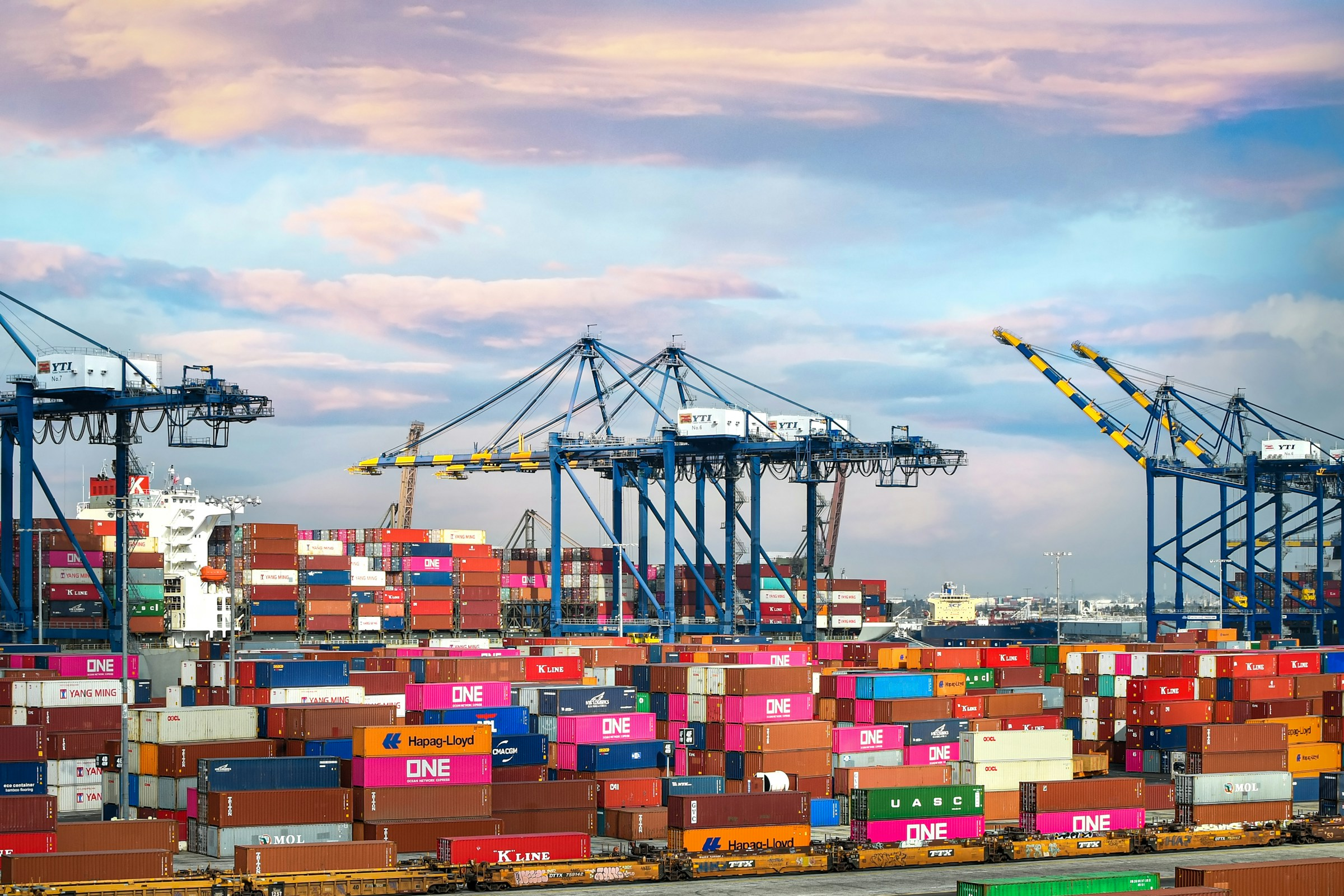
Port congestion added another variable. Yang Ming has identified congestion and geopolitical developments among the factors that could affect cargo flows and fleet deployment during the second half, alongside tariff policy and fuel costs. Delays at major terminals remove effective capacity even when the physical vessel fleet continues to expand.
That distinction is central to the current container market. A ship delayed outside port is still counted in fleet supply, but it cannot complete its planned rotation on time. Schedule disruption then carries into later calls, feeder connections, empty-container positioning, and equipment availability.
The result can be stronger spot pricing even when nominal fleet supply is growing faster than underlying demand. Carriers therefore face a market in which the orderbook points towards more capacity while disruption can still produce short periods of tightness on individual trades.
Fleet growth remains the larger constraint
Yang Ming’s stronger second quarter does not remove the longer-term supply question. Industry forecasts continue to point to vessel capacity expanding faster than container demand, leaving carriers dependent on disciplined deployment, blank sailings, and network adjustments if demand softens after the early peak.
That is why the composition of the second-quarter improvement matters. If customers merely shifted bookings forward, part of the third-quarter peak has already been consumed. If tariff uncertainty and higher costs also generated genuinely stronger cargo demand, the market could retain more support through the remainder of the year.
Yang Ming has said it will monitor cargo demand and adjust fleet deployment and sailing schedules where necessary. It also plans to strengthen port contingency management and cost control, with schedule reliability remaining a priority as operational conditions change.
The financial comparison with 2025 is mixed. First-half revenue of NT$84.58 billion was only slightly above the NT$84.17 billion recorded in the first half of 2025, while first-half net profit was lower than last year’s level. The second-quarter rebound therefore improved momentum without restoring the earnings profile seen a year earlier.
That leaves the carrier exposed to several moving variables at once. Tariff policies can change the timing and origin of bookings; higher bunker costs can lift voyage expenses; congestion can support rates while damaging schedule performance; and new vessel deliveries continue to expand nominal supply.
For shippers, the practical consequence is a market where rate direction may not follow headline fleet growth in a straight line. Localised congestion or a rush to move cargo ahead of policy changes can tighten capacity quickly, while the same lanes may soften once those temporary pressures ease.
Yang Ming’s second-quarter numbers capture that volatility. Profit strengthened as customers accelerated bookings and freight rates improved, but the carrier is entering the remainder of 2026 with more ships joining the global market and uncertainty over how much of the traditional peak has already been pulled forward.