IN Brief:
- Drewry’s Intra-Asia Container Index rose 6% to US$1,028 per 40ft container.
- Around 2.4 million TEU of containership capacity was waiting outside Chinese ports.
- Drewry expects rates to stabilise as operators work through weather-driven congestion.
Drewry‘s Intra-Asia Container Index rose 6% in the week to 13 August to US$1,028 per 40ft container, reaching a six-week high as poor weather and Middle East disruption tightened effective capacity.
The increase marked a second consecutive weekly rise after a prolonged decline, with freight rates increasing on most routes covered by the benchmark. Shanghai to Jawaharlal Nehru Port rose 33% to US$2,353 per 40ft container, Shanghai to Singapore increased 8% to US$1,096, and Shanghai to Jakarta rose 5% to US$1,533.
Those movements reverse the softer market visible at the end of July, when intra-Asia rates were falling across several important corridors. The benchmark excludes origin and destination terminal handling charges, so it does not represent the complete door-to-door cost of moving a container, but it provides a consistent view of short-term ocean spot pricing.
The latest increase is being driven as much by network disruption as by cargo demand. Drewry said Middle East unrest had already tightened the market before deteriorating weather compounded congestion across China.
Storm delays remove usable capacity
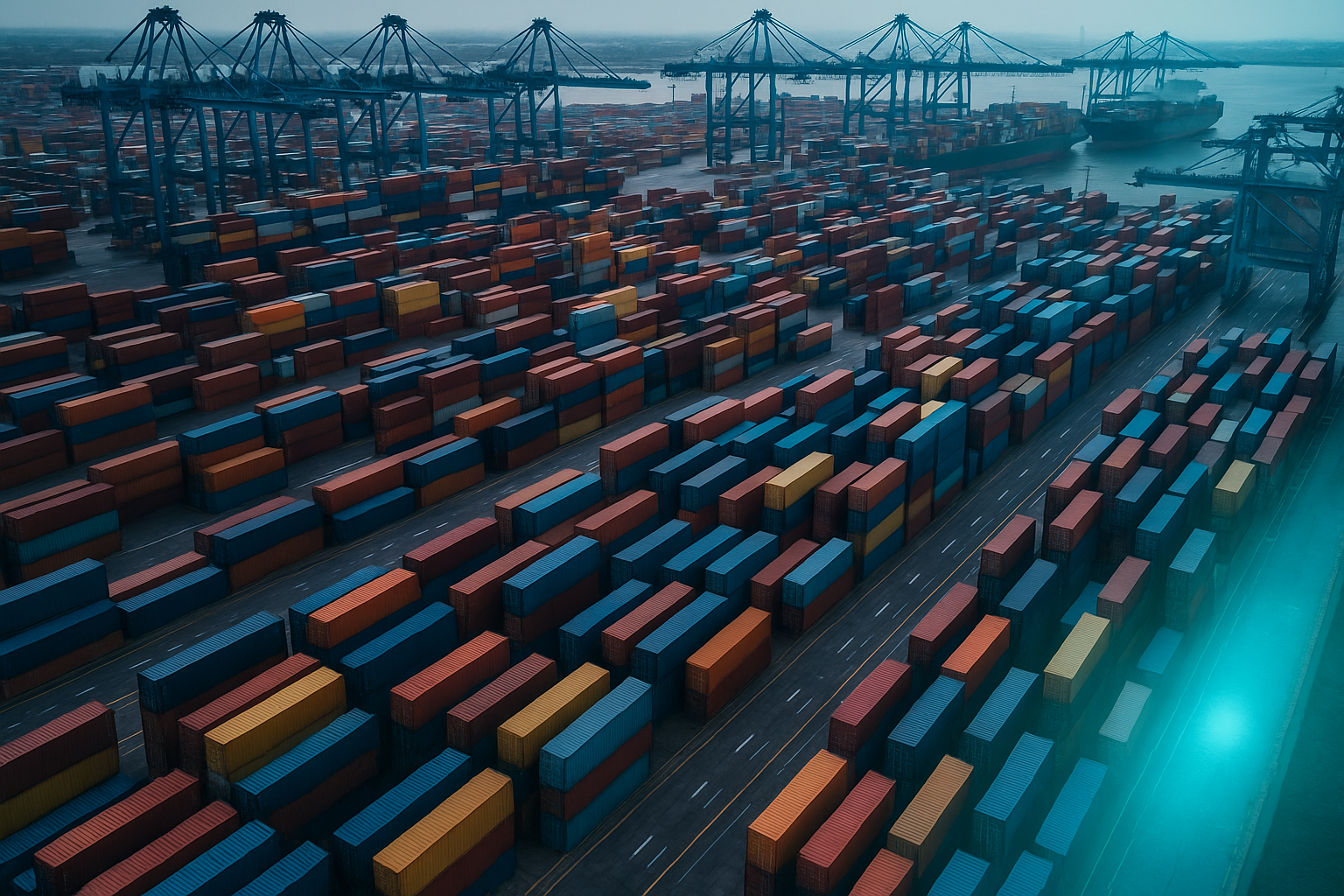
Typhoon Dolphin, the third and strongest tropical storm to affect China in five weeks after Typhoons Bavi and Noul, forced vessels to seek refuge and added to congestion around East Asian ports. Drewry estimated that around 2.4 million TEU of containership capacity was waiting outside Chinese ports.
Average vessel waiting times in week 32 reached 87 hours at Shanghai and 36 hours at Ningbo. Terminals in Shanghai and other regional ports introduced restrictions and temporary operational suspensions as weather conditions deteriorated.
Those delays reduce the amount of capacity that can be used productively even though the vessels remain part of the global fleet. A ship waiting outside port for several days cannot complete its planned rotation on time, and the delay then carries into subsequent port calls, feeder connections, empty-container positioning, and equipment availability.
The effect can be amplified across intra-Asia networks because services often depend on frequent port calls and tightly linked schedules. A disruption at one large Chinese gateway can therefore affect capacity on several later legs before operators have time to restore the rotation.
Rates from Ho Chi Minh City and Laem Chabang into Shanghai also increased, showing that the pressure was not confined to outbound China trades. That supports the view that port conditions, rather than one isolated demand surge, are influencing the wider regional market.
A disruption-led rise can reverse quickly
Higher bunker costs and Middle East security concerns are adding further pressure to voyage economics. Longer routings and schedule changes consume additional vessel days, while fuel increases raise operating costs even when cargo volumes remain unchanged.
The distinction between demand-led and disruption-led pricing is commercially important. A conventional peak driven by higher factory output or seasonal ordering can sustain rates while cargo remains strong. A disruption-led increase can unwind more quickly if weather improves, ports clear, and vessel schedules recover.
That makes the current six-week high a poor basis for assuming a lasting change in the market. Drewry expects intra-Asia freight rates to stabilise in the coming weeks rather than continue accelerating at the same pace.
Procurement teams still have to plan around the immediate problem. Spot rates are higher now, vessel waiting times are measured in days at major Chinese ports, and delayed rotations can reduce the reliability of nominal weekly capacity. Shippers with tight production schedules may therefore face both higher ocean costs and less predictable transit performance.
The previous decline in intra-Asia rates showed that underlying pricing pressure had been easing before the latest disruption. The new rise does not erase that trend; it interrupts it with a capacity shock that is operational rather than purely commercial.
For carriers, the next few weeks will test how quickly schedules can be recovered once the weather improves. Blank sailings, port omissions, equipment repositioning, and adjusted arrival windows may still be needed even after terminals return to normal operations because delays already embedded in the network do not disappear immediately.
For shippers, the more useful indicator will be whether waiting times and congestion fall alongside Drewry’s index. If port queues clear while rates remain firm, stronger demand may be providing more support than the current disruption suggests. If both decline together, the six-week high will have been another example of effective capacity tightening faster than the physical fleet can respond.