IN Brief:
- A Plessas Transport has ordered three further KRONE Box Liner FS10 sliding chassis.
- The order follows delivery of 18 FS10 units and three eLT3-40 straight frames during the past 12 months.
- The mixed chassis fleet supports UK container movements from ports including Felixstowe and London Gateway.
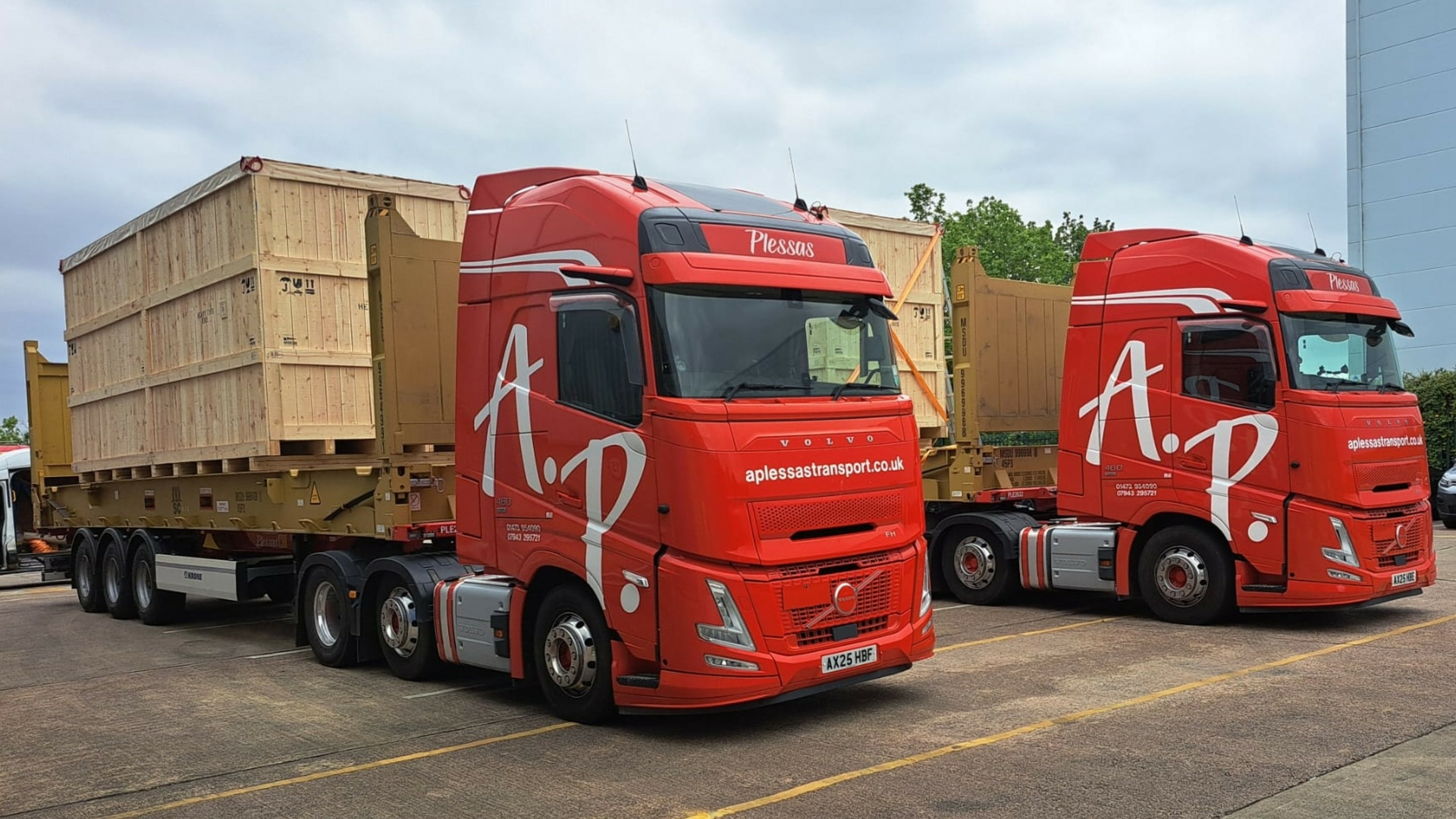
A Plessas Transport has ordered three more KRONE Box Liner FS10 container chassis as it continues to expand a Felixstowe-based fleet serving UK port traffic. The new order follows delivery of 18 FS10 sliding chassis over the past 12 months and three KRONE eLT3-40 straight frames, giving the haulier a larger mix of equipment for container movements from Felixstowe, London Gateway, and other UK ports.
The latest order is smaller than the preceding delivery programme, but it provides the clearest current step in the fleet expansion. A Plessas has already taken 21 KRONE chassis units across the two configurations, and the additional three FS10 units will extend the sliding-chassis element once delivered.
KRONE’s FS10 is designed to accommodate different container lengths and configurations by using a sliding chassis arrangement. The eLT3-40 provides a straight-frame alternative, giving planners a choice between flexible and fixed equipment according to the box, route, and job requirements.
That distinction is operational rather than cosmetic. Container haulage depends on matching tractors, drivers, chassis, containers, port collection windows, and customer delivery slots, and a shortage of the correct skeletal trailer can constrain a movement even when the tractor unit and driver are available. A larger equipment pool reduces the chance that a job has to wait for the correct chassis to be repositioned.
A Plessas specialises in UK-wide container haulage from major ports, including Felixstowe and London Gateway. Running equipment across more than one gateway adds another planning variable because chassis can finish a job away from the port where the next booking begins. Equipment flexibility can therefore reduce unnecessary repositioning, although the benefit depends on how the fleet is actually allocated through the week.
The company has linked the investment to continued growth and the need to maintain service levels as customer demand expands. That is a straightforward fleet-management rationale rather than a technology claim, but it is precisely where physical logistics capacity can become restrictive. Software can optimise a plan only within the assets available to execute it.
Container chassis also occupy an awkward position in capital planning because they are less visible than tractors but just as essential to the movement. Each unit carries acquisition, inspection, maintenance, tyre, storage, and management costs, yet too little chassis capacity can expose a haulier to missed collections, demurrage, or unproductive tractor time during peaks.
Standardising more of the fleet around one supplier can simplify parts, inspection routines, and workshop familiarity, although the company has not quantified those effects. The mixed use of sliding and straight frames still allows different operating configurations without introducing completely unrelated chassis platforms, which can help keep maintenance and driver familiarity manageable as fleet numbers rise.
A mixed chassis fleet can also make an operator less dependent on a narrow equipment specification. Different customer flows can involve standard containers, alternative lengths, or varying operational requirements, and the ability to assign a sliding chassis where flexibility is needed while retaining straight frames for more predictable work gives dispatch teams another way to protect utilisation.
The investment does not remove the larger constraints around UK container transport. Vessel bunching, terminal congestion, driver availability, road disruption, and customer delivery windows can all affect performance independently of chassis supply. Additional equipment simply reduces one source of friction inside that chain, which can be valuable when several other constraints are outside the haulier’s control.
The Felixstowe and London Gateway focus also gives the programme a resilience angle at company level. When customer flows shift between ports, a larger and more adaptable chassis pool can make it easier to absorb changes without waiting for equipment to be transferred from another part of the operation. The scale is modest, but the mechanism is practical and measurable.
Port operations also tend to create short periods of concentrated demand around vessel discharge, customs release, and customer delivery requirements. Extra chassis capacity can provide a buffer during those periods because a tractor can collect another unit rather than wait for a trailer to return from a previous job. That advantage depends on yard space and disciplined equipment tracking, but it is one reason skeletal trailer numbers can matter disproportionately during peaks.
The next useful evidence will be utilisation. If the additional FS10 units allow A Plessas to cover more container bookings, reduce chassis repositioning, or maintain service during busier vessel windows, the investment will have increased effective capacity rather than merely fleet size. In container haulage, that distinction matters because the most valuable equipment is the equipment that is in the right place when the box becomes available.