IN Brief:
- North American businesses ordered 17,995 robots worth $1.166 billion during the first half of 2026.
- First-half robot orders increased 2.0% by units and 6.6% by value compared with 2025.
- Warehouse operators continue investing in mobile robotics, automated handling, and orchestration software as automation becomes routine capital expenditure.
Association for Advancing Automation data shows North American robot investment continuing to rise during the first half of 2026, with order value growing faster than unit volumes as warehouse and industrial operators continue automation programmes despite uneven economic conditions.
Businesses ordered 17,995 robots worth approximately $1.166 billion during the first six months of the year. Unit orders were 2.0% higher than in the same period of 2025, while order value increased 6.6%, suggesting that spending growth is being driven by more than simply buying a larger number of identical machines.
The second quarter strengthened that pattern. North American customers ordered 8,940 robots worth $622 million between April and June, up 4.3% by units and 21.3% by value from a year earlier. The figures cover industrial robotics more broadly rather than warehousing alone, but logistics operators are increasingly significant buyers as automation spreads through distribution centres and fulfilment networks.
Separate warehouse research points in the same direction. An Interact Analysis survey found that 92% of respondents intended to increase warehouse automation spending during 2026, covering technologies including autonomous mobile robots, automated lift trucks, storage and retrieval systems, robotic picking, sortation, scanning, and the software used to coordinate them.
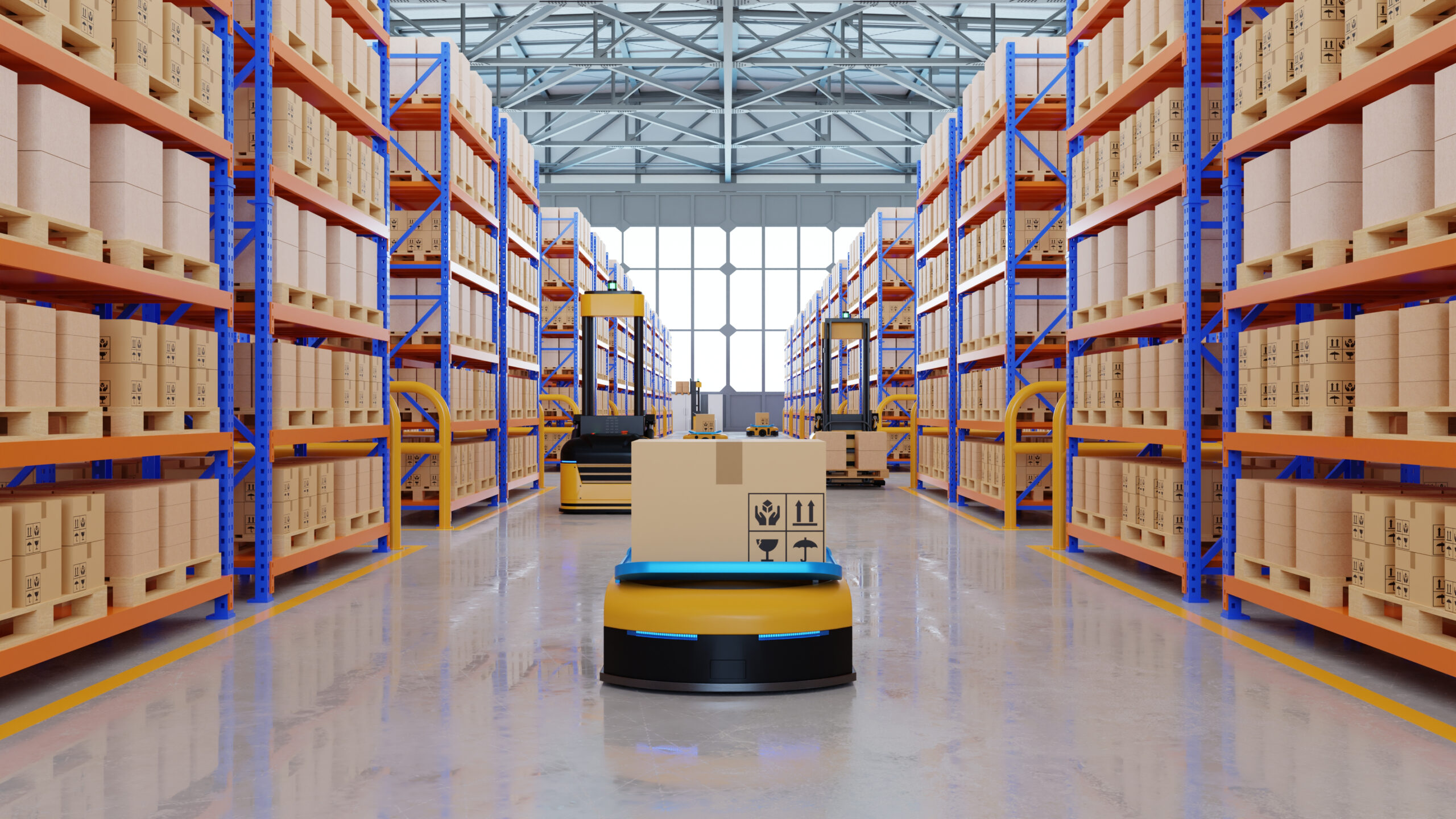
GXO Logistics has become one of the more visible examples of that investment cycle, having committed close to $1 billion to automation over the past five years. Its deployments span autonomous forklifts, inventory-scanning drones, and other robotic systems used across customer facilities, showing how automation is moving from isolated capital projects towards an operating model repeated across multiple sites.
The economics behind those programmes have also changed. Traditional fixed automation often required high, predictable throughput to justify conveyors, sorters, or dedicated machinery built around one process. Mobile and modular systems can lower the threshold by allowing capacity to be added in smaller increments, shifted between workflows, or expanded as demand changes.
Labour remains part of the calculation, but it is not the only one. Distribution centres have to manage wage pressure, recruitment difficulties in some markets, safety requirements, seasonal peaks, and customer expectations for shorter order cycles. Automation can reduce the amount of repetitive travel, lifting, scanning, or replenishment performed manually, while shifting employees towards exceptions and tasks that remain difficult to mechanise.
The installed base creates another reason for spending to persist even when capital budgets are under scrutiny. Once a warehouse depends on robots, conveyors, scanners, control software, batteries, safety systems, and wireless infrastructure, those assets require maintenance, replacement, integration, and periodic expansion. An automated operation does not return cheaply to a manual baseline when investment pauses.
The faster rise in order value than unit numbers also deserves attention. More capable robots, additional sensing, safety equipment, application engineering, software licences, and integration can raise project values without producing a similar increase in the physical machine count. A warehouse may therefore spend more on automation while buying only modestly more robots.
That puts greater pressure on project design. A faster picking robot delivers little benefit if packing stations cannot absorb the additional flow, just as rapid replenishment can simply transfer congestion to conveyors or storage locations. Automated mobile robots can spend much of their time waiting if aisle layouts, charging strategy, task allocation, or workstation capacity are poorly matched to the fleet.
Integration is becoming one of the decisive costs. Warehouses rarely start with a blank floor; operators have to connect new equipment with legacy conveyors, warehouse management systems, scanners, manual workstations, and other robots bought in earlier phases. The more suppliers involved, the more important orchestration software and dependable data become.
Those constraints explain why automation projects are increasingly judged against total facility performance rather than the productivity of one machine. The useful metric is not how quickly a robot completes a demonstration task, but whether the complete process moves more orders with fewer errors, less labour exposure, and enough flexibility to cope with changing product mixes.
Economic uncertainty cuts both ways. Tariffs, financing costs, and uneven freight demand can slow capital approvals, yet the same pressures increase the attraction of technologies that lower recurring handling costs or allow facilities to process more volume without expanding headcount at the same rate.
North America’s first-half figures therefore indicate continuity rather than a sudden automation boom. Robot orders are rising, but the more revealing change is that warehouse automation increasingly sits inside routine capital planning rather than being treated as a speculative technology programme.
The next constraint is less likely to be a shortage of machines than the ability to integrate them sensibly. Warehouses can buy robots faster than they can redesign every process around them, and the expensive part begins when several generations of automation are expected to behave as one system on a live operating floor.