IN Brief:
- Brazil's CADE has moved Hapag-Lloyd's proposed ZIM acquisition into full-form competition review.
- The assessment covers three long-haul trades involving the east coast of South America.
- The transaction would create a carrier operating more than 400 vessels and over three million TEU of capacity.
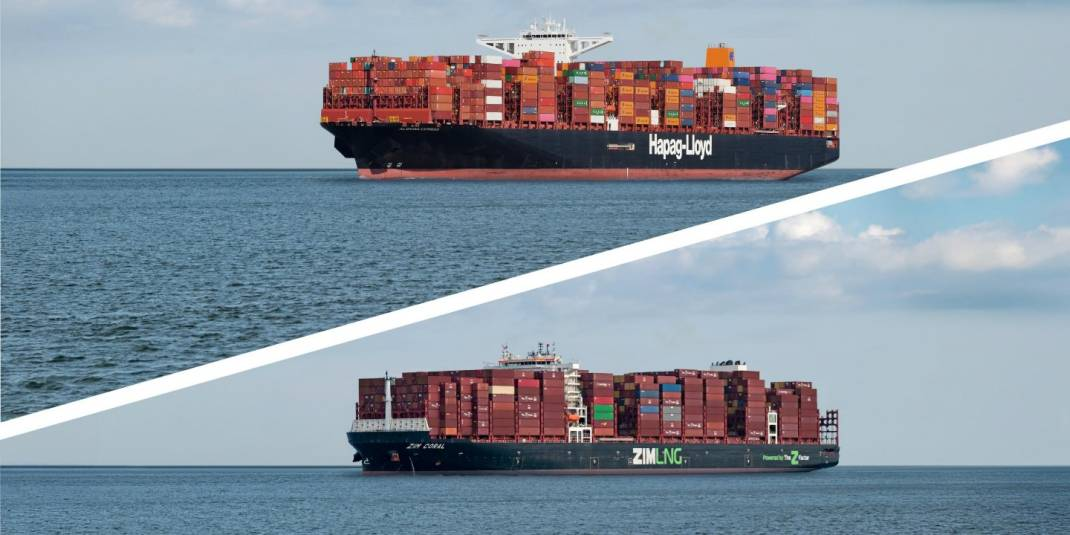
Brazilian competition authorities are subjecting Hapag-Lloyd’s proposed acquisition of ZIM Integrated Shipping Services to a full-form merger review, increasing scrutiny of a transaction that would combine two sizeable container networks and remove one independently controlled carrier from several international trades.
Hapag-Lloyd agreed in February to acquire 100% of ZIM’s shares for $35 in cash per share, valuing the transaction at more than $4 billion. The proposed combination would operate more than 400 vessels, control standing capacity exceeding three million TEU, and transport more than 18 million TEU annually.
Brazil’s Administrative Council for Economic Defence, CADE, is using its full review procedure because the parties’ combined positions exceeded screening thresholds on three long-haul liner markets. They cover North America to the east coast of South America, Central America and the Caribbean to the east coast of South America, and the west coast of South America to the east coast.
A full-form review is a request for deeper competition analysis rather than a finding that the merger is unlawful. The regulator still has to assess market concentration, alternative carrier capacity, service choices, existing cooperation agreements, and the practical ability of customers to switch providers on the affected trades.
Global scale can hide regional concentration
Container shipping competition cannot be measured solely by a carrier’s worldwide fleet share. Individual trades can have a much narrower field of operators, particularly on north-south services where available capacity, direct calls, transit times, and feeder connections may differ materially between carriers.
A merger can therefore appear modest when viewed against global liner capacity while producing a more concentrated market on a specific route. That distinction explains why CADE’s review is focused on three defined South American trade corridors rather than on the companies’ worldwide networks alone.
Operational cooperation makes the analysis more complicated. Container lines routinely use vessel-sharing agreements and slot-charter arrangements, meaning nominal competitors may already share some physical vessel capacity while retaining separate pricing, sales, equipment, and network decisions.
Hapag-Lloyd and ZIM have said they will remain competitors until the transaction closes, with cooperation limited to existing vessel-sharing and slot-charter agreements. Full integration of fleets, equipment pools, offices, customer contracts, and commercial systems cannot begin while regulatory approvals remain outstanding.
If completed, the deal would strengthen Hapag-Lloyd’s position as the world’s fifth-largest container shipping company. The buyer expects the enlarged group to gain a broader customer base, additional vessels, and stronger coverage on trades including the Transpacific, Atlantic, Latin America, intra-Asia, and East Mediterranean.
Approval timing becomes a planning variable
Brazilian merger rules provide a statutory framework of up to 240 days for a full review, subject to the circumstances of the case and possible extensions under the competition regime. That means the Brazilian process could continue into 2027, although CADE may reach a decision earlier and no timetable should be treated as a forecast of the outcome.
The extended review matters commercially because Hapag-Lloyd has been working towards completion around the end of 2026. Every additional clearance has to be secured before the carriers can begin realising the operating changes and cost savings on which part of the transaction’s economic case depends.
Hapag-Lloyd currently expects annual synergies of around $300 million to $500 million. Those benefits are expected to come from an enlarged network and combined operations, but they remain prospective until the deal completes and integration is permitted.
The transaction also contains an Israeli element separate from Brazil’s competition concerns. A carved-out Israeli liner controlled by FIMI Opportunity Funds is intended to take responsibility for 16 vessels, the ZIM brand, and Israel’s Golden Share arrangements, while maintaining strategic maritime connectivity.
For shippers, the immediate position is less dramatic: both carriers continue competing and their existing services remain in place. The longer-term issue is whether the merger reduces the number of genuinely independent options available on routes where alternative capacity may already be limited.
Fewer carrier brands do not automatically mean poorer service or higher prices. A larger network can offer denser schedules, broader geographical coverage, and better asset utilisation, while consolidation can also reduce independent commercial choices and make capacity decisions more concentrated.
That balance is precisely what the Brazilian review is intended to examine. CADE has not concluded that the acquisition should be prohibited or modified, and published information does not support writing the ending before the regulator has done the work.
Until those approvals are secured, Hapag-Lloyd and ZIM remain separate businesses with a signed transaction between them. For supply-chain planners on the affected South American trades, the important development is that one of the proposed shipping industry’s larger combinations now faces a more detailed examination of what customer choice would look like after it closes.