IN Brief:
- Crowley's Gulf-Central America Express will make its first Houston call on 10 September.
- The weekly route connects Port Houston directly with Santo Tomás de Castilla and Puerto Cortés.
- Dry, refrigerated, project, and 53-foot container capability targets industrial and time-sensitive supply chains.
Crowley is adding a weekly direct container service between Houston, Guatemala, and Honduras, creating another Gulf Coast routing option for refrigerated, industrial, project, and other time-sensitive cargo moving between the United States and Central America.
Crowley will make the first Houston call of its Gulf-Central America Express Service on 10 September, followed by regular Thursday departures. The service links Port Houston directly with Santo Tomás de Castilla in Guatemala and Puerto Cortés in Honduras.
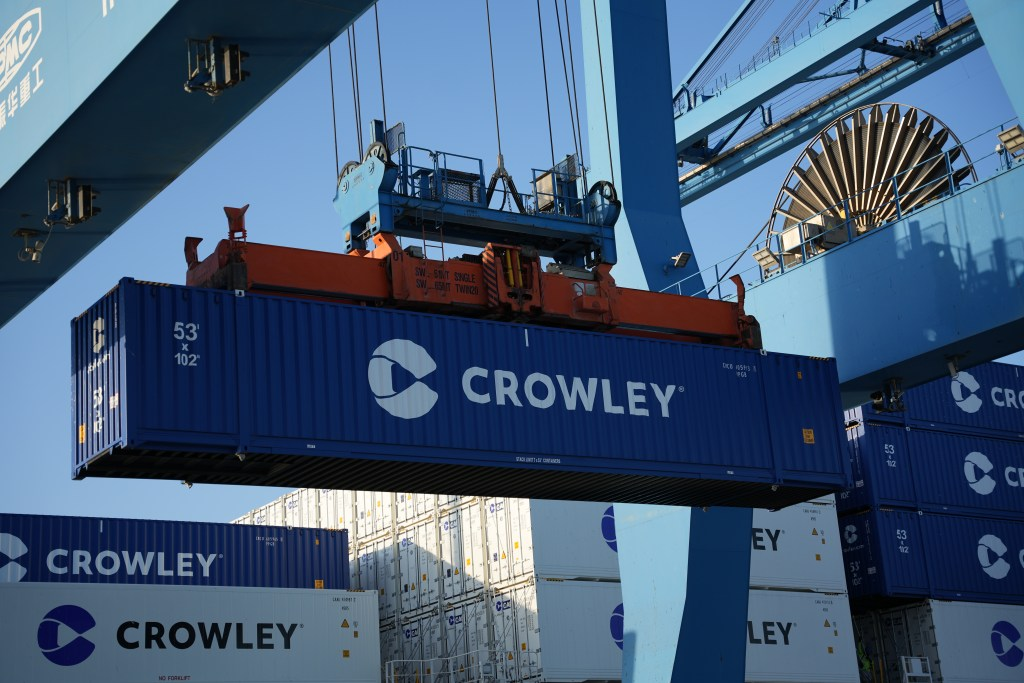
The carrier will accept dry and refrigerated containers alongside project cargo, with equipment including 40- and 45-foot dry and reefer units, 53-foot dry containers, and 20- and 40-foot flat racks. The equipment mix gives the service relevance across produce, apparel, industrial goods, and cargo that does not fit neatly inside conventional boxes.
Crowley is promoting the direct routing as a way to avoid the delays associated with transhipment. A direct service still remains exposed to weather, berth congestion, vessel reliability, and equipment availability, but it removes one scheduled transfer point from the journey.
One fewer handoff changes the risk profile
Transhipment allows carriers to connect many origin and destination combinations without operating a direct vessel between every pair of ports. The trade-off is another terminal operation and another timetable dependency between the first vessel and its connecting service.
If the inbound ship reaches a hub after its connection has sailed, the container can remain there until another suitable vessel has capacity. That variability matters for industrial inputs, customer orders tied to fixed delivery windows, and refrigerated cargo whose commercial life continues shortening while it waits.
A direct weekly route simplifies that part of the journey by keeping the cargo aboard the service between Houston and the Central American gateway. It does not guarantee faster delivery on every shipment, but it removes the planned intermediate connection that can turn a modest delay into a missed sailing.
The availability of refrigerated equipment is particularly relevant. Fresh produce represents an important component of Central American exports to the US, and Crowley cites Inter-American Development Bank data showing total Central American exports to the United States increasing 15.7% year on year in early 2026.
Cold-chain cargo is unforgiving of schedule variability because delay can reduce saleable shelf life even when temperature control performs correctly. A machine component arriving late can usually still be installed; a fresh product may simply become worth less.
Industrial shippers face a different but related constraint. Components, machinery, and project cargo can be tied to maintenance windows, production schedules, or installation dates, meaning the cost of late arrival may considerably exceed the freight charge itself.
Houston provides the inland connection
Port Houston handles approximately three-quarters of US Gulf container volume, according to the port figures quoted by Crowley. Its road and rail links provide onward access to Texas and markets further inland, while the Houston region itself generates substantial industrial, manufacturing, energy, and distribution demand.
The 53-foot containers offered by Crowley are relevant to that inland network because they match a common North American domestic intermodal format. Where a shipper’s cargo and route permit, using larger domestic equipment can reduce the need to transfer freight into another container for the inland leg.
Crowley’s wider Central American network adds warehousing, road transport, customs support, and other logistics services around the marine route. Customers can therefore combine the weekly sailing with inland services rather than treating the port-to-port movement as the complete supply chain.
That integration does not automatically make a single-provider model cheaper. Shippers will still compare freight rates, service reliability, inland costs, equipment availability, contractual terms, and the performance of competing routes before shifting cargo.
Container balance will also matter. A service with strong cargo flows in both directions can reuse equipment more efficiently, while an imbalance forces the carrier to reposition empty containers simply to make equipment available for the next export booking.
The range of dry, reefer, flat-rack, and 53-foot equipment broadens the cargo base from which Crowley can build that balance. Refrigerated produce may dominate one direction while manufactured products, machinery, consumer goods, or project cargo support the return leg.
The first Houston call on 10 September will begin the operational test. Published schedules can promise a direct route, but shippers will judge the service on whether weekly departures remain dependable, containers are available when bookings are made, and inland connections work once the vessel reaches port.
For supply-chain planners, the attraction is therefore more practical than dramatic. Removing one planned transfer means one fewer terminal, one fewer connecting vessel, and one fewer timetable that has to cooperate before the container reaches its destination — hardly revolutionary, but often exactly the sort of dull improvement that makes a freight network easier to run.