IN Brief:
- Durban Gateway Terminal delays are running at around 10 days, with some individual services further behind.
- Carriers are warning of disruption approaching 20 days while Pier 2 works through an accumulated container backlog.
- The terminal is also bedding in new operating systems and workforce processes after ICTSI assumed operational control in January.
Container congestion at Durban has deteriorated to the point that some carriers are warning customers of delays approaching 20 days, adding another constraint to freight moving through southern Africa.
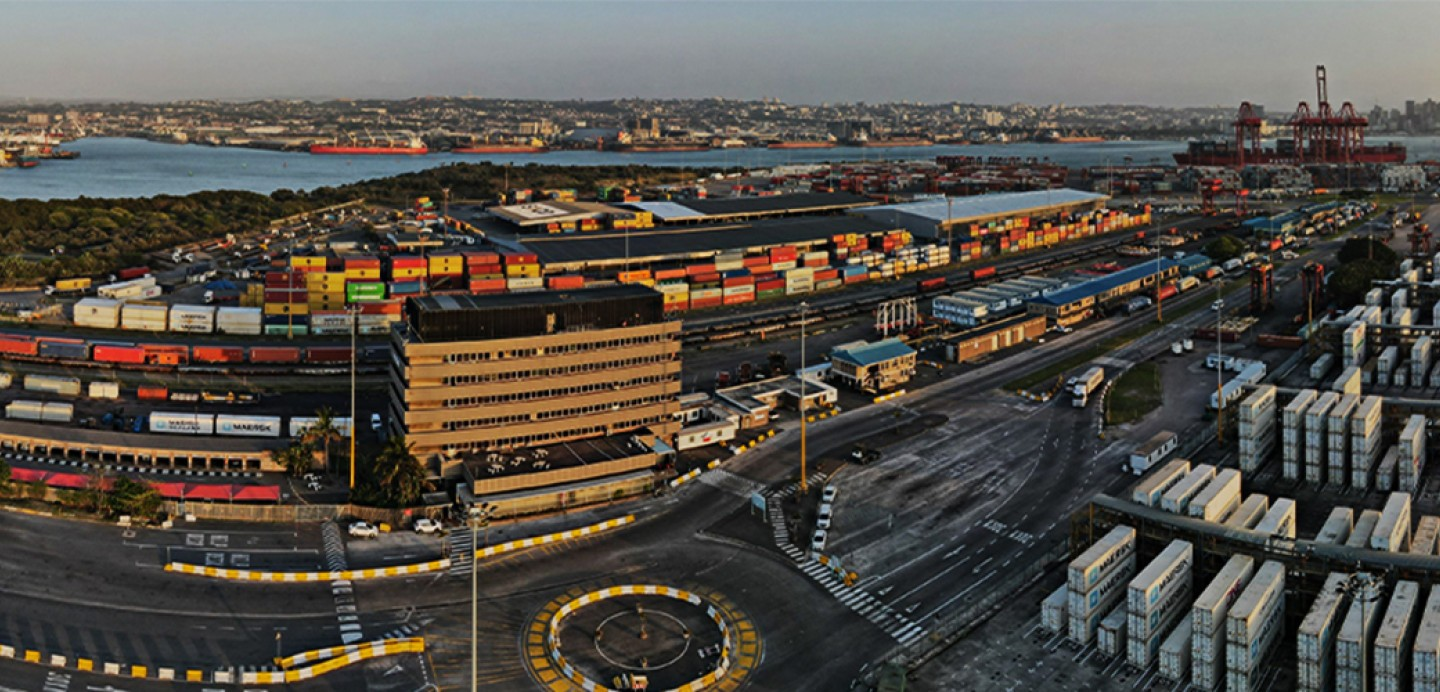
The most acute pressure is at Durban Container Terminal Pier 2, where current forwarding-market reports put expected delays at around 10 days, with individual services running further behind. Containers discharged on 11 August were still awaiting movement later in the month as the terminal worked through an accumulated backlog.
The disruption coincides with a significant change in how Pier 2 is managed. International Container Terminal Services Inc (ICTSI) entered a 25-year partnership with Transnet Port Terminals and assumed operational control on 1 January 2026 through a stake of 50% minus one share in the joint arrangement.
The partnership was intended to improve productivity and throughput at a terminal that has faced longstanding criticism over equipment reliability and congestion. Bringing a new operator into a live high-volume facility, however, also involves systems changes, revised management processes, and workforce retraining while ships and containers continue to arrive.
Current reports indicate that those transitional pressures are occurring alongside the existing backlog. That does not make the private-sector partnership the sole cause of Durban’s difficulties; the port’s operating constraints pre-date the ICTSI deal and have been compounded by wider changes in shipping patterns around southern Africa.
Vessels rerouted around the Cape have added traffic and variability to the region’s maritime network. Even where every diverted vessel does not call at Durban, longer rotations can cause ships to arrive outside planned windows, bunch services together, and leave carriers with less schedule recovery time after a port delay.
For Pier 2, the immediate challenge is mathematical as much as operational. A backlog will shrink only if the terminal handles containers and vessel calls faster than new workload accumulates. If daily productivity merely matches incoming demand, the queue remains in place.
That becomes difficult when delayed ships arrive in clusters rather than according to the original timetable. Berth plans need to be rearranged, cranes and labour reassigned, and yard space kept available for the next cargo exchange, while terminals also have to manage the containers already waiting for collection.
Yard congestion can then become self-reinforcing. As stacks become denser, equipment may have to perform additional moves simply to retrieve a particular import box or position an export container for the correct vessel. Those unproductive moves consume time and equipment availability without increasing the number of containers leaving the terminal.
The consequences extend immediately to road haulage and warehousing. A truck sent to collect a container that is not available loses productive time and may miss subsequent appointments, while an importer expecting stock on a particular day can be forced to reschedule warehouse labour or production activity.
Exporters face the reverse problem. Cargo delivered against an expected vessel call may remain in the terminal when that ship’s schedule changes, increasing storage requirements and potentially leaving the box out of sequence if the service is subsequently restructured.
Additional free-storage days can reduce the financial impact where cargo owners cannot collect containers because of terminal conditions. They do not remove the physical constraint: every unit left in the yard still occupies space and has to be moved before normal operating density can return.
South Africa has limited ability to shift very large container volumes elsewhere at short notice. Alternative ports can take some cargo, but rerouting may increase inland road or rail distance and risks transferring congestion rather than eliminating it. Shipping lines also build rotations around established berth windows, making network changes more complicated than diverting individual truckloads.
That makes Durban’s performance nationally important. The port handles manufacturing inputs, machinery, retail goods, automotive supply chains, agricultural exports, chemicals, and other containerised freight, connecting South African industry with major Asian, European, Middle Eastern, and African markets.
ICTSI and Transnet’s 25-year arrangement is intended to address those structural issues over a much longer horizon than the current queue. Investment, operating reform, and management changes are expected to improve Pier 2’s productivity and increase throughput, but the terminal has to reach that improved state while continuing to serve an active shipping network.
For cargo owners, the immediate planning horizon is more prosaic. Additional lead time, closer checking of terminal status before dispatching trucks, and flexibility around warehouse and production bookings remain necessary while delays are measured in days rather than hours.
A warning of 20-day disruption indicates that the problem has spread beyond an isolated difficult berth window. Pier 2 now needs sustained improvement while new traffic continues to arrive, and carriers will need evidence of that recovery before published schedules can again be treated as dependable rather than broadly aspirational.