IN Brief:
- Japan Logistics Development Partners V closed at its ¥612bn hard cap, nearly 50% above its predecessor.
- Total investment capacity is approximately ¥1.7tn, with around ¥450bn already committed to logistics projects.
- Ares will concentrate development on modern logistics facilities across Greater Tokyo, Greater Osaka, and Nagoya through Marq Logistics.
Ares Management has closed its fifth Japan-focused logistics real estate development fund at ¥612 billion, giving the investment manager approximately ¥1.7 trillion of total investment capacity for modern distribution facilities across the country’s largest metropolitan markets.
Ares Management said Japan Logistics Development Partners V reached its hard cap at approximately US$4 billion and is nearly 50% larger than its predecessor. The 2021-vintage JDP IV raised ¥412 billion.
The latest close is Ares Real Estate’s largest closed-end institutional fundraise to date. Investors include pension funds, sovereign wealth funds, insurers, financial institutions, and other institutions across North America, Asia-Pacific, Europe, and the Middle East.
Canada Pension Plan Investment Board is a cornerstone investor with a ¥150 billion equity commitment. CPP Investments has participated in every vintage of the Japan logistics fund series since its inception in 2011, giving the latest vehicle a substantial commitment from an investor already familiar with the development strategy.
The fund will primarily target modern logistics facilities across Greater Tokyo, Greater Osaka, and Nagoya. Development and operation will be handled by Marq Logistics, Ares’ vertically integrated logistics real estate platform, which managed approximately 120 million sq ft in Japan and more than 655 million sq ft globally at 30 June 2026.
Ares has already committed the fund to projects representing approximately ¥450 billion of total investment and says further proprietary opportunities are in development. That means a significant part of the vehicle’s capacity has an identified route towards deployment rather than beginning with an entirely uncommitted property pipeline.
Modern warehouses carry a larger technical specification
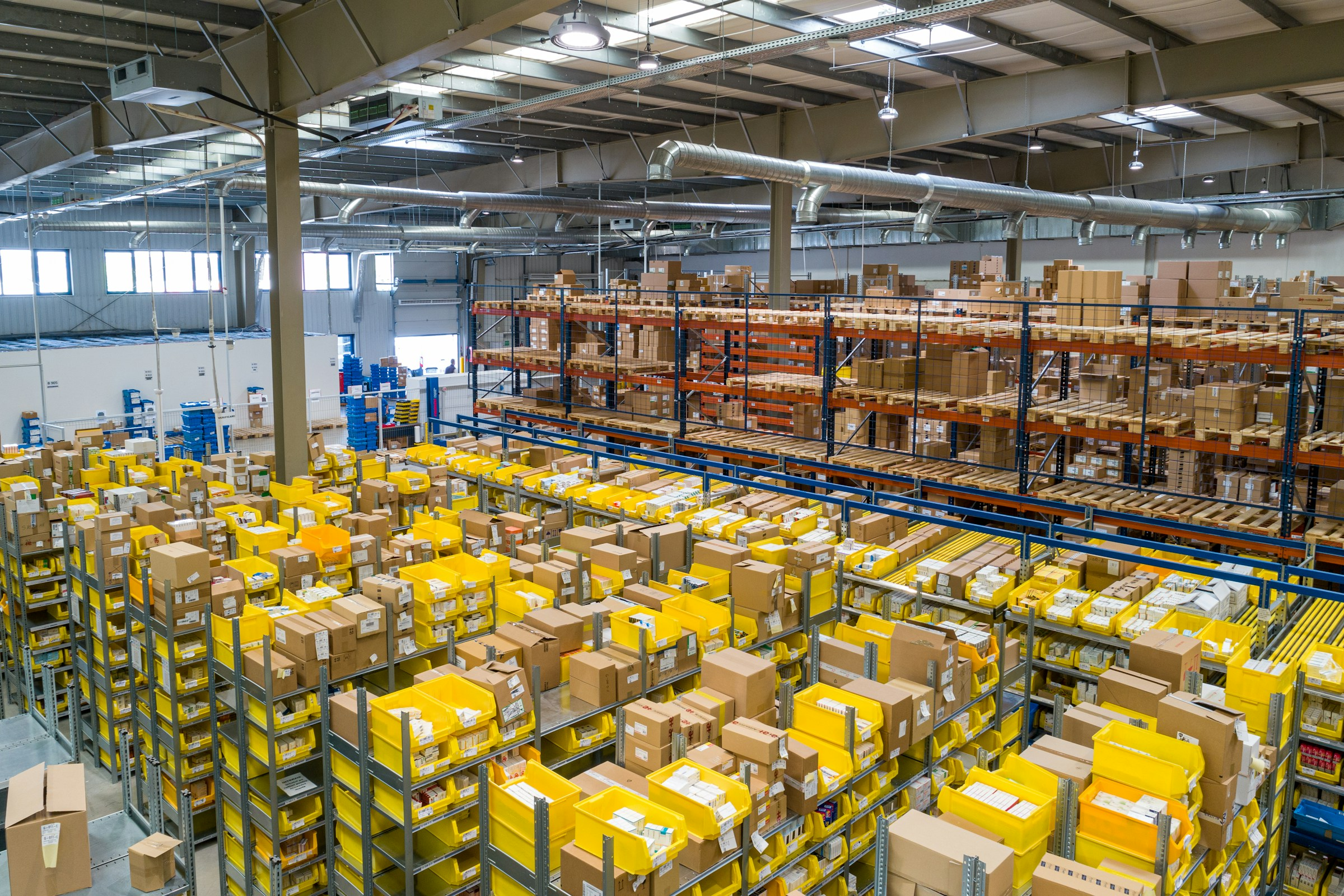
Logistics property investment increasingly depends on the operating capabilities of the building as much as its location and floor area. Large occupiers need sites that can support automation, dense storage, efficient vehicle flows, higher electrical loads, and changing environmental requirements while remaining close enough to factories or consumption markets to control transport cost.
Those requirements can expose the limits of older warehouse stock. Low clear heights, insufficient yard depth, restricted loading positions, limited floor loading, or inadequate electrical capacity can constrain automation and throughput even when a building is well placed geographically.
New development allows those characteristics to be designed around current logistics processes, although the specification also increases capital cost. Automated storage and retrieval systems, conveyors, sortation equipment, robotics, charging infrastructure, and high-density racking all place different demands on building layouts and utilities from conventional pallet storage.
Developers therefore have to anticipate how an asset will be used after the first tenant has left. A warehouse optimised too tightly around one customer’s equipment or workflow can become harder to re-let, while a more adaptable building may carry additional construction cost at the outset.
The ¥1.7 trillion investment capacity gives Ares scope to spread those decisions across several projects rather than rely on a small number of individual assets. It also gives Marq Logistics the opportunity to standardise parts of design, procurement, technology provision, and operational specification across a larger development programme.
Japan’s major metropolitan regions add another constraint through land availability. Distribution buildings require large, accessible sites with suitable road connections, yet Greater Tokyo and Greater Osaka combine dense urban development with strong demand from a wide range of competing land uses.
Committed capital now has to become occupied capacity
Fund size alone does not determine whether new logistics capacity will perform. Site acquisition, planning, construction, tenant demand, rent levels, and financing conditions all affect the time between an investor committing capital and an occupied building generating its intended return.
The roughly ¥450 billion already committed to projects reduces some deployment uncertainty, but it increases the importance of execution. A large pipeline can create procurement and delivery efficiencies, although simultaneous developments also expose the platform to changes in building costs, labour availability, leasing conditions, and occupier demand.
The tenant side is equally important. Warehouse rent is paid from operating budgets, so modern logistics property has a stronger commercial case where the building contributes to measurable improvements in storage density, labour productivity, transport efficiency, energy use, or service performance.
Changes in inventory strategy can support demand for additional space without producing the same warehouse requirement everywhere. Companies may hold deeper safety stocks for selected components, place inventory nearer customers, consolidate national distribution into larger hubs, or add urban facilities to shorten final delivery distances.
The resulting network can involve national distribution centres, regional facilities, cross-docks, urban logistics units, and specialist temperature-controlled or high-security buildings. A development platform operating across Tokyo, Osaka, and Nagoya can address several of those formats if sites and specifications are matched closely to actual customer requirements.
Ares’ acquisition of GCP International in March 2025 expanded its Asia-Pacific real estate platform before the latest fund close, while Marq Logistics provides the integrated development and operating capability through which JDP V will deploy its capital.
The fundraising stage is now finished. The more useful measures will be the pace at which the ¥450 billion committed pipeline moves through construction, how quickly completed facilities reach occupancy, and whether the broader ¥1.7 trillion investment capacity can be deployed without sacrificing location, technical specification, or leasing discipline.
At ¥612 billion, JDP V confirms continued institutional appetite for Japanese logistics real estate. Converting that capital into productive warehouse capacity across three highly competitive metropolitan markets will be a considerably more operational test than reaching the fundraising hard cap.