IN Brief:
- Padrock has acquired a 10-acre Waltham Cross site and submitted plans for 205,000 sq ft of industrial and logistics space.
- The proposed scheme comprises 13 leasehold units ranging from 6,500 sq ft to 28,500 sq ft.
- Subject to planning, construction is expected from late Q1 2027, with practical completion targeted for Q1 2028.
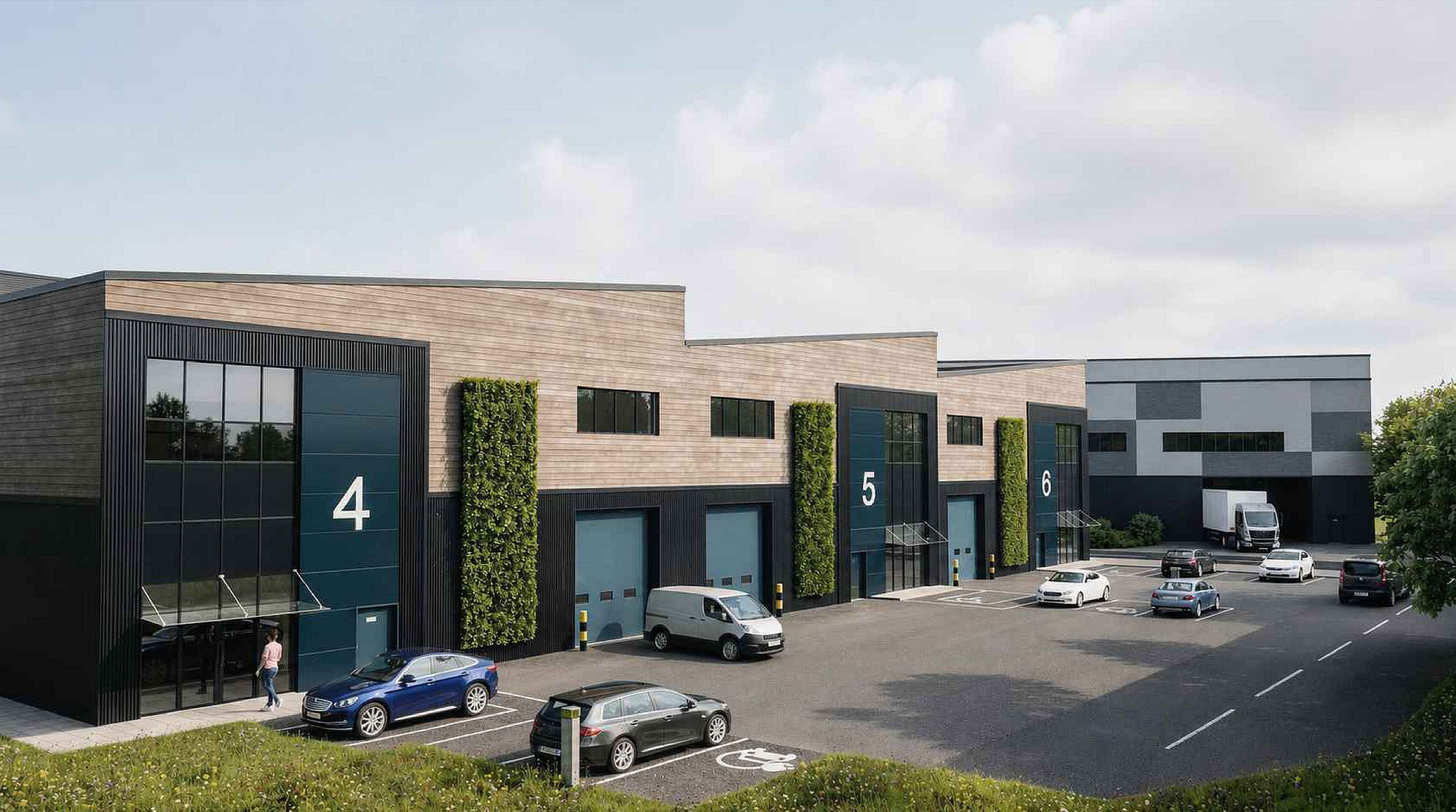
Padrock has acquired a 10-acre site at Waltham Cross in Hertfordshire and submitted plans for a £110 million multi-let industrial and logistics development comprising 13 speculative units close to the M25 and A10.
Padrock is proposing 205,000 sq ft of Grade A accommodation on the Lieutenant Ellis Way site. Individual units would range from 6,500 sq ft to 28,500 sq ft and would be offered on a leasehold basis.
The land was acquired from a private investor for an undisclosed amount. Padrock puts the completed scheme’s gross development value at approximately £110 million and has submitted its application to Broxbourne Borough Council.
All 13 units are intended to target EPC A+ and BREEAM Outstanding ratings. Padrock also says the development will be designed to align with EU Taxonomy requirements and target Article 9 objectives.
Subject to planning, construction is expected to begin at the end of the first quarter of 2027, with practical completion anticipated during the first quarter of 2028. The developer estimates the project would support around 110 construction jobs and 295 permanent roles once occupied.
The site sits beside the A10 and less than a mile from junction 25 of the M25. Google opened its Waltham Cross data centre nearby in September 2025, adding another substantial infrastructure investment to the surrounding employment area.
Mark Symonds, founding partner at Padrock, said: “Our plans will deliver much-needed, high-quality new employment space in a location where the supply of modern industrial accommodation has not kept pace with the calibre of investment around it.”
Unit sizes broaden the potential occupier base
The 13-unit layout gives Padrock a different leasing proposition from a single large distribution centre. Buildings between 6,500 sq ft and 28,500 sq ft can accommodate regional distributors, trade suppliers, light manufacturers, spare-parts operations, service businesses, and other occupiers that need logistics access without committing to a large national warehouse.
That range also gives the estate more flexibility as demand changes. A single 200,000 sq ft building depends heavily on one occupier’s requirements and lease cycle, while a multi-let scheme can absorb lettings, departures, and expansion in smaller increments.
The arrangement is particularly relevant around London, where occupiers often need to balance proximity to customers against the cost and availability of industrial land. Small and medium logistics units closer to major road corridors can support shorter regional movements while allowing businesses to keep stock, handling, and service functions together.
Access to the A10 and M25 is central to that operating case. The location gives occupiers routes into London as well as connections towards Hertfordshire and the national motorway network, although actual logistics performance will depend on journey reliability, vehicle restrictions, and congestion rather than motorway distance alone.
The development’s environmental specification could also affect day-to-day operating costs. High building efficiency, photovoltaic generation where installed, energy monitoring, and adequate electrical infrastructure can become increasingly relevant as warehouse automation, material handling equipment, and vehicle charging raise electrical demand.
Padrock’s sustainability targets are consistent with its wider development model. Its existing portfolio includes Dagenham Logistics Hub, Leyton Logistics Hub, Erith Logistics Hub, and Hertford Logistics Hub, giving the company an established focus on multi-let industrial accommodation around London and the South East.
Waltham Cross extends Padrock’s Hertfordshire pipeline
The project follows another sizeable Hertfordshire proposal. In June, Padrock submitted plans for a £120 million, 245,000 sq ft Grade A urban multi-let industrial and logistics development at Elstree, comprising another 13 units on a 17-acre site.
Taken together, the projects point to a strategy based on speculative multi-unit development rather than waiting for a single occupier before construction. That approach brings leasing risk forward because the developer commits capital before all tenants are secured, but it can also place finished space onto the market more quickly when occupier demand emerges.
For supply chains, the distinction between large-box and multi-let stock is significant. National distribution centres concentrate inventory and automation into fewer locations, while smaller urban and regional facilities can position stock, service parts, or light production nearer customers and labour markets.
The Waltham Cross scheme would add 205,000 sq ft across units small enough to accommodate businesses that would not normally appear in a large logistics park. That can create a more varied tenant mix but also requires estate infrastructure capable of handling different traffic patterns, shift structures, power requirements, and loading profiles.
Planning remains the immediate gate. Until consent is secured, the £110 million valuation, construction programme, and employment estimates remain attached to a proposed development rather than completed logistics capacity.
If approval is obtained on the current timetable, work would begin in early 2027 and run towards practical completion in the first quarter of 2028. That schedule would place another tranche of modern multi-let space into the north London logistics market at a time when occupiers continue weighing transport access, energy performance, unit size, and occupational flexibility together rather than treating warehouse floor area as the only specification that counts.